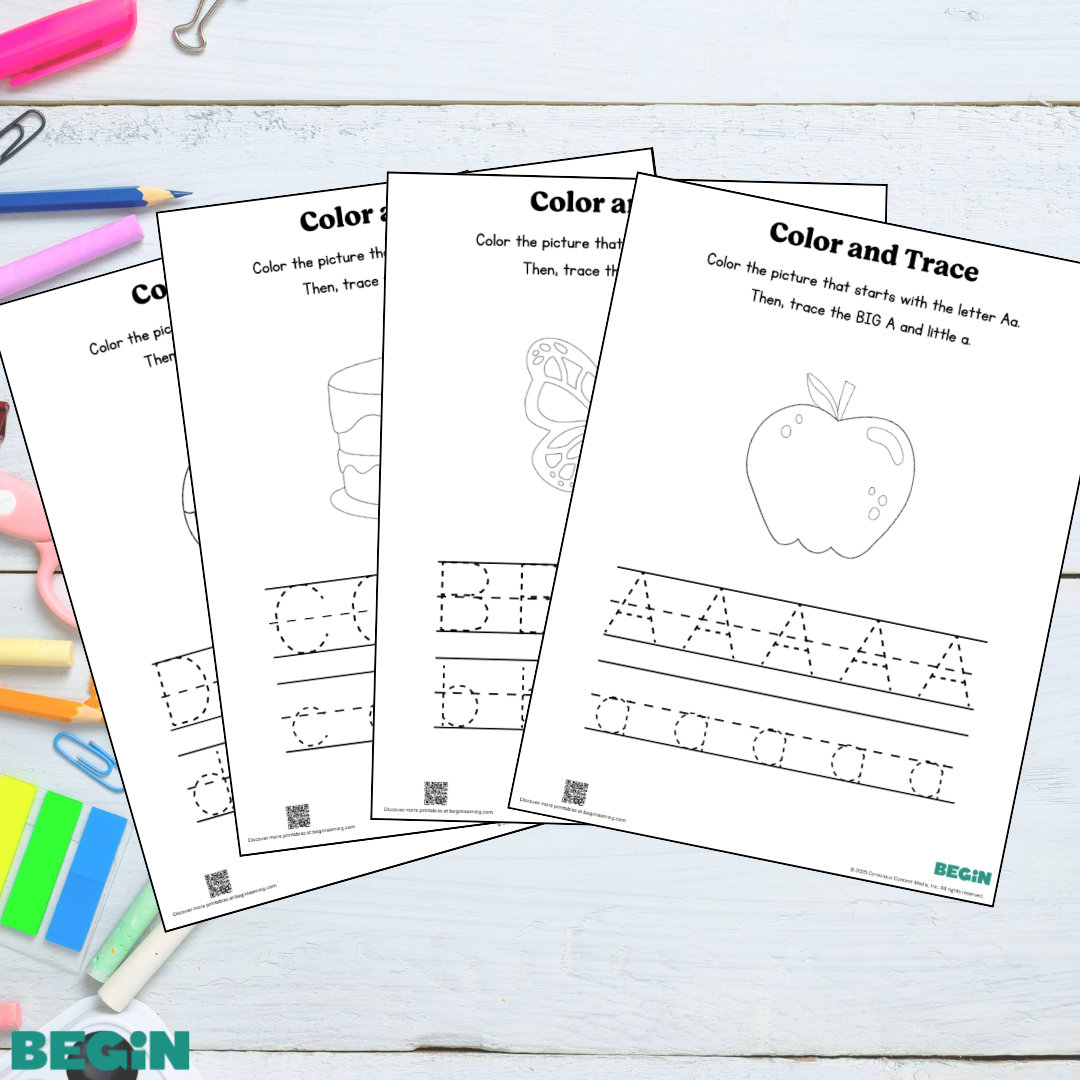
Support early writers with this free Letter Q tracing and coloring worksheet. Kids trace uppercase and lowercase while adding color to letter-themed pictures, reinforcing fine motor skills and early phonics.
Letter Q Tracing – Upper & Lowercase Practice – Free PDF Printables
Frequently Asked Questions (FAQs)
What skills does this printable worksheet help build?
This Letter Q tracing worksheet supports a mix of early learning goals: handwriting, phonemic awareness, and fine motor development. As children trace uppercase and lowercase Q, they begin understanding how letters are formed, where to start and stop strokes, and how to hold a writing tool with control.
Coloring letter-themed images helps reinforce the letter-sound connection, which supports both reading and vocabulary.
How can I tell if my child is ready to use this worksheet?
Children are usually ready for this printable worksheet when they can hold a crayon, draw lines or circles, or show interest in letters. If your child enjoys pretend writing or points to letters in books or on signs, they’re likely ready for a color tracing activity. Look for signs like being able to sit and focus on an activity for 5-10 minutes and showing preference for one hand when drawing.
Should my child start with uppercase or lowercase Q?
We recommend starting with uppercase letters first. Uppercase letters are generally easier to copy than their lowercase counterparts. Our worksheet set includes three versions: uppercase only, lowercase only, and a mixed option. If your child is new to writing, start with the uppercase version and use the mixed version when they’re ready to transition.
What does each printable worksheet version include?
Each version focuses on the letter Q and includes bold, dashed letterforms for tracing, paired with a simple, recognizable image to color that starts with the letter Q. The lowercase worksheet focuses on rounded strokes; the uppercase emphasizes vertical and diagonal lines. The mixed version combines both for extended practice.
Why is coloring paired with letter tracing?
Coloring is not just a fun add-on, it boosts attention span, helps kids notice details, and improves pencil control. It slows kids down in a good way, encouraging careful observation of shapes and strokes. When kids color pictures tied to the letter they’re tracing, they also deepen their understanding of the letter’s sound and real-world meaning. This makes the activity feel more purposeful and engaging.
What if my child colors outside the lines or doesn’t trace perfectly?
That’s perfectly okay! Learning to write is about building comfort and control, not precision. Celebrate your child’s effort and progress rather than expecting perfect letter shapes. Encourage them to slow down and try again, but always make the experience feel encouraging and stress-free. The goal is to help kids feel successful and capable.
How often should kids practice letter tracing?
Consistency is more important than volume. Try using one letter tracing worksheet 2-3 times per week for about 5-10 minutes each time, depending on your child’s interest and readiness. Pair worksheets with play-based practice, such as making the letter Q with pipe cleaners or drawing it in salt trays. Mixing methods helps reinforce learning without overloading young learners.

Want to support your child’s early literacy, math skills, and creativity?
Try HOMER free for 30 days