
When your child can read sight words at a glance, they’ll be able to read more fluently and their confidence will soar. Mastering this list of 2nd grade sight words will be a big step toward them becoming a strong reader.
In this article, we’ll explain why learning sight words makes such a difference and share some tips to make learning them more enjoyable.
Key Takeaways
- Sight words are words your child recognizes quickly without having to sound them out.
- The Dolch Word List is composed of 42 words your second grader needs to learn.
- Tips for helping your child learn sight words include practicing with technology, doing word searches, making learning a multisensory experience, and reading books together.
- 2nd grade sight word activities include making silly sight word sentences, using sight words in the kitchen, playing games such as sight word BINGO and sight word parking lot, and telling sight word stories.
Table of Contents
- What Are Sight Words?
- 2nd Grade Sight Words
- Tips for Practicing Sight Words at Home
- 2nd Grade Sight Word Activities
What Are Sight Words?

Sight words are words that can’t be decoded (sounded out) and need to be recognized automatically (by sight). These words, also sometimes called high-frequency words, occur frequently in written text and make up 50-70% of all words in children’s books.
It’s important to note that not all high-frequency words are sight words. Some high-frequency words can be decoded, unlike sight words.
Typically, students study a new list of sight words each school year, from preschool through 3rd grade. By the time they’re in 4th grade, most students can read these commonly used words without hesitation.
Why Sight Words Are Important
When your child comes to an unknown word while reading, “sound it out” is likely the approach they’ll try first. While this is a common strategy, being able to recognize sight words at a glance will improve your child’s reading speed and fluency.
2nd Grade Sight Words
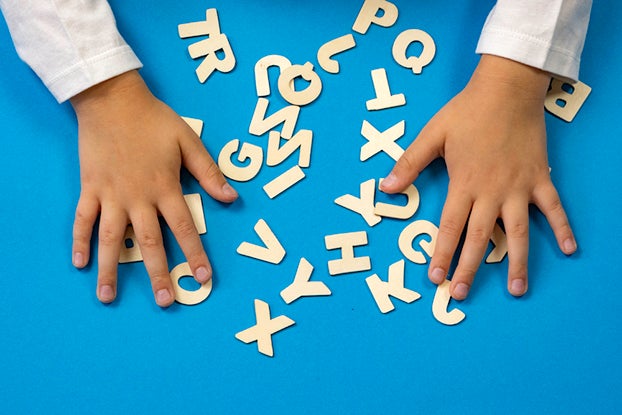
Now that you know what sight words are, let’s dive into the Dolch Word List for 2nd grade. The 46 words are arranged alphabetically.
- always
- around
- because
- been
- before
- best
- both
- buy
- call
- cold
- does
- don’t
- fast
- first
- five
- found
- gave
- goes
- green
- its
- made
- many
- off
- or
- pull
- read
- right
- sing
- sit
- sleep
- tell
- sheir
- these
- those
- upon
- us
- use
- very
- wash
- which
- why
- wish
- work
- would
- write
- your
Tips for Practicing Sight Words at Home
Now that you know what words to focus on, here are some tips for helping your child master 2nd grade sight words.
Allow Practice with Technology

Give your child some screen time and let them practice their sight words with the HOMER app by Begin. This app helps children build their literacy skills through interactive games and activities.
And since it’s personalized to your child’s reading level, it can be a great tool for practicing sight words at home!
Pick Personal Sight Words
Your child’s personal sight words are going to be different from their friends’. For instance, you might have a family dog, so a personal sight word for your child would be “dog.”
Generate a list of these special words with your child. Think about pets, family members’ names, and important objects at home. These words will resonate with your child and, as a result, be easier for them to learn.
Use Flash Cards for Quick Practice
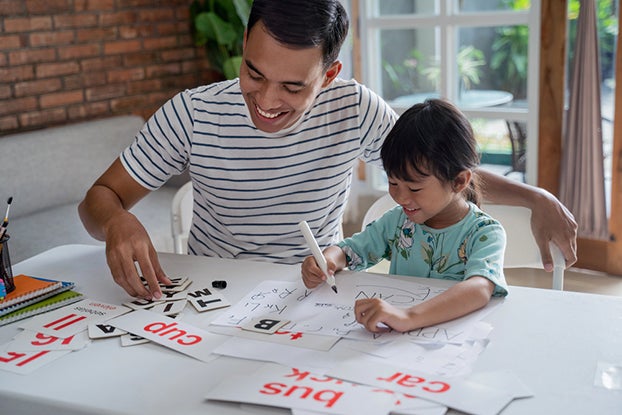
Flash cards are a classic but effective way to practice sight words. While you can purchase pre-made sight word flashcards, making your own is simple. You need index cards and a marker.
Once your flash cards are ready, use them for quick drills. Since they’re small, you can bring them anywhere and use them when there’s waiting involved, such as at the dentist’s or doctor’s office or at a restaurant.
They’re also perfect for your child to use on their own during car rides or whenever they have a few minutes of extra time.
Pair Words and Pictures
Pairing words with pictures is a great starting point for learning sight words. You can use a flashcard-type strategy, where you show your child the picture first and then flip the card once they know the word.
You can also involve your child by giving them the word written on a piece of paper and asking them to draw a picture that includes it.
Just remember that this word-picture combination is a great scaffolding tool, but you may eventually want to drop the pictures. Studies show that presenting pictures with text can be distracting when the focus of a lesson is on word comprehension.
Do Word Searches
Ask your child to search for sight words in magazines, newspapers, and catalogues. They can highlight them with a marker or cut them out and glue them onto a piece of paper.
Another fun idea: find a jar or basket to put them in. Then take time each day for your child to pull one out and read it.
You can also ask your child to search for their sight words in the books you read together. This gives them a chance to see how the words are used in context.
Make Sight Words Multisensory
Make sight word study a full-body experience. When your child’s senses are activated, learning becomes easier because multiple parts of their brain are at work. And seeing, hearing, saying, and feeling at the same time is fun!
How many ways can you engage your child’s senses as they practice their sight words? Here are a few ideas to get you started:
- Write words in shaving cream
- Write words in a salt tray
- Build words with play dough
- Tap out words on body parts, like a knee, shoulder, or wrist
- Sing words or use a silly voice
- Pose in the shape of the word
Read Books Together

As you read together, point out the sight words and let your child say them. You may be amazed at how often they spot these words independently in everyday life after practicing them in books. Sight words are everywhere!
Review Sight Words Frequently
Sight words must be reinforced consistently in order for your child to learn them. Reviewing them frequently is key.
Take time to practice words your child has learned so they don’t forget them. Your daily sessions can focus on a mix of old and new sight words.
Make a Word Wall
Create a mural where your child can display the sight words they’ve mastered. They can decorate some butcher paper or make a big canvas by taping together pieces of paper.
You can write the words directly on the mural as your child learns them, or they can write them on index cards and tape them to it. This is a fantastic way for your child to see just how much their vocabulary is growing. And it builds their confidence, too!
Find Authentic Opportunities
If your child is already curious about a subject, they’ll absorb information more quickly. The same is true for subjects your child already knows and loves. So, look for authentic opportunities like these to motivate your child’s learning process.
Some ideas for this kind of dynamic engagement include:
- Going to the library and finding books about subjects your child wants to understand
- Helping your child write about subjects that interest them
- Writing a letter to a family member focused on something they care about
- Learning a new game or skill
Celebrate Progress and Stay Positive
The journey to sight word mastery can take time, so it’s important to celebrate your child’s progress along the way. Recognize their effort and praise them for their hard work.
If your child struggles with certain words, stay positive and encourage them to keep trying. Remind them that everyone learns at their own pace and that with practice, they’ll eventually master every word on the list.
Choose Engaging Activities
Classic flash card drills can become repetitive after a while. To spice things up, incorporate a variety of games and activities. We’ll share some ideas below.
2nd Grade Sight Word Activities

Here are a few specific sight word activities your second grader may enjoy.
Sight Word BINGO
Draw a five-by-five grid on paper and have your child write a sight word in each square. Then, call off words and have them mark off the corresponding square. If they get five words in a row and read them back to you, they win!
Sight Word Ladder
Draw a ladder on a piece of paper, aiming for between five and 10 rungs. Write a sight word on the bottom rung. Ask your child to read the word and then create a new word by only changing one letter and writing it on the second rung.
Continue this until your child has reached the top of the ladder. Learning sight words in this way helps your child expand their vocabulary and boost their confidence.
For example, a finished sight word ladder could look like this (changed letters are in bold):
- Rung 1 WISH
- Rung 2 WISK
- Rung 3 RISK
- Rung 4 RINK
- Rung 5 PINK
Sight Word Parking Lot
Practicing sight words and playing with cars is a great combination!
The simplest way to play this game is by drawing a parking lot on a piece of paper. But you can also get more creative by using tape on the floor or building a parking lot out of blocks.
Write your child’s sight words on individual pieces of paper and place one inside each parking space. Then ask your child to begin “driving” a toy car around the parking lot. When you call out one of the sight words, your child parks their car in its corresponding space.
You can also play this game on a larger scale by taking it outside and using chalk to draw the parking lot on your driveway or the sidewalk. Your child can park bigger toy cars or trucks, or you can even try the game with a real bike!
Silly Sentences
Put several sight word flash cards in a bowl and have your child randomly draw four. Encourage them to read the words and create a silly story with them.
For example, if they got the words before, green, pull, and work, they might come up with a story like this:
One morning before breakfast, I saw an elephant in my yard. He was trying to pull an apple tree out of the ground with his trunk. When I asked him what he was doing, he said, “Taking some green apples to school for a snack.
I told him he should leave the tree where it was and put the apples in a giant lunchbox instead. Then I gave him a suitcase. “That will work!” he said.
After listening, encourage them to write down their story and illustrate it so you can read it again. That way, they’ll also get to practice writing sight words.
Sight Words in the Kitchen
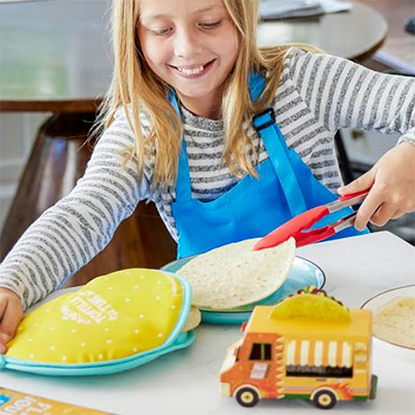
Enlist your child’s help in the kitchen and make it a sight word practice session. Let them help you cook dinner using a recipe, and point out any sight words you see listed.
If you need kid-friendly recipes or cooking supplies, check out Kitchen Adventures from Little Passports! As you read the materials together each month, encourage your child to look for sight words.
Fishing for Sight Words
Integrate some sensory play into your sight word practice with this simple game. You’ll need magnetic letters, a large bowl, and a slotted spoon. To help reduce the mess, set up the activity on a large bath towel to soak up any spilled water.
Fill the bowl halfway with water, and drop the letters in. Hand your child a slotted spoon and give them a sight word to spell. Their job is to use the spoon to “fish” each letter they need out of the water.
Then, they must put them in order and read the word to you before trying again.
Swat a Sight Word
Have some fun pretending sight words are flies your child needs to swat! Lay out a list of the current sight words your child is learning. You can write them on separate index cards and organize them into a grid, on a big piece of paper, or on a whiteboard.
Explain to your child that every time you call out one of the words, they need to slap it with their palm, or if you want to make the game even more engaging, have them use an actual flyswatter.
Kids love this fast-paced, simple-to-set-up activity. And if you want to go a creative step further, you can write the sight words on paper cut out to look like actual flies!
This is a great way for your child to develop their fine motor skills and hand-eye coordination as well.
Sight Word Hunt
Write sight words on sticky notes and put them up around the house. Challenge your child to find and read all the words. For extra practice, encourage them to use each word in a sentence before looking for another one.
Sight Word Shuffle
Write each letter of a sight word on a piece of copier paper, and scatter the letters randomly on the floor. Call out the letters to spell the sight word one at a time to have your child discover what the word is.
Next, rearrange the letters and ask your child to put them in the right order. Keep rearranging until they put the letters back in the correct order every time.
Light Up Words
Write sight words in large letters on a small whiteboard or large paper. Then hand your child a small flashlight and ask them to trace each word with the light beam. When they reach the end of a word, ask them to read it before moving on to the next one.
Sight Word Reveal
Reveal hidden sight words! Write the words on a piece of paper using a white crayon. Then give your child a marker or watercolors and a paintbrush and ask them to color over the mystery space to uncover the words. Ask them to read each word as it is revealed.
Matching Game
Make a matching game using index cards and a pen. Write each sight word on two separate cards so you’ve got pairs of all of them. Then spread them out, face side down, on the floor or table.
Ask your child to turn over two cards. If they match, ask them to read the word and take the pair. If the words don’t match, your child turns both cards back over. Continue the game until all of the words have been matched with their identical twin!
If your child likes to draw, invite them to create the memory cards with you. Maybe you can write the word, and they can draw a corresponding picture.
Sight Word Stories
Use your child’s sight words to create stories. Write each one on a separate piece of paper and put them in a jar or basket. Ask your child to pull out three words and make up a story using all of them.
Depending on your child’s interests and skills, the stories can be formatted in different ways. They can be created as one drawing with all three words incorporated or three drawings (or more!), one per word.
Your child can write a story using the trio of words. And if they like to talk or perform, they can tell you a story instead. (In this case, you might want to transcribe it for them.)
Help Your Child Grow as a Reader with Begin
With so many fun activities, your child will never get bored while practicing 2nd grade sight words. As you practice each day, stay positive and offer encouragement. Before you know it, your child will read these words like a pro!
Products from Begin’s family of brands can help children feel confident and motivated to learn, including the HOMER app, which offers engaging ways to practice sight words and other important literacy skills. And kits from Little Passports spark curiosity and inspire a love of reading that will last a lifetime.
Check out our line of products and help your child grow as a reader with Begin!
Frequently Asked Questions
What is the difference between a sight word and a high-frequency word?
A sight word is automatically recognizable to a reader. A high-frequency word, on the other hand, is a word that a reader comes across often. Ideally, high-frequency words turn into sight words.
Is there a “best order” to teach sight words?
No, there isn’t one best order to teach sight words. Much more important is the process:
- Isolating the word
- Seeing it and saying it
- Spelling it
- Putting it in context
- Searching for the word in books and out in the “real world”
- Repeating this process
For example, you might be reading a book with your child and come across one of their sight words. Let’s say it’s “first.”
You might say, “First. See the word? Can you say it? It’s spelled ‘F I R S T.’ It means before anything else. Like when you run to the door before I do because you want to be the first one outside.”
Are there only 46 sight words for second graders?
No, while the Dolch Word List is one of the most commonly used sight word lists, it isn’t the only one. The Fry Word List is another example.
Ideally, your child learns all 46 sight words for second graders, but they remember the Pre-K through first-grade sight words, too. And it’s important to keep in mind that any word can become a sight word if your child learns it!