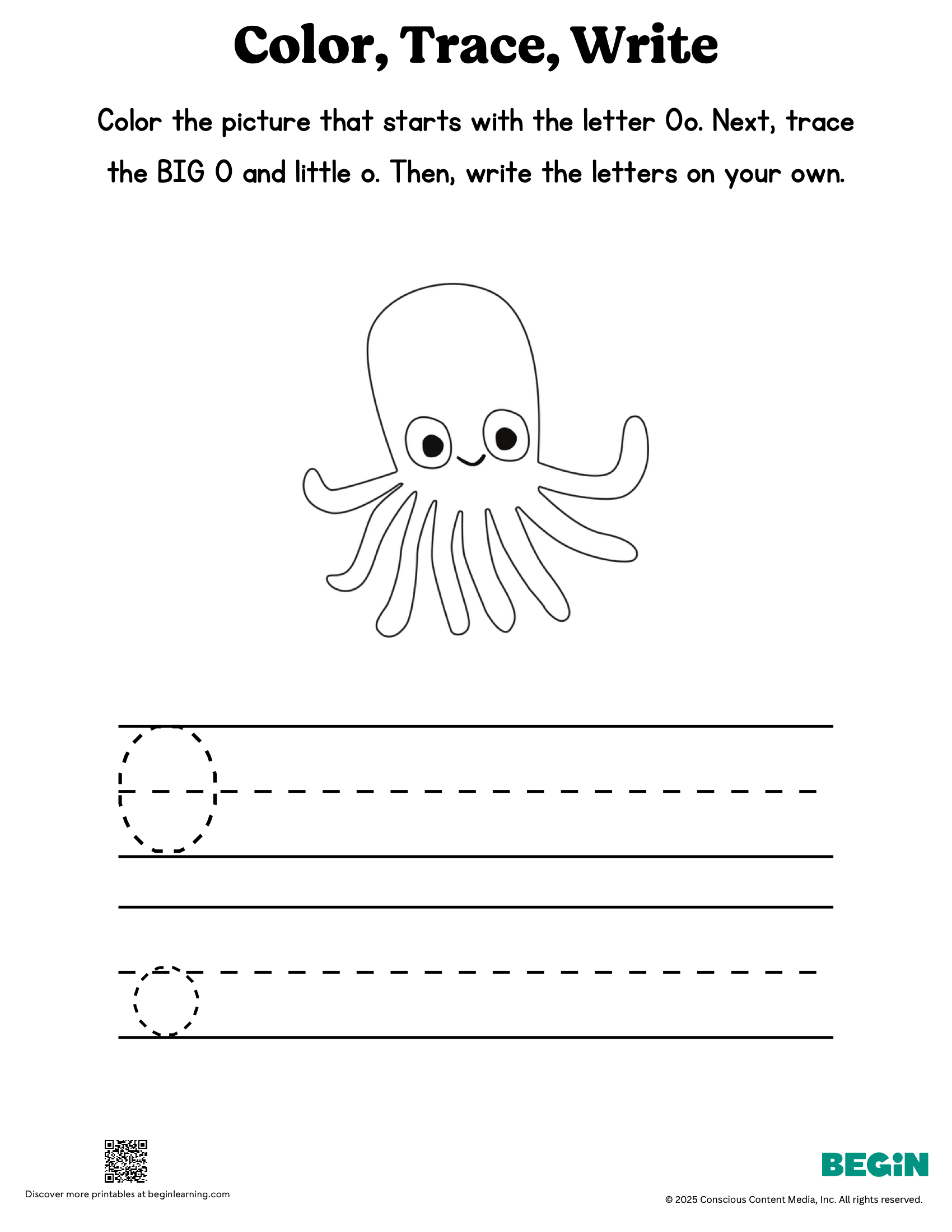
Help your child learn the letter “O” with this free printable coloring, tracing, and writing worksheet. It combines phonics awareness and handwriting practice in one engaging activity.
First, your child colors a picture of an object that begins with the letter’s sound—building a strong visual and auditory link. Next, they trace the letter along dashed lines to learn proper formation and hand movement. Finally, they write the letter independently on blank lines to apply what they’ve learned and strengthen fine motor skills.
Letter “O” Free PDF Printables – Uppercase, Lowercase, And Mixed Worksheets
Frequently Asked Questions (FAQs)
What makes this worksheet different from other letter “O” worksheets?
This format combines three learning modes in one activity-visual/creative (coloring), guided practice (tracing), and independent application (writing). Unlike worksheets that focus solely on letter formation, this approach integrates phonics through the coloring picture. Your child learns the letter shape, its sound, and a vocabulary word all in one session. The variety also keeps children engaged longer, since they’re switching between different types of activities rather than repeating the same task.
What if my child wants to skip the coloring and go straight to writing?
That’s completely fine, especially if your child is eager to practice writing. However, the coloring section does serve a purpose beyond keeping them busy-it reinforces the letter’s sound and warms up their hand. You might encourage them to do “quick coloring” where they don’t worry about staying perfectly in the lines, just enough to identify the picture. Or let them color after they’ve done the tracing and writing as a reward. Follow your child’s interest while gently explaining why each section helps them learn.
Should my child complete this worksheet in one sitting?
Not necessarily. Some children enjoy moving through all three sections, while others focus better when you break the worksheet into shorter sessions. You might color together one day, trace the letter the next, and practice independent writing on the third day. This spaced approach can actually help learning stick better and prevents frustration. Watch your child’s engagement level and adjust accordingly. The goal is positive practice, not completing everything at once.
What if my child already knows how to read and write the letter “O”?
Even if your child can already read and write the letter “O”, this free printable worksheet reinforces correct letter formation, spacing, and handwriting fluency. Tracing helps refine fine motor control and strengthen the muscles needed for consistent writing. The coloring activity also reinforces phonics by connecting the letter sound with a visual image, supporting reading and spelling development. Repetition through structured practice helps children gain automaticity, confidence, and long-term writing accuracy.
What if my child’s independent writing looks very different from the traced letters?
That’s completely normal and expected. Tracing with guides is much easier than writing from memory. Your child is building new skills, and it takes time for their hand control and letter memory to develop. Look for improvement over time rather than perfection on the first try. Celebrate when they remember to start at the top, when the letter faces the right direction, or when they stay mostly on the line. With repeated practice across multiple sessions, their independent writing will gradually look more like the traced version.
Which letter “O” worksheet should we start with: uppercase, lowercase, or mixed-case?
Start with uppercase if your child is new to the letter O. Uppercase letters typically use simpler strokes and sit uniformly on the line, making them less confusing for beginners. Once your child writes uppercase confidently, introduce the lowercase version on a separate worksheet. Finally, use mixed-case worksheets when they’re ready to practice switching between both forms. This progression builds from simpler to more complex and prevents overwhelming them with too many new formations at once.

Want to support your child’s early literacy, math skills, and creativity?
Try HOMER free for 30 days