Make music and math come together with this playful pattern worksheet for kids from HOMER! Kids practice identifying and extending patterns—a foundational early math skill—by spotting what comes next in the sequence.
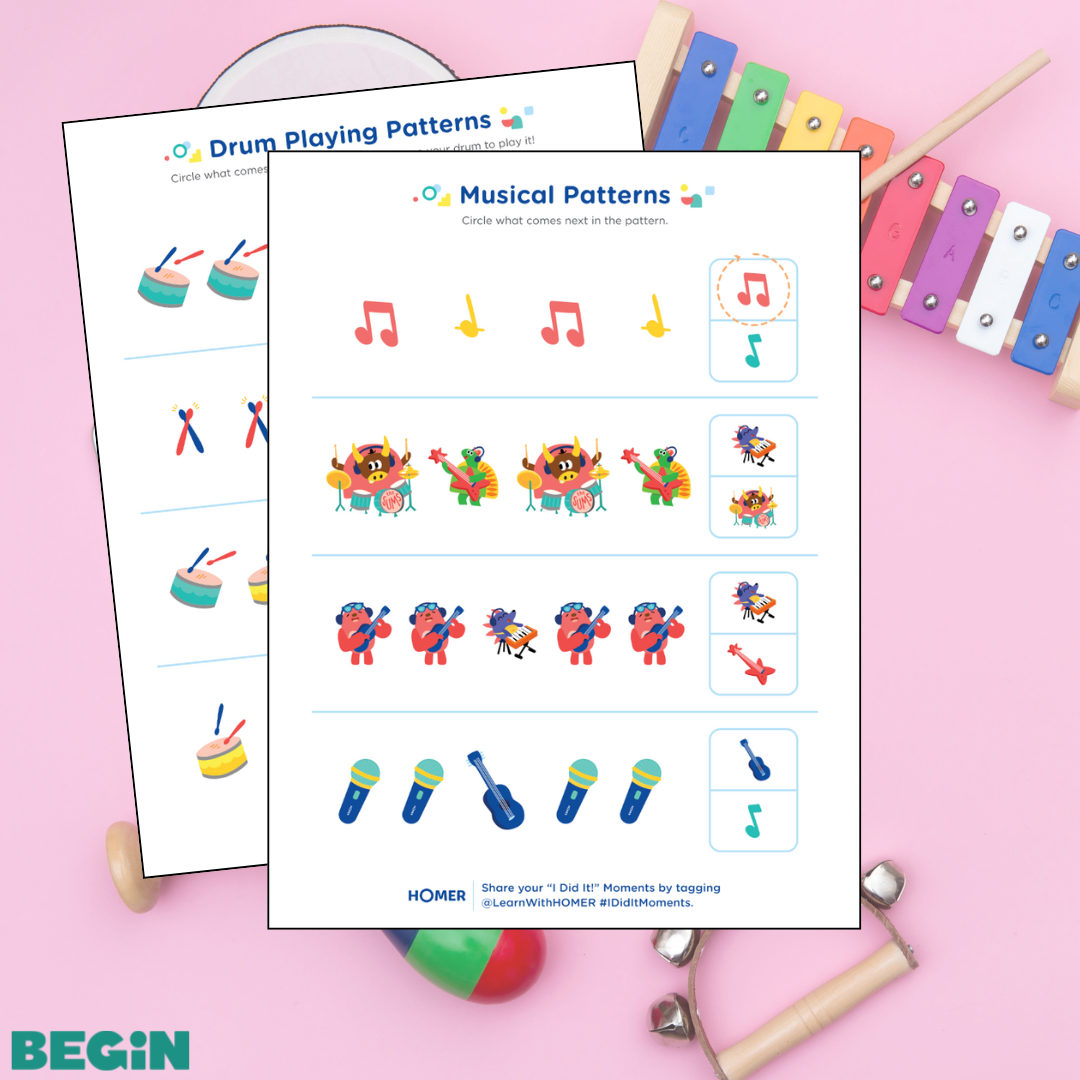
Materials Needed:
🖨️ Printed “Drum Pattern” sheet
✏️ Pencil, marker, or crayon for circling answers
⏱️ Time Needed: 10 minutes
👩👧 Best As: A do-together activity (younger kids may need guidance with patterns; older kids can complete more independently)
How to Use:
- Print the drum pattern page.
- Look at each row of pictures together.
- Talk about the pattern you see (ABAB, AABB, or another).
- Help your child circle what comes next in the sequence.
- For extra fun, act out the pattern using claps, stomps, or pretend instruments.
Build early math skills and bring learning to life with music and movement!
Why Learning About Patterns Matters for Growing Minds
Patterns are a key building block in early math learning. Recognizing patterns helps children notice order, make predictions, and build reasoning skills—all of which connect to problem-solving, number sense, and even coding later on. Simple repeating patterns children learn in preschool and Kindergarten include:
- ABAB: air guitar, drum, air guitar, drum
- AABB: clap, clap, stomp, stomp
- ABCABC: drum, piano, guitar, drum, piano, guitar
✨ Want to make it even more meaningful? Act out the patterns together! If the pattern is “air guitar, air guitar, piano,” pretend to play an air guitar twice, then switch to a piano. Moving through the patterns helps kids connect math with rhythm, memory…and fun! For extra fun, you can make up some of your own musical patterns together!

Want to support your child’s early literacy, math skills, and creativity?
Try HOMER free for 30 days