
You want your child to become a confident reader. One of the best ways to do that is to help them learn high-frequency words. These words are the ones your child will see in nearly every book they open.
Because they’re so common, high-frequency words provide the building blocks for children’s reading success. Learning to recognize these words quickly and automatically is an important step in becoming a fluent reader.
There are many ways you can help your child master these words. However, first, you need to understand what they are.
Key Takeaways
- High-frequency words are the words your child sees in many books they read.
- Learning these words fosters communication and content skill, two of the 6Cs* that inspire the Begin Approach to helping kids thrive in school and life.
- Knowing high-frequency words helps your child become a more confident and proficient reader.
- Some practical ways to help your child master high-frequency words include making learning fun, reading together, going on word hunts, making word soup, practicing spelling high-frequency words, making reading personal, creating a word journal, and doing sensory activities.
Table of Contents
- What Are High-Frequency Words?
- What’s the Difference Between Sight Words and High-Frequency Words?
- Which Words Are Considered High-Frequency?
- Why Are High-Frequency Words Important?
- How to Help Your Child Master High-Frequency Words
What Are High-Frequency Words?

Back in the 1930s, Dr. Edward William Dolch started studying how children learn to read. He found that certain words make up a high percentage of the text found in books for young readers.
Using his research, Dolch compiled a list of 220 words that were used most frequently in children’s books. He also created a list of 95 common nouns. Between the two lists, there are 315 words.
Dolch believed that if a child mastered those words by the end of third grade, they would be able to read proficiently. Though Dolch wrote his list long before your child was born, it’s not out of date.
Subsequent studies have shown that these words continue to make up most words in children’s books. Today, teachers and reading specialists refer to Dolch’s list of words as “high-frequency” words, sometimes also called sight words.
To become a good reader, your child needs to recognize these words by sight, meaning they shouldn’t need to stop and sound them out. And the best way for that to happen is through lots of practice.
What’s the Difference Between Sight Words and High-Frequency Words?
It’s important to understand the difference between sight words and high-frequency words. These words are sometimes confused with one another, but they are not necessarily the same.
Sight words are chosen because of how they’re learned (some can’t be sounded out). They need to be memorized for instant recognition, especially irregular ones. High-frequency words, on the other hand, are chosen because of how often they appear in texts.
Not all sight words are high frequency words and not all high-frequency words are sight words, but there is overlap between the two groups. High-frequency words are the most common words in print, while sight words are words a child can recognize instantly (which may include many high-frequency words, but not only those).
Because some high-frequency and sight words don’t follow regular phonics rules, memorizing them is important. However, teaching kids phonics and phonemic awareness still makes a big difference in mastering these words, so the rules that do apply should be used when initially teaching both high-frequency and sight words.
Which Words are Considered High-Frequency?

Before your child can practice, you need to know what words to work on. The main 220 high-frequency words are broken down by grade level. Here are a handful of the words you’ll find on each:
Pre-K
- The
- To
- A
- I
Kindergarten
- We
- You
- They
- On
- Withs
First Grade
- Could
- From
- Any
- Know
Second Grade
- Us
- Very
- Because
- Been
- Does
Third Grade
- About
- Better
- Bring
- Carry
- Clean
There’s also a list of 95 high-frequency nouns. Here are some of those words:
- Baby
- Toy
- Children
- Picture
- Bird
- Day
As you can see, these words are ones your child is likely to encounter many times in different types of children’s books.
Why Are High-Frequency Words Important?
High-frequency words are important for children to master because they make up 50–70% of words in children’s books. If kids can instantly recognize them, it frees up mental energy for decoding longer or less common words.
The service words (like the, and, is, to, you) provide the framework of language. The nouns (like dog, ball, house, tree) give kids the content to fill that framework. Together, they let kids read and write meaningful, complete sentences early on without needing to sound out words when reading or struggling to spell basic words when writing.
Some high-frequency words are decodable (can, run, not), reinforcing phonics skills. Others are irregular (was, said, one), so children must memorize them as sight words. This combination helps kids apply phonics where it works and recognize exceptions.
When children master these words, they can read familiar books and simple sentences on their own. Early success = motivation to keep reading!
How to Help Your Child Master High-Frequency Words

Now that you know what high-frequency words are and why they’re so important, here are some practical ways to help your child master them.
1) Make Learning Fun
Learning to read doesn’t have to be boring. When working with your child, steer clear of mindless drills or never-ending flashcard sessions.
Instead, look for ways to make learning more enjoyable. For example, pick engaging activities that allow your child to practice what they’re learning without making them miserable.
You can accomplish a lot in just a couple of minutes throughout the day. If you’re looking for a quick way to make reviewing high-frequency words part of your daily routine, give this activity a try.
First, put some index cards in a file box so they’re easily accessible. Then, take five index cards, choose five high-frequency words or sight words, and write one on each card. These are the words you’re going to work on right now.
Each day, have your child read those five cards. If they read a word correctly and instantly, put a checkmark on it. When a card has three checkmarks, move it to the back of the box. Then, add a new word into the mix. You may even incorporate a sticker chart with a small prize for each word memorized for a touch of fun!
Once there are ten cards in the back, add a weekly review session to your routine. Go through the mastered words quickly once a week. Any word your child has forgotten (which is totally normal) goes back to the front of the box. Add them back in as a part of your daily five.
2) Read Together
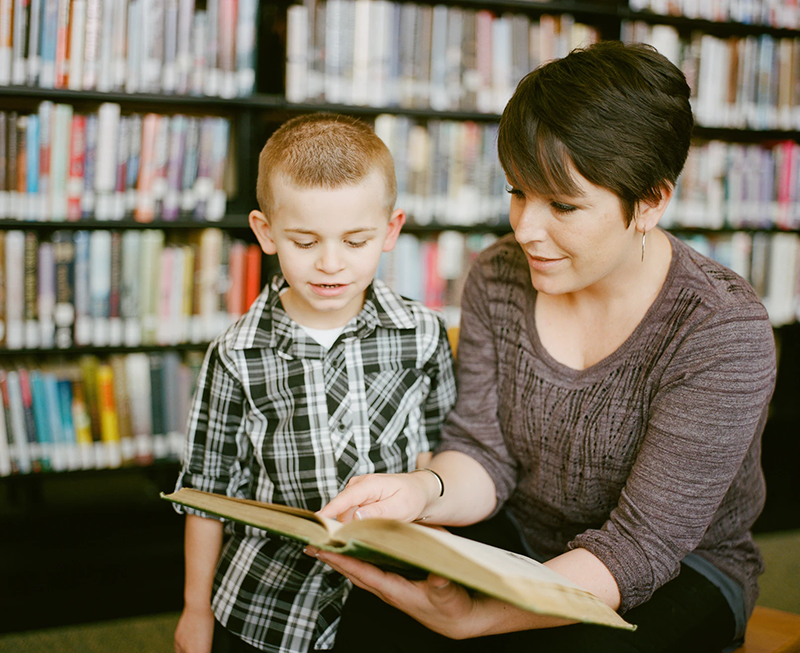
It’s important to model good reading for your child. One of the best ways to do this is to spend time reading together every day. When you sit down to read with them, stop to point out the high-frequency words that pop up in the text.
As your child starts recognizing these words, pause when you come to one. Then, ask them to read the word you stopped on.
This activity helps your child become familiar with the words and how they look in context. It also allows you to gauge their understanding of the words. If your child is having trouble reading a certain word, you know it’s one you need to focus on.
3) Go On Word Hunts
You want your child to understand that high-frequency words are everywhere. One way you can do that is by having them go on word hunts.
If you’re out and about, ask them to keep their eyes peeled for high-frequency words. Encourage them to look at signs for words they can read. When they find one, offer plenty of praise for their discovery.
You can also give your child a newspaper or magazine and a pen. Ask them to look through the words and circle the words they know. Once they’re done, count the circled words together. Point out how often these words are used.
Your child can also practice searching for sight words and high-frequency words with the HOMER app, where you’ll find a variety of sight word games and activities to help them master high-frequency words.
As they play Sight Words Memory Match or Soak and Sort Sight Words, they’ll be learning to read these words. And since the app creates a personalized learning environment, your child can get started no matter what reading level they are at.
While they play, the HOMER learning journey can gently guide them along the path to becoming better readers.
4) Make Word Soup

Help your child stir up a pot full of high-frequency words! To play, write some high-frequency words on index cards. Write one word on each card in large letters so it’s easier for your child to read. Then, get out a big soup pot and a large spoon.
When you have your materials gathered, hide five index cards around the room. Then, call your child over. Ask them to find the cards and add them to your soup pot.
As they find each word, have them read it aloud, dump it into the pot, and give it a stir with the spoon.
When all the cards have been added to the soup, use the spoon to fish out a word. Hand it to your child and ask them to read it. Continue scooping out words until they’ve read them all again.
5) Practice Spelling High-Frequency Words

Spelling and reading go hand in hand. To help your child improve their reading skills, help them learn to spell high-frequency words.
To make it fun, connect spelling with physical or hands-on activities. For example, ask them to jump up and down while spelling the word the. As they jump, they can say “T-h-e spells the.” You can also have them skip, run, crawl, or do jumping jacks as they spell or tap their arms or their stick on a finger.
Manipulatives such as Scrabble blocks or letter tiles are another fun way to practice spelling. Ask your child to use the letters to spell a word you call out. Once they spell the word correctly, have them read it to you.
6) Make Reading Personal
Sylvia Ashton Warner (1908-1984) was an educator who believed that incorporating children’s experiences made literacy learning easier and more meaningful. She thought it was critical for kids to use their own voices.
She developed a system of learning called the Language Experience Approach (LEA).
LEA reinforces high-frequency words by connecting them to each child’s personal vocabulary. It links storytelling, or spoken words, with words in print. At its heart, it is a collaborative learning experience between a child and a teacher.
Try coupling this fun activity with the LEA approach to learning.
What does your child love to do? Let’s say they’re an adventurer whose curiosity blooms when they spend time in the woods. Go for a walk, focusing on the collaborative experience. Ask questions. Encourage your child to engage in dialogue. Highlight sensory details.
When you return home, ask your child to describe their experience. While they tell you their “woods story,” transcribe it, using their exact words. Then read the transcription back to them. Reread it, paying extra attention to the high-frequency words.
When these high-frequency words are connected to your child’s experiential story, the words are more easily stored in their memory.
7) Create a Word Journal
Make a word journal with your child. You can buy a simple notebook, staple a few pieces of paper together, or, if your kid loves art, you can get creative and make a journal together using cardboard, paper, a hole punch, and yarn.
Separately, print out a list of high-frequency words and put it somewhere you and your child will see it often, like the fridge. Every time they see or use one of the words, your child can write it on a page of their word journal.
Each time your child fills a page, challenge them to tell a story using as many of the words as possible.
8) Engage All of Your Child’s Senses
The more senses your child uses while they’re learning, the more pathways they create in their brain. Multiple pathways mean more high-frequency word retention.
How can you incorporate the senses into your child’s high-frequency word learning?
- Place flour, salt, or sugar into a deep bin and ask your child to write words with their finger.
- Cut letters out of cardboard and have your child trace them.
- Have your child form letters and words out of play dough or clay.
- Create letters out of cookie dough, bake them, and eat them. Yum!
- Write giant words with chalk on the sidewalk or a patio. Walk along the shape of each letter.
- Spell words by forming letters with pipe cleaners.
Be Your Child’s Reading Coach

With just a little practice each day, you can help your child improve their reading skills. As you coach your child in mastering high-frequency words, you’ll be setting them up for reading success.
To make learning these words even more fun, let them play with the HOMER app. It will help your child practice those critical building-block words through engaging activities. And as they practice regularly, they’ll become an even better reader!
*The 6Cs Skills Framework is a science-backed framework designed by acclaimed developmental psychologists and learning scientists Dr. Kathy Hirsh-Pasek and Dr. Roberta Michnick Golinkoff (Becoming Brilliant, 2016).
Frequently Asked Questions
What is a low-frequency word?
A low-frequency word is, as you might expect, a word that isn’t found often in children’s books. Low-frequency words can become sight words, just like high-frequency words, but the process of learning them takes longer.
Interestingly, your child’s name, which is most likely a low-frequency word, is one of the first sight words they may acquire. But that makes sense. They see it all the time!
For the tens of thousands of words that fall into the low-frequency category, reaching sight word status only comes when your child can make connections between the spelling of the word, its pronunciation, and its meaning.
When these three components of the word are glued together, your child will remember them.
How many high-frequency words should I teach my child per day?
There is no hard and fast rule to determine how many high-frequency words your child should learn each day. It’s much more important for them to have a solid recognition of fewer words than a “sort-of” understanding of many.
Try beginning with three words a day. You’ll be able to tell if that’s too many or not enough. On each subsequent day, review the previously memorized words before adding new ones. If your child is whizzing through the old words, speed up your pace. If not, maybe slow it down.