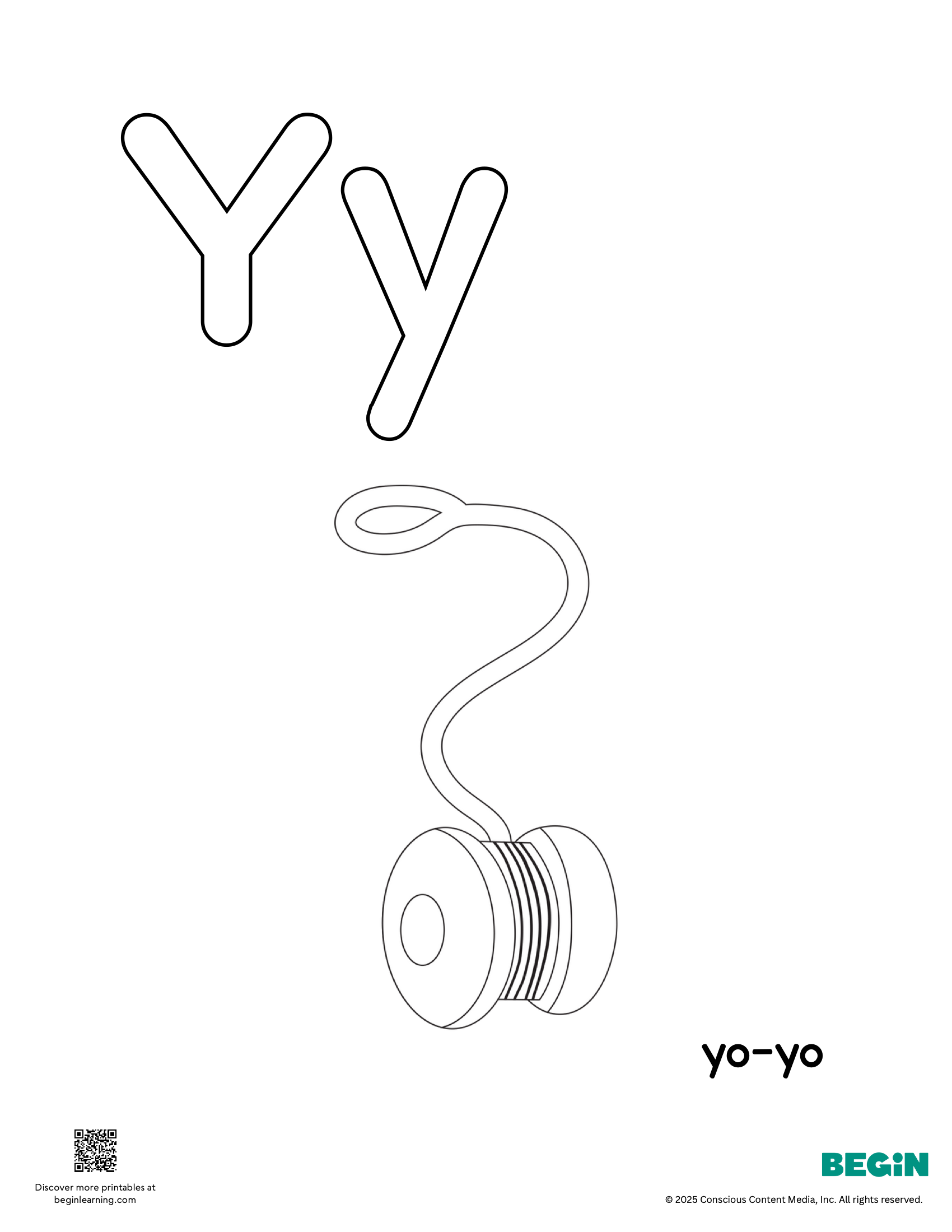
This free letter Y coloring page helps young learners practice letter recognition while building fine motor skills. Children color the letter alongside themed images, making letter learning creative and engaging.
Letter Y Coloring Practice – Free PDF Printables
Frequently Asked Questions (FAQs)
Why is coloring letters important for my child?
Coloring letters helps children pay close attention to letter shapes, which strengthens recognition and memory. As your child colors, they spend extended time observing the details of how each letter is formed: the lines, curves, and angles that make it unique. This focused attention helps letters stick in their mind more effectively than quick exposure alone. Coloring also builds the fine motor control needed for future writing. Holding crayons, controlling pressure, and working within boundaries all develop the same hand muscles and coordination used in pencil grip and letter formation. By combining creativity with letter learning, coloring keeps children engaged and helps them associate letters with positive, enjoyable experiences.
How does this worksheet support letter recognition?
This worksheet gives your child repeated visual exposure to the letter form through focused coloring time. The images paired with the letter also create connections between the letter, its sound, and real words, which supports early phonics awareness. This combination of visual focus, fine motor practice, and sound association creates multiple pathways for letter learning.
Does my child need to know the Letter Y before using this worksheet?
No, this coloring page can introduce the Letter Y as easily as it can reinforce it. Whether your child already recognizes the letter Y or is seeing it for the first time, coloring provides a low-pressure, hands-on way to explore it. As they color, you can mention the letter’s name and sound to help them make the connection. Repetition and encouragement will help the letter feel more familiar over time.
What if my child doesn’t stay in the lines?
That’s completely normal and part of the learning process. Early coloring is about exploration, not perfection. Scribbling still helps develop hand strength, control, and confidence. Encourage your child’s effort rather than focusing on neatness. You can model gentle tracing or coloring if they’re open to it, but the main goal is to keep the activity positive and engaging. Every mark on the page helps them build comfort with letters.
How can I tell if my child is learning from this coloring page?
Learning shows up in small, gradual ways rather than sudden breakthroughs. You might notice your child starting to recognize the letter when they see it in books, on signs, or in their name. They may point it out spontaneously or respond correctly when you ask, “What letter is this?” Some children will begin making the letter’s sound or naming it without prompting. Others show learning through their coloring itself: spending more time on the letter, talking about its shape, or comparing it to other letters they know.
Don’t worry if progress feels slow or inconsistent. Letter recognition develops over weeks and months, not in a single session. The fact that your child is spending focused time with the letter, even if they can’t name it yet, means learning is happening. Celebrate small signs of recognition and trust that repeated exposure through coloring and everyday encounters will build familiarity over time.
Should I pair this coloring page with other letter activities?
Yes, pairing coloring with other activities helps reinforce letter learning through multiple experiences. After coloring, you might look for the letter in books you read together, hunt for it on signs during a walk, or practice forming it with play dough or finger painting. You could also trace the letter in sand, build it with blocks, or find objects around the house that start with its sound.
These varied activities help children see the letter in different contexts, which strengthens recognition and memory. However, there’s no need to do everything at once. Even just coloring and talking about the letter is valuable. Add other activities when they feel natural and when your child shows interest, not as a requirement. The goal is making letter learning feel playful and connected to everyday life, not like a structured lesson plan.

Want to support your child’s early literacy, math skills, and creativity?
Try HOMER free for 30 days