Learning to print and write the letter “A” is easy with these free printable worksheets for kindergarten and early learners. Each worksheet includes uppercase and lowercase letter A practice with guided lines, directional arrows, and clear starting points that encourage proper handwriting technique. These pages help strengthen pencil control, improve spacing awareness, and build confidence in early writing skills.
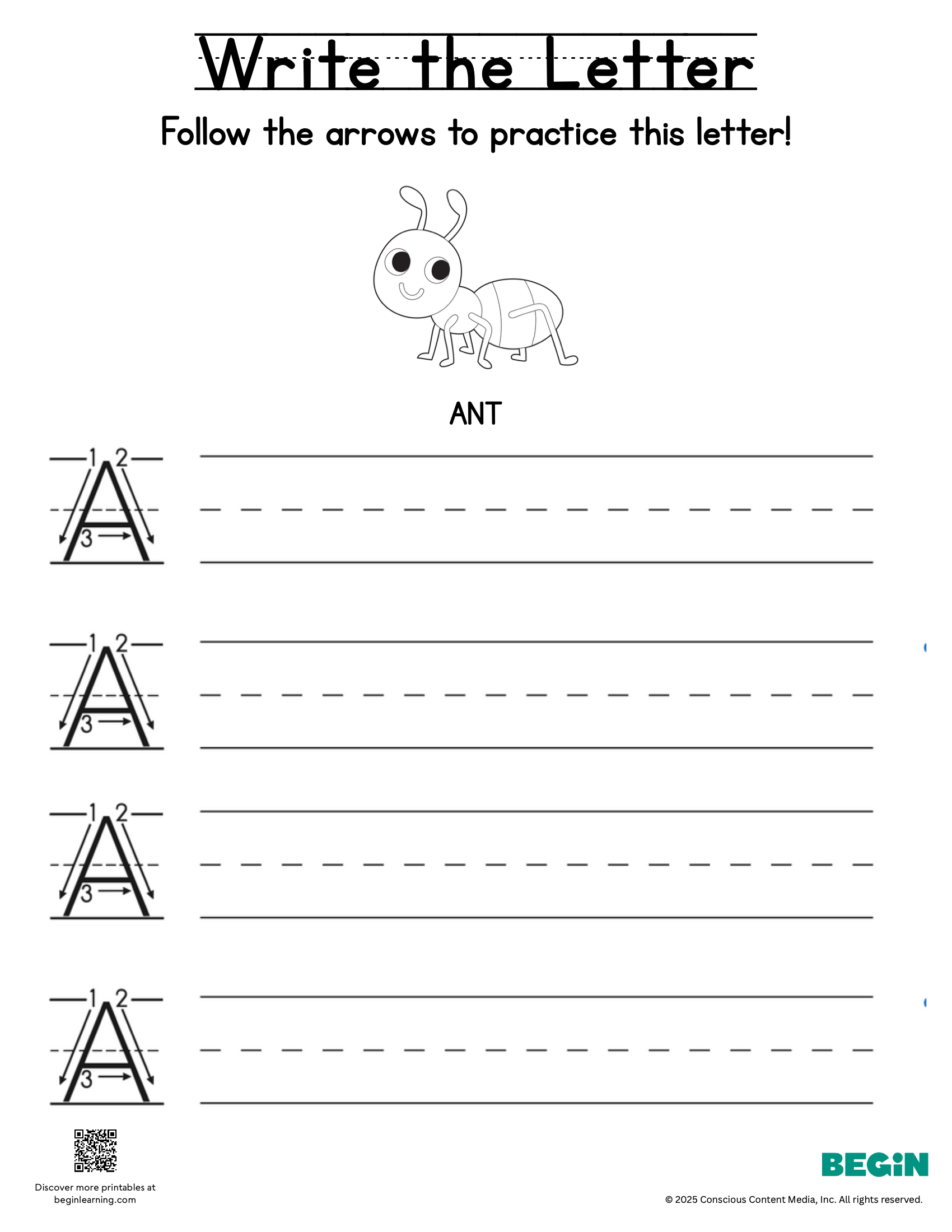
Uppercase Letter “A” Printing & Writing Practice Printable
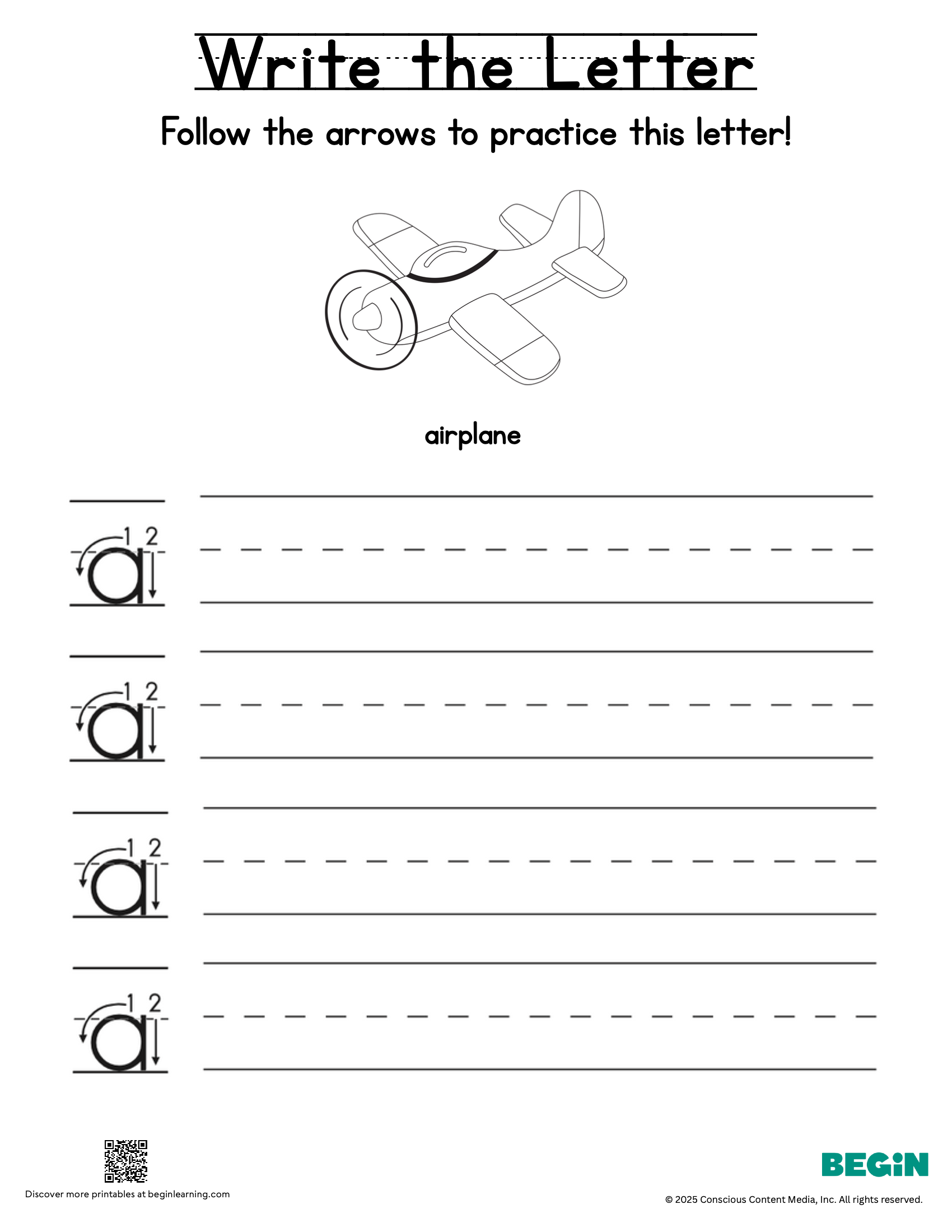
Lowercase Letter “A” Printing & Writing Practice Printable
Frequently Asked Questions (FAQs)
What is this letter printing worksheet for?
This worksheet is designed to help children independently print the letter “A” through structured, guided practice. With support features including stroke guides, midlines, and starting dots, learners gain confidence in forming both uppercase and lowercase versions of this letter accurately. Repeated practice builds handwriting fluency and strengthens the motor control needed for writing full words and sentences. Each session with this worksheet helps cement proper letter formation habits.
How does this worksheet help my child learn letter printing?
The worksheet provides visual cues-directional arrows, a model letter, and baseline guides-that help children recall the letter shape and form it with increasing independence. This scaffolded approach bridges the gap between tracing and completely independent writing. Children learn to start at the correct point, follow proper stroke order, and judge appropriate letter size, all while building the hand strength and coordination needed for fluent handwriting.
How is this different from tracing or coloring worksheets?
While coloring builds letter recognition and tracing teaches basic formation, printing requires your child to produce the letter independently using only visual guides. This is a more advanced skill that develops self-reliance in letter writing. Printing strengthens motor memory differently than tracing because your child must recall and execute the letter form without physical guidance, making it an essential step toward fluent, automatic handwriting.
When is my child ready to start letter printing?
Most children are ready to begin printing individual letters after they’ve had substantial experience with tracing and can hold a pencil with control. Signs of readiness include successfully tracing letters with minimal drift, interest in writing independently, and ability to copy simple shapes. This readiness can emerge as early as age 4, but varies significantly by child. If your child struggles, return to tracing activities for a few more weeks before trying again.
What if my child’s printed letters look messy?
It’s completely normal for printed letters to be uneven, oversized, or imperfectly formed during early practice. Avoid focusing on perfection or neatness. Instead, encourage your child to use the lines as guides, start at the dot, and slow down during formation. Offer gentle support when needed-“Let’s start at the top together”-but allow room for independent practice and natural improvement. Celebrate their effort and small improvements over time. Accuracy develops gradually with repeated practice.
How often should we practice letter printing?
Consistency matters more than length. Short sessions-about 5-10 minutes, 2-3 times a week-are ideal for building skills without fatigue or frustration. You can use different versions of this worksheet (uppercase only, lowercase only, or mixed upper and lowercase practice) across multiple sessions to reinforce mastery from different angles. Some children benefit from daily brief practice, while others do better with spaced repetition. Follow your child’s engagement level.
Should I correct my child’s letter formation during practice?
Model the correct form alongside them rather than interrupting mid-writing. Use supportive phrases like “Let’s try starting at the top together” while pointing to the arrows or starting dot. Demonstrate once, then let them try independently. Positive reinforcement works best-praise effort, acknowledge improvement, and let repetition naturally refine their technique. Overcorrection can decrease motivation. Their accuracy will improve gradually through continued upper and lowercase practice and gentle guidance.

Want to support your child’s early literacy, math skills, and creativity?
Try HOMER free for 30 days