The moment a child starts reading is special. Parents are often in awe of how well their little learner can sound out words. But how does phonological awareness come into play when it comes to developing this new skill?
Most people are often surprised to discover that children can learn to read at such a young age. And it all starts with phonological awareness.
Our learning experts know a thing or two about this. In this article, we’ll help you understand what it means and, most importantly, how to help your child develop it so that they can start reading confidently.
Let’s begin.
Key Takeaways
- Phonological awareness is the understanding of sounds by rhyming, segmenting, and blending syllables. It is a foundational skill necessary for reading.
- Phonological awareness develops through repeated exposure to language. Children first start to recognize rhymes and syllables, and then learn to blend sounds into words.
- Phonemic awareness, which is the ability to manipulate sounds, is a subset of phonological awareness. Children use their phonological and phonemic awareness skills together to decode, encode (spell words), and manipulate sounds.
- Games that help support your child’s phonological awareness include Mystery Sound Box, Repeat the Beginning Sound, Word Train, Rhyme Dance, Grandmother’s Trunk, How Many Syllables, The Name Game, Rhyme Singing, Producing Rhymes, Breaking Words Apart, Snack Segmentation, Sound Hopscotch, and Sound Be Gone.
Table of Contents
- What Is Phonological Awareness?
- How Does It Develop?
- Why Is It Important?
- 14 Fun Games to Build Phonological Awareness
- Tips for Supporting Your Child’s Learning
What Is Phonological Awareness?

Phonological awareness is an umbrella term that refers to the different skills a child needs to make use of while learning to read. These skills include:
- Segmenting (or isolating) syllables and sounds in words
- Rhyming
- Blending syllables and sounds together to form words
You can also think of phonological awareness as understanding sounds in our language and how they relate to each other.
When a child learns to combine and play with syllables and apply these skills to the words in a sentence, they are on their way to mastering phonological awareness.
If the idea of teaching your child these essential skills seems a little overwhelming, don’t panic. They may already be comfortable with one or two of them if your child is in preschool because they usually get exposed to songs, rhymes, stories, and language play on a daily basis.
This frequent exposure to language play helps children eventually start to create their own rhymes and also break words into syllables.
How Does It Develop?
Above, we mentioned that, like most language learning-related concepts, the more children are exposed to language play, the easier it is for them to understand the skills related to that particular concept.
For the most part, phonological awareness develops over time with exposure, and it often starts with awareness of rhymes and syllables. Then, and most critically, children begin to isolate individual sounds in words as well as blend individual sounds into words.
Many children pick up on rhyming at a very early age, which is not surprising considering how many nursery rhymes children get exposed to from birth on!
As children get older and more comfortable with language play, they then develop phonemic awareness, a subset of phonological awareness.
Why Is It Important?

In order to fully grasp the importance of phonological awareness, we first need to discuss what phonemic awareness is.
Phonemic awareness is a subset of phonological awareness. In a nutshell, it is the ability to identify and manipulate sounds. It focuses on how we understand the function of sounds, in particular phonemes.
A phoneme is the smallest unit of sound in a language. For instance, from the word cat, you have three individual sounds: c/a/t. We blend these individual sound units (phonemes) to form a word.
We can also break words down and change their meaning by just alternating the phonemes. For example, cat can turn into bat, hat, cap, etc.
Phoneme (letter sound) manipulation is a key part of phonemic awareness, and since phonological awareness includes understanding segmentation and blending, phonemic awareness is the aspect of phonological awareness that is the most impactful for learning to read.
Additionally, strength in other aspects of phonological awareness build skills in phonemic awareness. Together, these skills are crucial because they allow children to decode and encode (spell) words and manipulate their sounds.
The benefit of all of this ability is that it helps kids crack the alphabetic code and, eventually, start reading.
14 Fun Games to Build Phonological Awareness
1) Mystery Sound Box
This is an exciting game to help support young kids (around two to three years old) as they start differentiating sounds.
Start by putting several objects that make noise in a box. You could get a bell, a set of keys, a piece of paper, or a clicky pen, for instance.
Then ask your child to close their eyes as you take an object out and ring or jiggle it, crumple it up, or start clicking away. Ask your child to guess the object. Once they’ve guessed, they can open their eyes, and you can discuss the sound and how they knew or why they were tricked.
2) Repeat the Beginning Sound
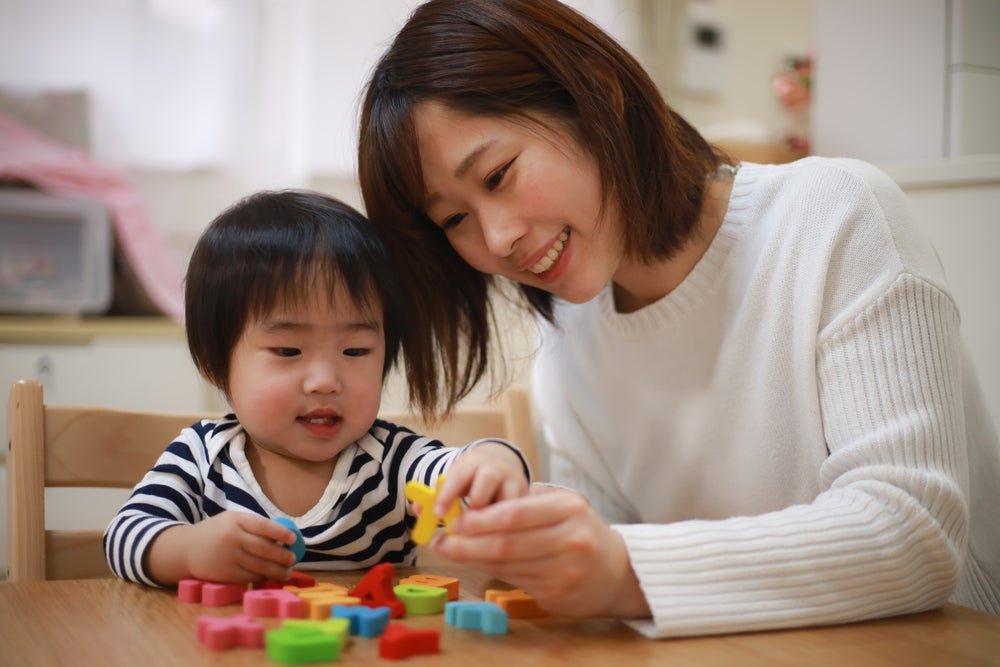
This is a game that will help your young learner get comfortable with phonemes. To play, all your child will have to do is repeat the sound at the beginning of a particular word.
For example, if you start with the word cat, your child will then need to create other words that begin with the /c/ sound—cap, car, cut, etc. (Notice that the words don’t have to rhyme.)
This is an excellent game to help children develop phonemic awareness, which, as explained above, is a crucial subset of phonological awareness. This fun activity can also help build your young learner’s vocabulary.
3) Word Train
While the previous game focused on the beginning sound, Word Train is about both the beginning and last sound of a word.
To play this game, you and your child will take turns saying a word that begins with the last sound of the previous word. For example, if you start with the word boat, the next word sequence could go tickle, lemon, nice, etc.
Notice that lemon followed tickle because tickle ends with an /l/ sound. With this game, the focus is on sounds, not spelling.
Keep in mind that this is a more advanced game, and it may take some time for your young learner to grasp it. This is absolutely fine! The more practice they get, the better.
4) Rhyme Dance
This is a simple game that also gets kids moving. Gather some picture cards with animals or other common objects on them. Go through the cards together, and say the word that describes each image.
Once your child is familiar with the cards, stand facing each other. Hold up two cards at once. Ask your child to say what the cards depict out loud. If the words don’t rhyme, they stand as still as a statue. If the two words match, they get to do a silly dance move.
5) Grandmother’s Trunk

Grandmother’s Trunk is one of those old-school games that many of us played in our childhood. In our version, everything in the trunk starts with the same sound (or, for a variation, ends with the same sound). Not only does it reinforce phonemes, but it’s a great memory game! If it’s been a while since you’ve played and you need some reminding, here’s how it goes:
The first player says, “I went to Grandmother’s trunk, and I found (an object, e.g., a sweater).”
The following player will then add to that by saying, “I went to grandmother’s trunk, and I found (an object, e.g., a sweater) and (an object, e.g., a sock).”
As the game continues, each subsequent player repeats what was said before and adds a new word. Players can take multiple turns. It all depends on how long you want the sentence to get!
6) How Many Syllables?
Many people were taught to understand syllables as the “beats” of a word. This is an effective and fun way for a child to start grasping the concept.
To start, begin with simple words that your child is already familiar with (mommy, daddy, banana, etc.).
As you play, show your young learner how to clap or stomp the syllables of a word. For example, table— /ta/ (clap or stomp) /ble/ (clap or stomp). And then count the syllables together.
Once you feel your child understands the beats of words, you can then make it a little more challenging by mixing up the syllables and asking them to say a word in the correct order.
What is corn pop? Popcorn! What is bow rain? Rainbow! You can then progress to two-syllable words that are not compound: what is ger-ti? Tiger! Next? Three-syllable words! What is ful-der-won? Wonderful!
The more your little one does this fun activity the better they’ll get at separating, connecting, and even rearranging the sounds of a word.
7) The Name Game
This is an easy game to play anywhere, whether you’re at home, in the car, or taking a walk. In this game, you point to objects, animals, or people, and your child says the first sound of the word.
For example, if you pointed to Grandma, your child would say, “Grandma, the first sound is /g/.” If you pointed to their truck, they’d say, “Truck, the first sound is /t/.”
You can also play this game in reverse. You can start with a sound and then ask your child to find something that starts with it. For instance, if you said “/m/,” they could point to a mug or muffin.
8) What Doesn’t Belong
In this game, your child listens to a group of words and identifies the one that doesn’t belong.
You can tailor this game to different skills or make different rounds to level up as you go. Start with rhyming words (and one non-rhyming word), and then try a set of words that, bar one, start with the same letter. After that, do another round where all words but one have the same final sound.
Every time your child identifies a word that doesn’t belong with the others, ask them to tell you what is different about the word.
9) Rhyme Singing

When we were younger and singing Itsy Bitsy Spider or Hickory Dickory Dock, it was all just fun and games (and lots of laughter!). But these classic rhymes were actually critical in helping us play with and understand different language components — particularly, rhyming.
You can help your young learner get familiar with rhymes by singing these types of tunes at home. If you need a little reminding or would love some background music, you can always check out the HOMER nursery rhymes section.
Happy singing!
10) Producing Rhymes
Once your child has heard and sung along to different nursery rhymes a few times, they might start to recognize rhyming words. They may even begin to point them out in the songs or the books you read to them.
This is an exciting time to encourage your young learner to start producing their own rhymes. They may even ask you questions like, “Do you know what rhymes with run? Sun!”
Don’t be surprised if they even add a nonsense word like “frun” into the mix. And don’t be shy of adding your own nonsense words as well. Who says learning can’t include silly fun?
11) Breaking Words Apart
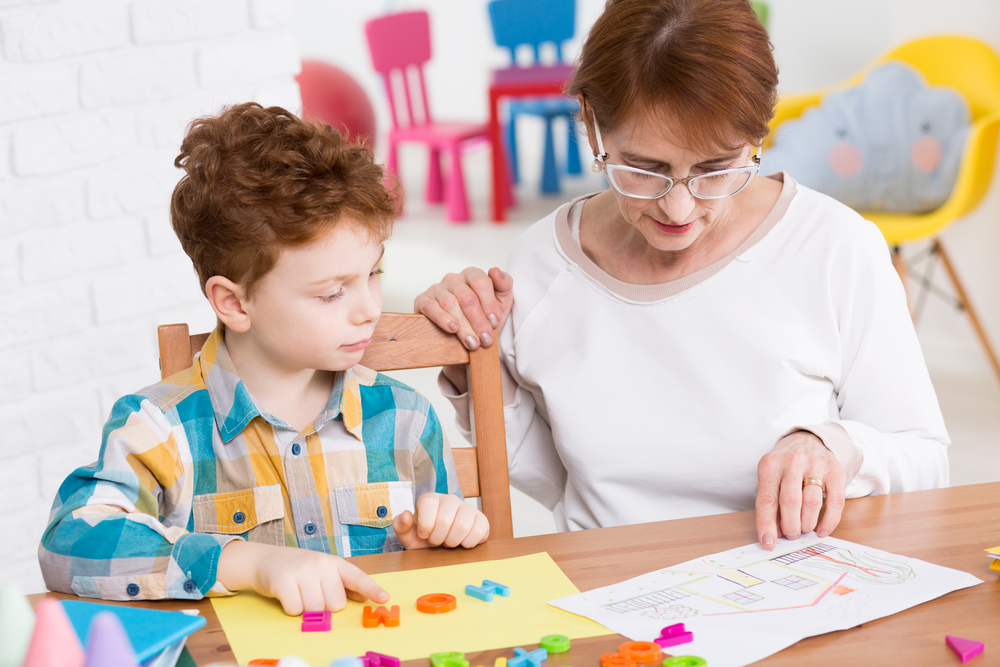
In an earlier game, we mentioned that children can have fun while learning by playing with the individual phonemes of a word. Now, we want to focus on having fun with larger sections (or syllables) of a word.
To begin doing this, you’ll need to say a word and then ask your child to take away a specific syllable from that word. For example, from “baseball,” you can ask your child to take away “base.” Then ask them what is left.
This might be a little tricky in the beginning, but with some practice, your child will get comfortable with the idea.
Breaking words apart, manipulating the sounds, and switching them up are all skills that develop phonological awareness, so this is a great and simple game to help your child grasp these concepts.
12) Snack Segmentation
This is a great activity during snack time. Begin this game by giving your child some crackers or carrot sticks. Then say a simple word like dog, cat, mom, or dad. As you enunciate each sound in the word, ask your child to move a snack to the side.
Once they’ve segmented the word, they can eat their snack! As your child gets better at this, you can try harder and harder words and yummier and yummier snacks.
13) Sound Hopscotch

Here’s another active game to play. Draw a hopscotch board with chalk, but instead of numbers in each square, put a letter inside. Then call out a sound, and have your child hop to the corresponding square.
As your child hops and jumps from square to square, they should say the sound they landed on.
14) Sound Be Gone
This last game is a tricky but fun one, challenging your child to understand how removing sounds will change a word. Start by saying a simple word like dog.
Then ask your child to say the word without the first sound, and then without the last sound. Make it even harder by asking them to say it without the middle sound.
Increase the challenge by asking them to change the sound at the beginning, end, or middle of the word.
Tips for Supporting Your Child’s Learning
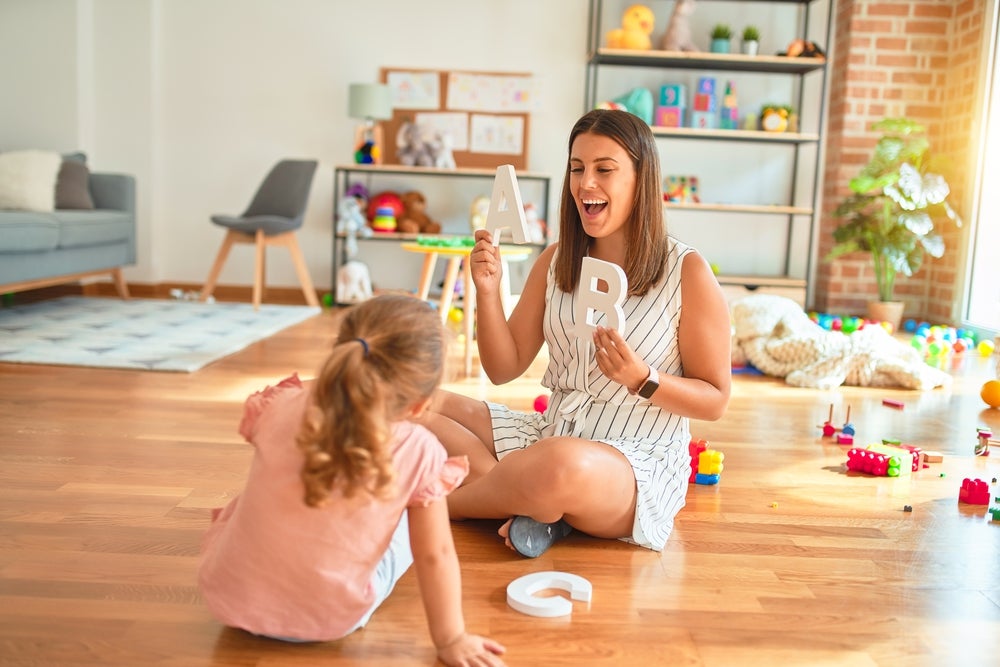
If you want to support your child’s learning at home, follow these tried-and-true tips.
Be Patient
Rushing your child’s learning can foster anxiety, which can slow down their progress. All new skills come in their own time. With a little practice every day, your child will be on their way to reading. Be sure to celebrate all of their little wins along the way.
Start Slowly
Start with a simple skill, like rhyming, and then build from there. Your child’s newfound confidence will help fuel their curiosity and desire to learn more complex concepts.
Stay Consistent
People often say, “Practice makes perfect.” But we like to say that practice makes progress! That certainly holds true for mastering phonological awareness. Be sure to dedicate a little bit of (fun) time each day to practicing these skills.
Relate Skills to Reading
It’s important to share with your child what all this skill-building is for. Open a book and connect their practice to the written word. If they know the end game is to be able to read a book on their own, they may be even more inspired to put the time in.
Bring the Fun
Whatever you’re practicing at home, it’s important to make sure it’s fun. The more interactive and engaging an activity is, the more likely your child is to want to do it again and again.
Act silly when you sing a rhyming song or read a rhyming book by acting out the words, making up a dance, or something else that will solicit lots of smiles and laughs along the way.
Go Digital
Give your child some extra practice with digital games tailored to build their phonological awareness. The Homer app, for example, teaches kids two to six years old to read by honing their foundational skills.
Phonological Awareness One Day at a Time

Once upon a time, none of us could read. We didn’t know the alphabet, the sounds of each letter, or even how to create a few rhyming words. And we’re certain we didn’t know the term “phonological awareness” when we started either.
But over time, reading became second nature and an important skill we use every day. We can pick up a book, magazine, newspaper, or any reading material and quickly connect the letters, sounds, and words to read fluently.
One day, your child will reach this stage, too!
But learning to read won’t (and can’t) happen overnight. This is a skill that takes lots of time and practice to develop. Strengthening your child’s phonological awareness is a key component of helping your little learner become a lifelong reader.
Begin’s Homer app is a fun way to help your child learn to read through interactive games, stories, and activities. In fact, our app has been proven to boost reading scores by up to 74% in just 15 minutes a day!
Frequently Asked Questions
1) How can phonological awareness be tested?
There are several ways to test phonological awareness. You could evaluate your child using observation, or you could get an informal or formal assessment.
During an informal assessment, you test skills like rhyming, sound matching, and onset-rime. Formal assessments are made through standardized tests.
Tests for phonological awareness include the Phonological Awareness Screening Test and the Phonological Awareness Literacy Screening Test.
2) How can I improve my child’s phonological awareness?
To improve your child’s phonological awareness, focus on skills like rhyming, identifying sounds, segmenting, and blending. It’s best to take one skill at a time. For instance, reading books, singing songs, and playing games with rhymes can help your child understand rhyme.
If your child needs more help identifying sounds, try practicing sound matching. Segmenting sentences and syllable clapping can improve your child’s segmenting skills.
When your child is ready for blending sounds, breaking words down sound by sound can improve these skills.
3) What are the signs my child might be struggling with phonological awareness?
Although phonological awareness develops at a different pace for every child, there are some signs that a child is struggling with phonological awareness and might need support.
For instance, if your preschooler has trouble learning nursery rhymes, counting syllables, or identifying alliteration, they may need extra help.
If your child is in elementary school and they cannot identify or blend sounds or make rhymes, it’s a sign they’re having trouble with the skill. If you are worried about your child’s progress, it’s a good idea to reach out to their teacher, who may suggest you contact a speech pathologist for advice.