
Just like adults, children have an internal monologue. Is what they’re saying positive and encouraging or negative and pessimistic? Engaging in positive self-talk can make all the difference for kids when it comes to their future happiness and success.
In this article, we’ll tell you what positive self-talk is, why it’s important, and how you can encourage it in your own kids.
Key Takeaways
- Positive self-talk refers to an optimistic, supportive inner monologue that encourages kids, helps them build confidence, and colors their outlook on the world around them. Its opposite is negative self-talk, which is harmful and can cause stress.
- Positive self-talk is important for kids because it helps create a positive self-image, influences behavior, impacts problem-solving and decision-making skills, and makes success more likely. It boosts confidence, reduces stress, and builds better relationships.
- Positive self-talk optimistically anticipates opportunities and focuses on positive characteristics.
- There are many ways to encourage positive self-talk, including reciting positive affirmations, being a great role model, identifying and stopping negative self-talk, encouraging self-compassion, praising positive self-talk, and making it fun.
Table Of Contents
- What Is Positive Self-Talk?
- Why Positive Self-Talk Is Important for Kids
- Examples of Positive Self-Talk
- Ways to Encourage Positive Self-Talk for Kids
What Is Positive Self-Talk?

Positive self-talk is just as it sounds: an internal monologue that’s supportive, optimistic, kind, and helps kids navigate the world more smoothly. They can use it as a tool to boost their confidence when trying something new or struggling with a task.
Negative self-talk, on the other hand, does just the opposite. It focuses only on mistakes or imagined deficiencies. This sort of talk can result in worry, lack of confidence, and feeling defeated.
Harnessing the power of positive self-talk for kids can be a helpful path to future success.
Why Positive Self-Talk Is Important for Kids
Now that we know what positive self-talk is, let’s discuss why it’s so important.
Creates Positive Self-Image
First of all, positive self-talk helps kids focus on their ability to try, resilience, and perseverance
Influences Kids’ Behavior
When our children see themselves as worthy and capable, they’re more apt to try something new or tackle a new challenge. Positive self-talk gives them the confidence they need to jump into the unknown.
Impacts Problem-Solving and Decision-Making Skills
When kids engage in positive self-talk, they are more prepared to tackle problems and make decisions.
Makes Success More Likely
Have you ever heard the saying, “If you build it, they will come”? It’s kind of like that with positive self-talk. If kids tell themselves they can do something, they’re more likely to succeed at it.
Boosts Confidence
Positive self-talk can make children feel more motivated and optimistic, resulting in higher confidence. And with this extra confidence, they’ll be more willing to take on new challenges and reach more of their goals.
Reduces Stress
Positive self-talk also offers mental health benefits. Children who engage in it experience less stress and have a better outlook overall.
Helps Build Better Relationships
Positive self-talk for kids has social-emotional benefits, too. How children feel about themselves impacts how they interact with others. When they feel confident and secure, they’re more able to make meaningful emotional connections with others.
Examples of Positive Self-Talk
It’s easiest to show what positive self-talk is by comparing it to its opposite, negative self-talk.
- Negative self-talk: “I’m no good at math.”
- Positive self-talk: “I’m proud of myself for trying hard to get better at math.”
- Negative self-talk: “I’ve never played this game before. I’m sure I’ll be bad at it.”
- Positive self-talk: “I’ll do my best to learn this game. I can ask for help if I need to.”
- Negative self-talk: “No one likes me. I hardly have any friends.”
- Positive self-talk: “I am kind and fun. I like the friends I have, and I will make more in the future.”
Ways to Encourage Positive Self-Talk for Kids
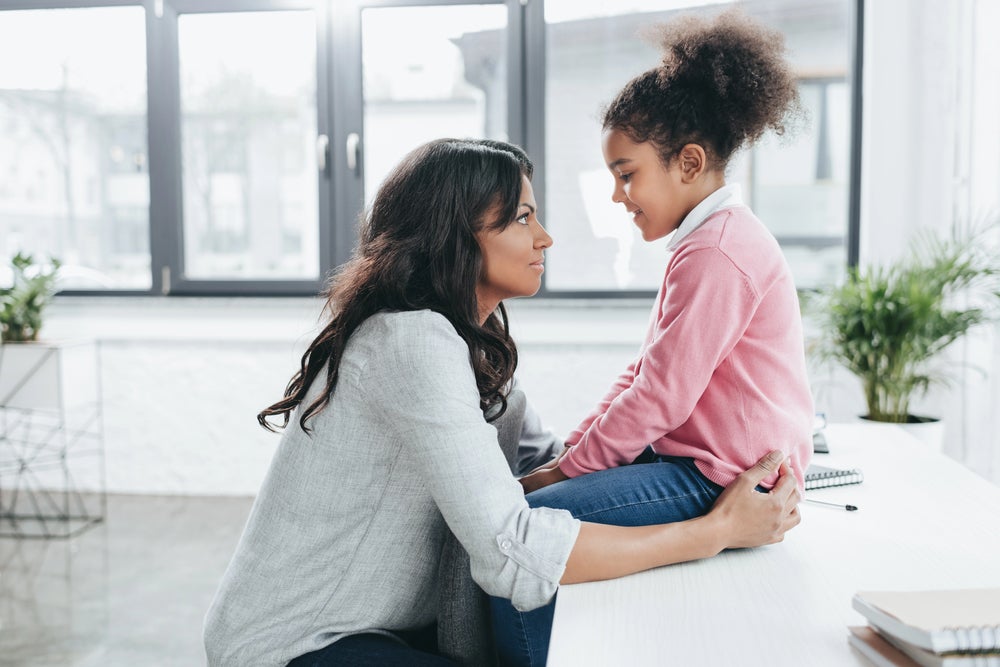
There are several things you can do with your child to encourage positive self-talk. Let’s take a look.
1) Teach Positive Affirmations
Whenever your child feels negative emotions, teach them a positive mantra to counteract the pessimistic thinking, such as “I will keep trying.” They’ll feel better about themselves as a result. You can even write the mantra on a sticky note and stick it on the mirror or the front door.
2) Be a Great Role Model
If you engage in positive self-talk, your child will follow your lead. So the next time you’re trying something new and it’s hard, model positive self-talk aloud.
For instance, if that knitted scarf doesn’t turn out as you planned, say “I’ll keep practicing. Then the next scarf I knit may be better.”
3) Spot and Squash Negative Self-Talk
Try to identify any negative sentiments and encourage your child to restate their feelings with growth-focused language. For instance, they can reframe “I can’t” as “I can’t, but I’m trying so I can improve.”
4) Encourage Self-Compassion
Encourage your child to practice being kind to themselves. You might also suggest that they speak to themselves as they would to their best friend.
5) Praise to Reinforce Positive Self-Talk
Praise your child’s effort and focus on their improvements in order to help them see their own growth. If they make a mistake, be sure they understand that mistakes are just part of learning.
6) Keep It Fun
It’s important to keep the practice of self-talk positive and fun. Think of activities you can do together to reinforce the habit. For instance, you could encourage your child to look in the mirror and tell their reflection something they love about themselves.
Staying Positive with Begin

Positive self-talk is an important social-emotional habit that will help your child develop their self-esteem and move through the world with optimism.
Begin offers apps and hands-on kits that reinforce your child’s social and emotional learning. For instance, Learn with Sesame Street teaches your child to identify and manage their feelings, empathize with others, and be a good friend.
All of Begin’s products make learning fun, because we know that when kids stay engaged, they can acquire new skills, embrace new challenges, and rise to new heights!
Frequently Asked Questions
What activities encourage positive self-talk?
There are many activities you can do with your child to encourage positive self-talk at home. For example, you could ask your child, “What do you like about yourself?” Then set a timer for a minute and see how many qualities they can say or write down in the time allotted.
Another idea is to have them play “coach” to themselves. Your child can pretend to be having trouble with something (e.g., reading, playing soccer, or mastering a new video game) and then coach themselves to success using encouraging words.
What is a short affirmative sentence for kids?
If you want a short affirmative mantra for your child, think about what they’re struggling with. Add the phrase “but I’m trying” to any “I can’t” phrase, such as “I can’t swim, but I’m trying.” Another idea is to pick out some positive attributes and string them together, such as “I am strong, brave, and kind.”
You might also encourage your child to say something like, “I believe in myself and my abilities” any time they’re experiencing worry or self-doubt.