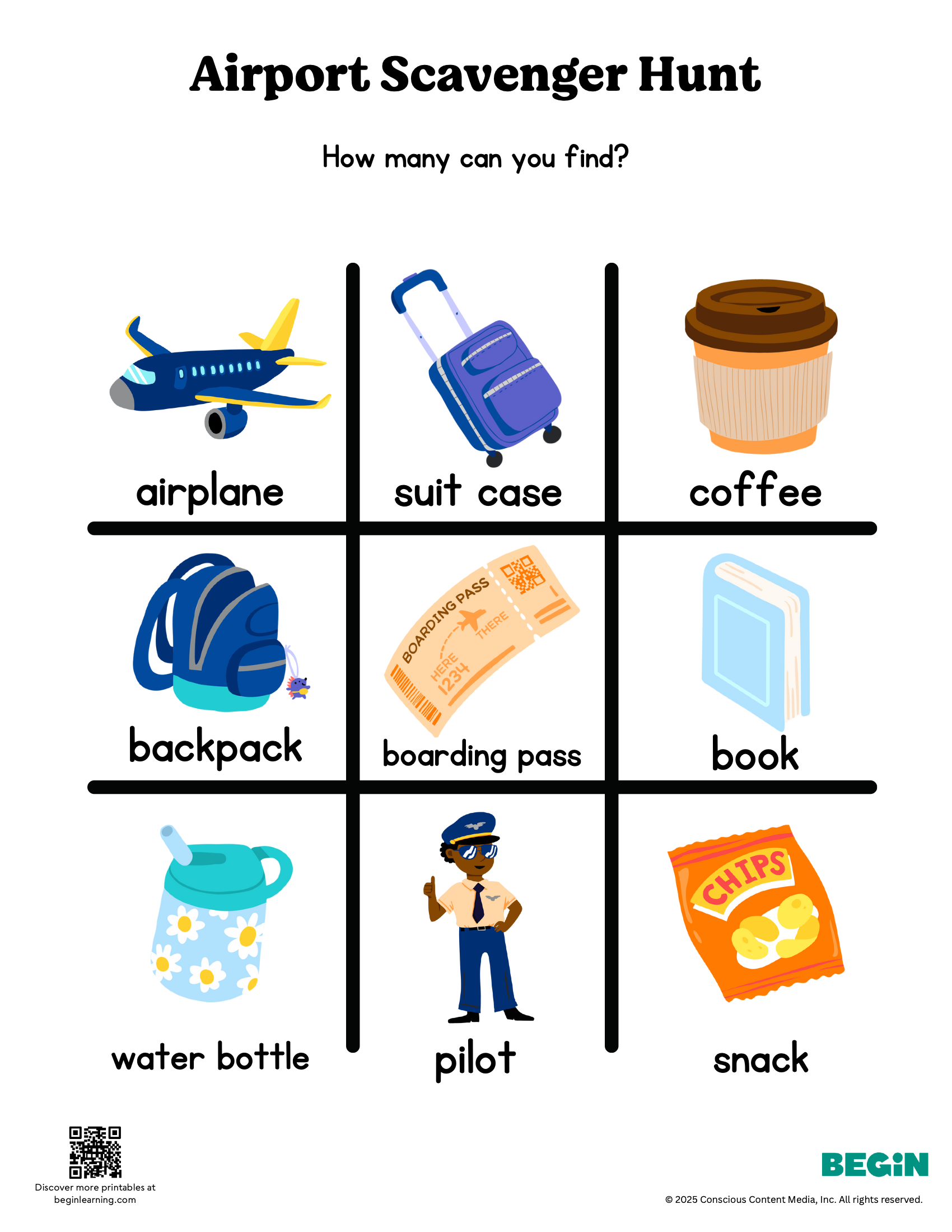
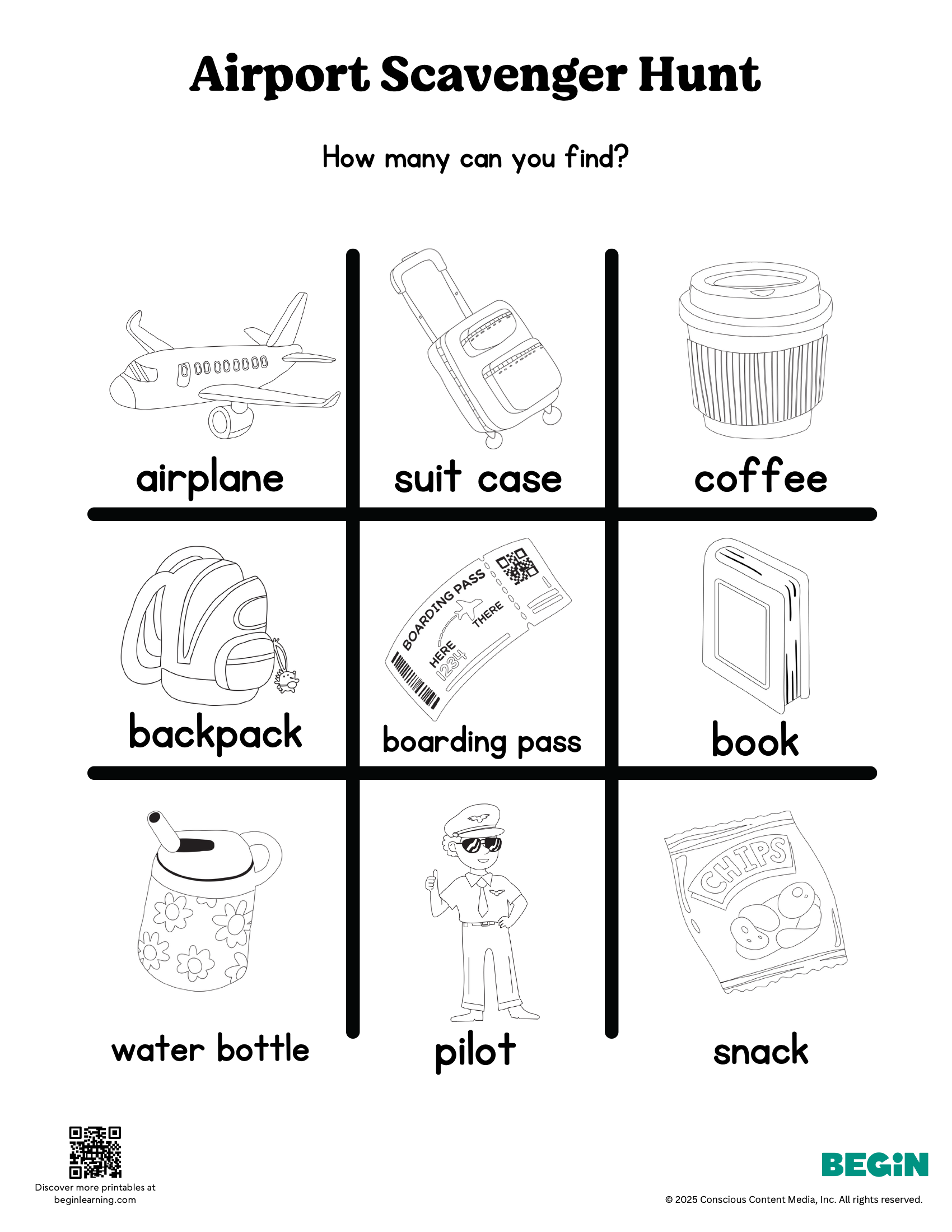
Turn everyday moments into learning opportunities with this free printable airport scavenger hunt worksheet. Designed for young learners, each hunt encourages children to find and name common objects related to the theme. As they search, they build observation skills, expand vocabulary, and engage in early categorization – all while having fun.
Whether you’re exploring in real life or imagining from home, this worksheet supports curiosity, language development, and critical thinking. Available in both color and black-and-white formats.
Free Airport Scavenger Hunt Color Printable
Free Airport Scavenger Hunt Black & White Printable
Frequently Asked Questions (FAQs)
What is an airport scavenger hunt?
An airport scavenger hunt is a simple yet engaging game where children search for listed items in their surroundings. These worksheets provide themed checklists that turn everyday exploration into a structured learning opportunity. Whether done indoors or outdoors, scavenger hunts encourage children to connect words to real-world objects – all while having fun.
What skills does the airport scavenger hunt develop?
Scavenger hunts help children strengthen key early learning skills such as visual discrimination, vocabulary recall, and attention to detail. As they identify and name objects, they also build confidence in using descriptive language and making real-world connections – all of which align with foundational literacy and cognitive development goals.
Do we need to be at a real airport to use this worksheet?
Not at all! While using this scavenger hunt at a real airport can make the experience more immersive, it’s just as effective when used at home or in the classroom. Children can complete the activity using themed books, pretend play, toy sets, or even online videos.
This kind of flexible use supports both real-world exploration and imagination-based learning – important components of early childhood development. It also makes the worksheet great for prepping kids before a real visit, reinforcing themed vocabulary, or simply engaging them in purposeful play on indoor days.
How can I adapt this worksheet for different learning levels?
Younger children may simply point to or circle the objects they find. Older learners can go a step further by describing items out loud or writing short sentences about what they found. For more advanced play, try setting a timer or asking children to categorize objects (e.g., colors, shapes, or size) as they go.
How does this worksheet support group learning or play?
This scavenger hunt encourages collaborative learning by giving children the shared goal of finding themed items together. Whether working with a sibling, friend, or small group, kids practice important social skills like turn-taking, active listening, and respectful communication. Working as a team also helps reinforce vocabulary and observation as children talk through what they see and compare their findings.
What should I do if my child struggles to find an item?
It’s completely normal for some items to be harder to spot – especially if you’re using the worksheet in a different setting than intended. Instead of focusing on completing the list perfectly, shift the emphasis to observation and exploration. Try offering gentle prompts like, “What shape is it?” or “Have we seen anything like that before?” to guide their thinking. You can also adapt the hunt by substituting a similar item, using toys, books, or images. The goal is to encourage curiosity and perseverance, not perfection. Every attempt builds visual discrimination, language development, and flexible thinking.

Want to support your child’s early literacy, math skills, and creativity?
Try HOMER free for 30 days