
Imagining the scientific method for kids may conjure images of test tubes and bubbling liquids, but it lives beyond the walls of the science classroom, too. It’s a way to understand the world—getting curious, asking questions, solving problems, and finding out something brand-new.
The earlier a child learns how to engage with the scientific method, the sooner they’ll learn how to follow where their curiosity takes them and to think critically and creatively.
The scientific method relies on critical thinking, one of the 6Cs at the heart of the Begin Approach to helping kids thrive. Discover the steps involved in the scientific method, examples of it in action, and tips for helping you introduce it to your child.
Key Takeaways
- The scientific method teaches critical thinking, one of the 6Cs at the heart of the Begin Approach to helping kids thrive.
- The scientific method can be divided into six progressive steps: making observations, asking questions, forming hypotheses, doing experiments, drawing conclusions, and communicating findings.
- The scientific method is used in everyday life, from figuring out how to fix a broken toy to discovering why monarch butterflies need milkweed.
- To help your child learn to use the scientific method, encourage them to be curious, ask lots of questions, make a science journal, develop hands-on activities, and be patient.
Table of Contents
- What Is the Scientific Method?
- The 6 Steps of the Scientific Method
- Why Is the Scientific Method Important?
- Examples of the Scientific Method
- 5 Tips for Teaching Kids the Scientific Method
What Is the Scientific Method?

The scientific method is an approach to making sense of the things around us—things like ice melting and butterflies migrating. It helps us understand what we’re curious about and offers a specific path for exploring it.
Through questions, experiments, and observations, the scientific method teaches us how to ask questions and understand information. It gives us a logical framework for coming up with hypotheses, testing ideas, and coming to conclusions.
The scientific method is a natural fit for young kids because they’re already curious about the world around them. The more they ask questions and find answers, the more active they become in their own learning process.
The 6 Steps of the Scientific Method
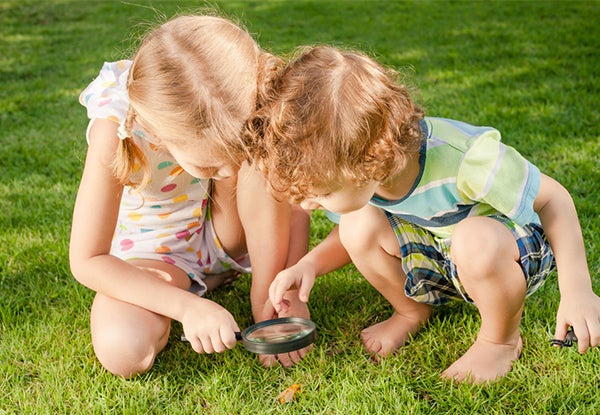
The scientific method can be divided into six different steps, each one building on and informing the next. They include:
- Make Observations
- Ask a Question
- Form a Hypothesis
- Conduct an Experiment to Test the Hypothesis
- Record Results, Analyze Them, and Draw Conclusions
- Share What You’ve Learned
Why Is the Scientific Method Important?
Teaching kids how to use the scientific method in all aspects of their lives allows them to follow their curiosity—and that’s a huge deal! When kids are offered the chance to observe what interests them, they become engaged.
Maybe your kid loves ants and spends hours outside watching their every move. And maybe your kid observes that they carry things far bigger than their bodies.
Questions begin to bubble up in your child’s mind, igniting their curiosity, their critical thinking, and their creativity. They’re motivated to seek answers to their questions (“How can an ant carry something 50 times their body weight?”), and the process of discovery begins.
The scientific method helps develop:
- Curiosity
- Critical thinking
- Logical thinking
- Problem-solving
- Communication
- Collaboration
Examples of the Scientific Method

To demonstrate how the steps of the scientific method can be applied to everyday play, let’s imagine your child is building a block tower.
1) Make Observations
Your child puts a block on top of another, then another, then another, and then the tower falls. They try again with the same result.
2) Ask a Question
You ask your child what they want to learn or what problem they want to solve, and urge them to ask a specific question (e.g., “Why is the tower tumbling?”).
3) Form a Hypothesis
You talk together about what you know. The blocks are all the same size. The material they’re made of seems sturdy. But what about the rug your child is sitting on? Is it even or uneven? If it’s uneven, could it be causing the tower to fall?
You guide your child in predicting the answer to their question. They do some research by feeling the rug with their fingers and decide that, yes, the rug is uneven.
4) Conduct an Experiment to Test the Hypothesis
You and your child brainstorm ways to test the hypothesis. You design an experiment together. Your child moves the blocks off the rug and onto the floor and builds the tower there. They do the experiment a few times to see what happens.
5) Record Results, Analyze Them, and Draw Conclusions
Your child builds the tower on the floor and it remains standing. They build it again, and then a third time. It stays up each time. At this point, you have a conversation about the results.
6) Share What You’ve Learned
Now you ask your child what they learned and how they learned it. In this instance, they might say that the tower stayed up because the floor is hard and flat.
5 Tips for Teaching Kids the Scientific Method
Experimenting with the scientific method is fun! If your child is engaged in an activity or immersed in a topic they love, they may just dive right into the process. But if they’re a little less motivated, here are some tips for introducing the scientific method to kids.
1) Encourage Your Kid to Be Curious
Curiosity is the foundation of the scientific method. If we expose our kids to all sorts of different experiences, they’re more likely to have their curiosity piqued. Try to be an active participant in their adventures when you can. Your engagement will spark theirs!
2) Ask Lots of Questions
Ask questions based on what you notice your child gravitating toward. Maybe you see that they’re fascinated by planes flying overhead. Or maybe you observe them mixing different colors when they’re painting.
Take the opportunity to ask them “what if” and “why” questions. Their answers might surprise you!
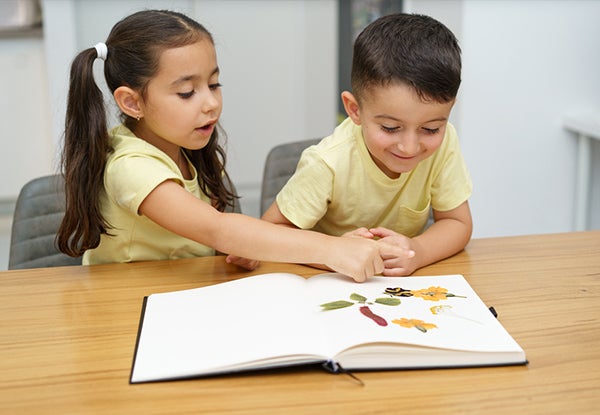
3) Make a Science Journal
Consider making the scientific method more concrete for your child by creating a science journal with them. You can buy a small notebook or simply staple pieces of paper together. Encourage your child to decorate the cover. This personalization may make them want to use the journal even more.
4) Develop Hands-On Activities
Be mindful of how hands-on your experiments are. The more kids can use multiple senses and skills, the more invested they’ll be in the process. They’ll learn more, too: Using a variety of skills enriches an educational experience.
For example, you might go on a fall nature walk and encourage your child to feel a leaf that’s still on a tree and one that’s fallen on the ground. (How do they compare?) Or ask them to listen to the sound a kite makes as it’s flying. (Does the sound change with the strength of the wind?)
5) Be Patient
Kids don’t need to complete a whole round of the scientific method in one go. If you give your child the time and space they need, they’ll be more immersed in the task at hand—but that might mean a process spread out over a few days or even more.
Begin Has a Method!

Our award-winning products can help your child develop critical thinking skills as well as creativity and curiosity, which all play a pivotal role in the scientific method—and in life. Explore our digital and hands-on solutions for every learner!
Frequently Asked Questions
Who invented the scientific method?
The English philosopher Francis Bacon is credited with being one of the founders of the scientific method. He created a practice of observation, hypothesis, and experimentation. Bacon believed studying things systemically was the only pathway to knowledge.
But 250 years earlier, an Iraqi scientist named Ibn al-Haytham engaged in learning about the properties and behaviors of light. He published his discoveries in a book titled Book of Optics, which revealed the methods he used for running his experiments.
This is one of the earliest records of the scientific method at work.
What is a scientific method anchor chart?
An anchor chart is a tool used to help solidify students’ understanding of a particular topic. It’s most often a poster hung on the wall. A scientific method anchor chart is exactly that: a poster listing the six steps of the scientific method.
What is a useful mnemonic for remembering the scientific method steps?
One way for kids to remember the steps for the scientific method is to make up their own sentence using the first letter of each step.
- Observe
- Question
- Hypothesize
- Experiment
- Conclude
- Share
For example: One quiet horse eats corn stalks.