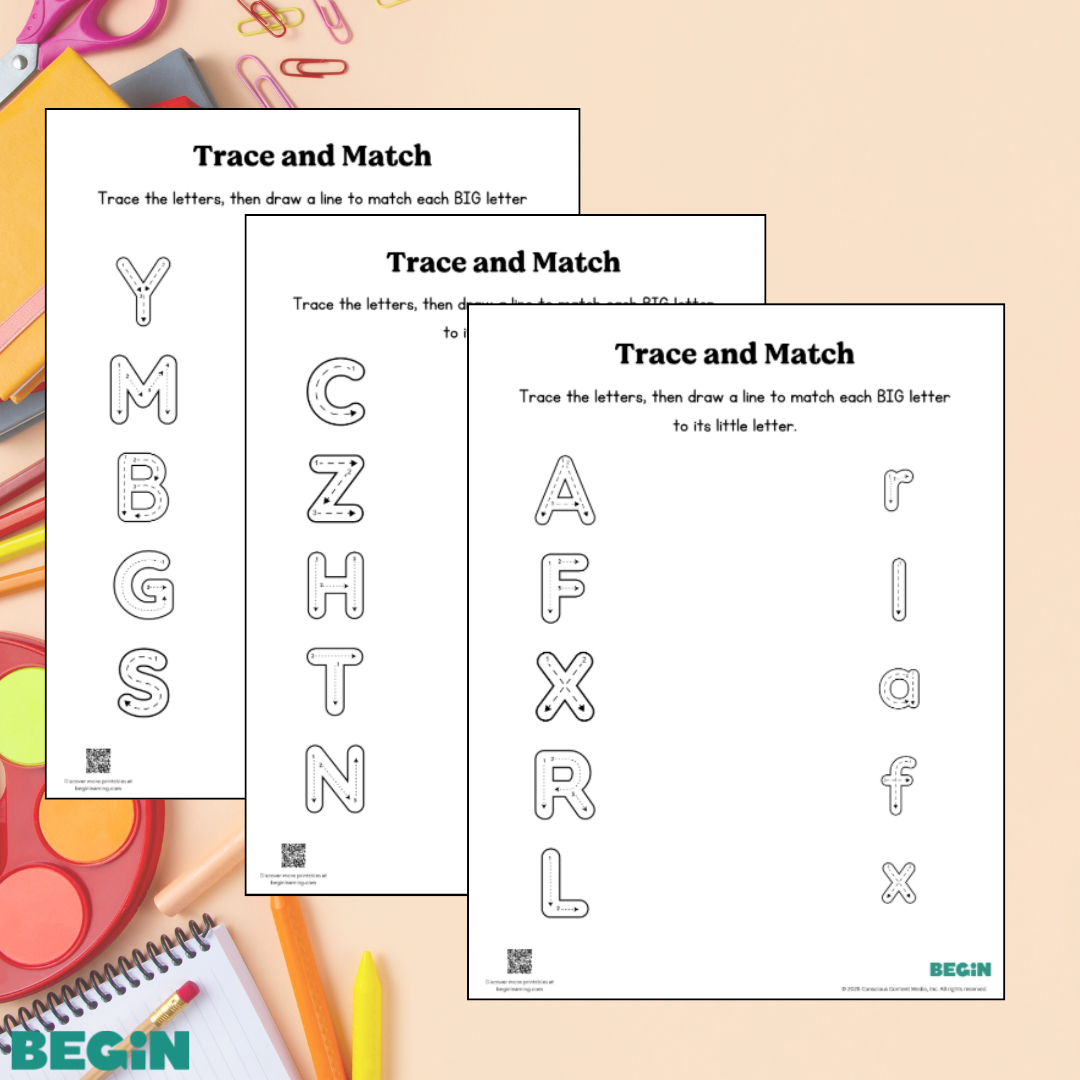
Looking for a simple way to strengthen early literacy skills? This uppercase and lowercase letter matching activity helps kids trace, connect, and recognize letters while practicing sounds. Children trace each letter, then draw a line to connect the uppercase letter with its lowercase partner—building handwriting, recognition, and phonics all at once.
Materials Needed:
🖨️ Printed “Upper & Lower Case Matching” pages
🖍️ Crayons, markers, or colored pencils
✏️ Pencil for tracing and matching
⏱️ Time Needed: About 5-10 minutes per page
👩👧 Best As: A do-together activity for younger learners (ages 4) who are just beginning to connect upper and lowercase, and a guided-independent activity for older kids (ages 5–6) who need practice and reinforcement.
How to Use:
- Print the “Upper & Lower Case Matching pages.
- Have your child trace each uppercase and lowercase letter. Support them to follow the arrow.
- Help them draw a line from the uppercase letter to its lowercase match.
- As you trace and connect, say the letter name and sound together. For example:
“Trace A and say ‘A.’ Now as we draw the line to lowercase a, let’s say the sound—‘ahhh.’ Then say ‘a’ again to remember both the name and the sound.” - Repeat with each letter on the page, encouraging your child to use both their voice and their pencil to strengthen learning.
Build letter recognition, strengthen phonics, and make connecting uppercase and lowercase letters fun and memorable!
Why Matching Upper & Lower Case Letters Matters for Growing Minds
Matching uppercase and lowercase letters builds strong letter recognition and supports phonics by connecting symbols (letters) to sounds. Saying the letter name and sound while tracing helps children anchor both pieces of knowledge, making reading and writing more automatic later on.
✨ Want to make it even more meaningful? Play a movement game after completing each letter: call out a letter, have your child jump to a big “uppercase body shape” (arms wide, tall posture) for capital letters and a “smaller lowercase body shape” (curling small, crouching, or hugging knees) for lowercase. Adding movement reinforces the difference between big and small letters in a playful way.

Want to support your child’s early literacy, math skills, and creativity?
Try HOMER free for 30 days