These free vertical subtraction worksheets introduce the column format, helping children understand subtraction by organizing numbers in a simple, visual way. Vertical problems let kids focus on what it means to take away, while developing neatness and step-by-step thinking skills.
Each worksheet download contains a practice sheet and an answer sheet.
Vertical Subtraction 1 – 10: Worksheet #1
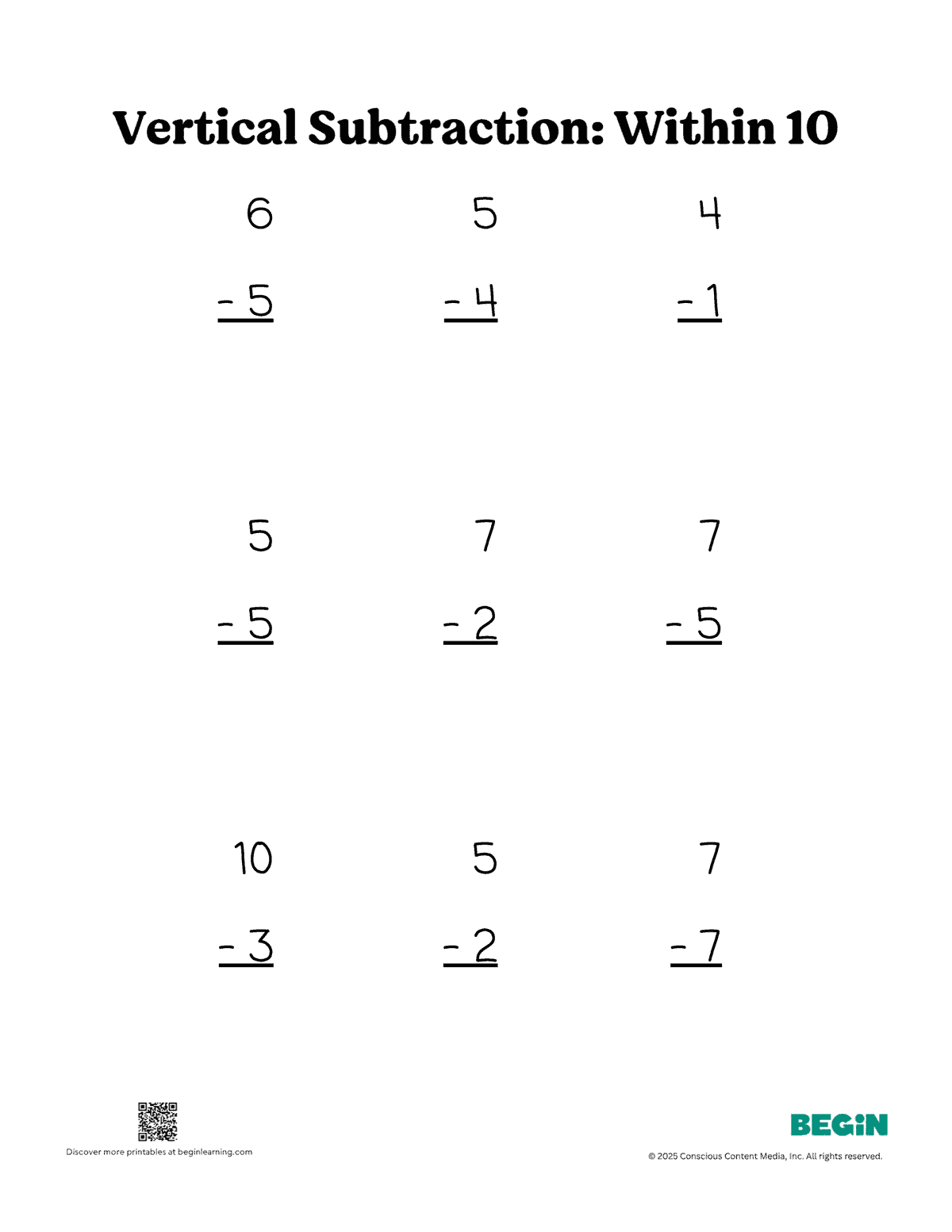
Vertical Subtraction 1 – 10: Worksheet #2
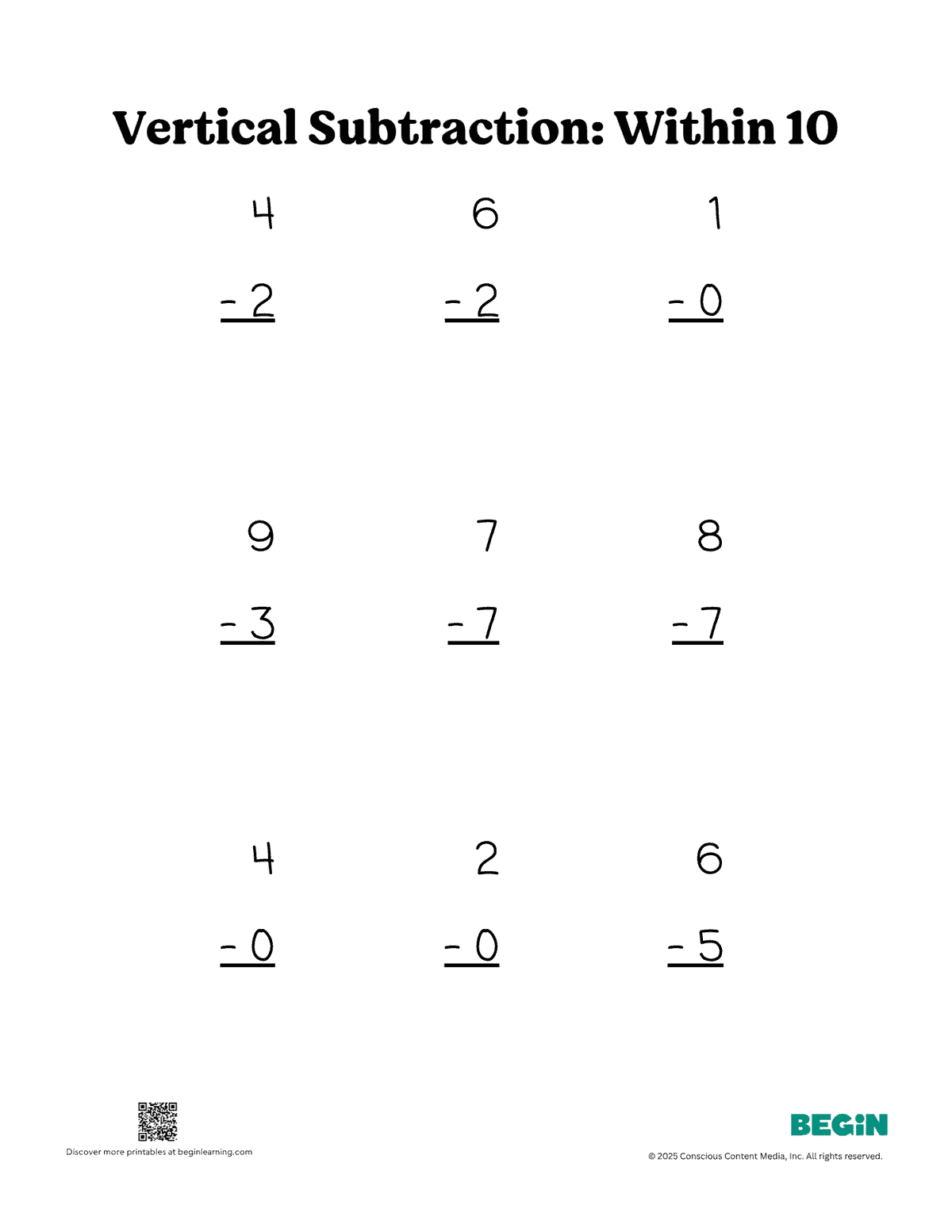
Vertical Subtraction 1 – 10: Worksheet #3
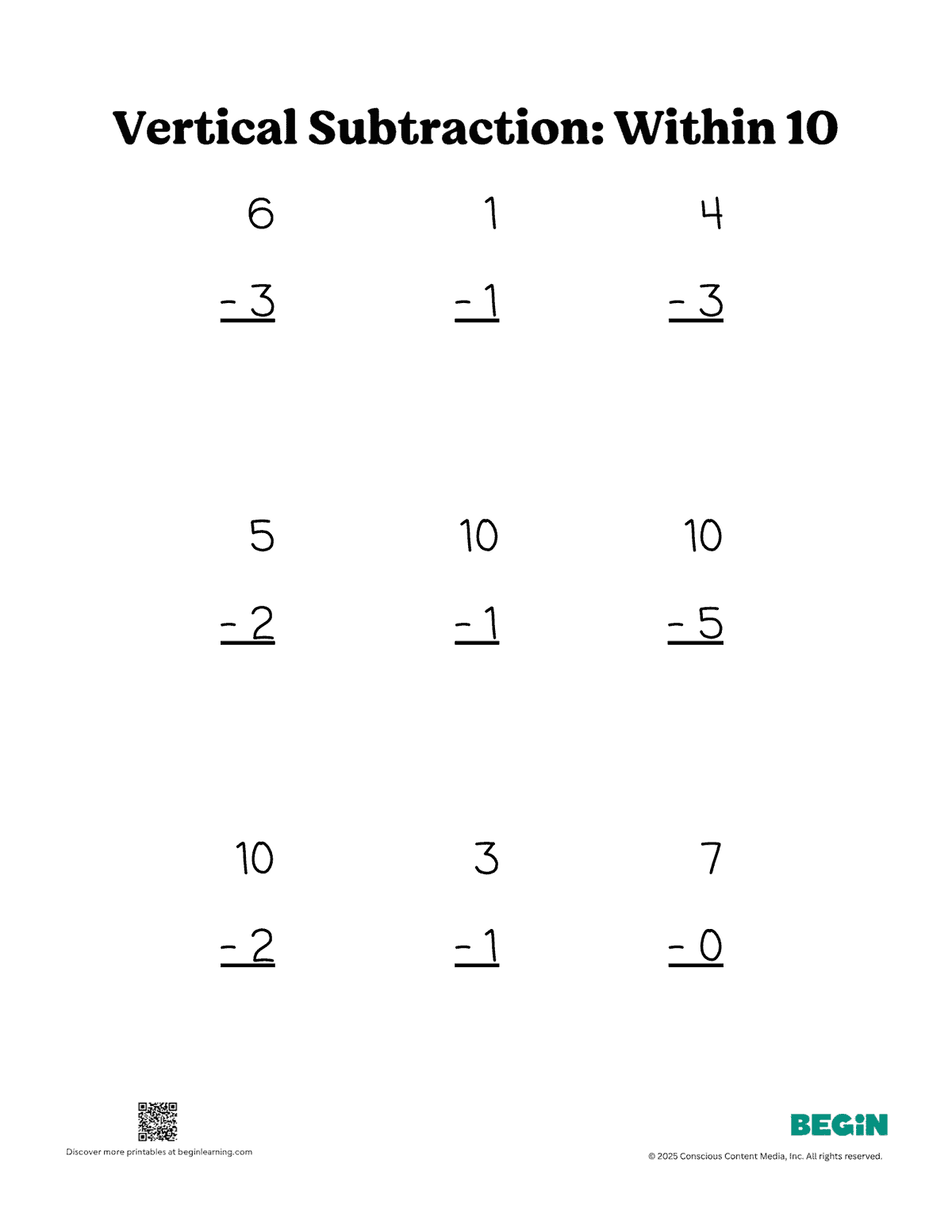
Vertical Subtraction 1 – 10: Worksheet #4
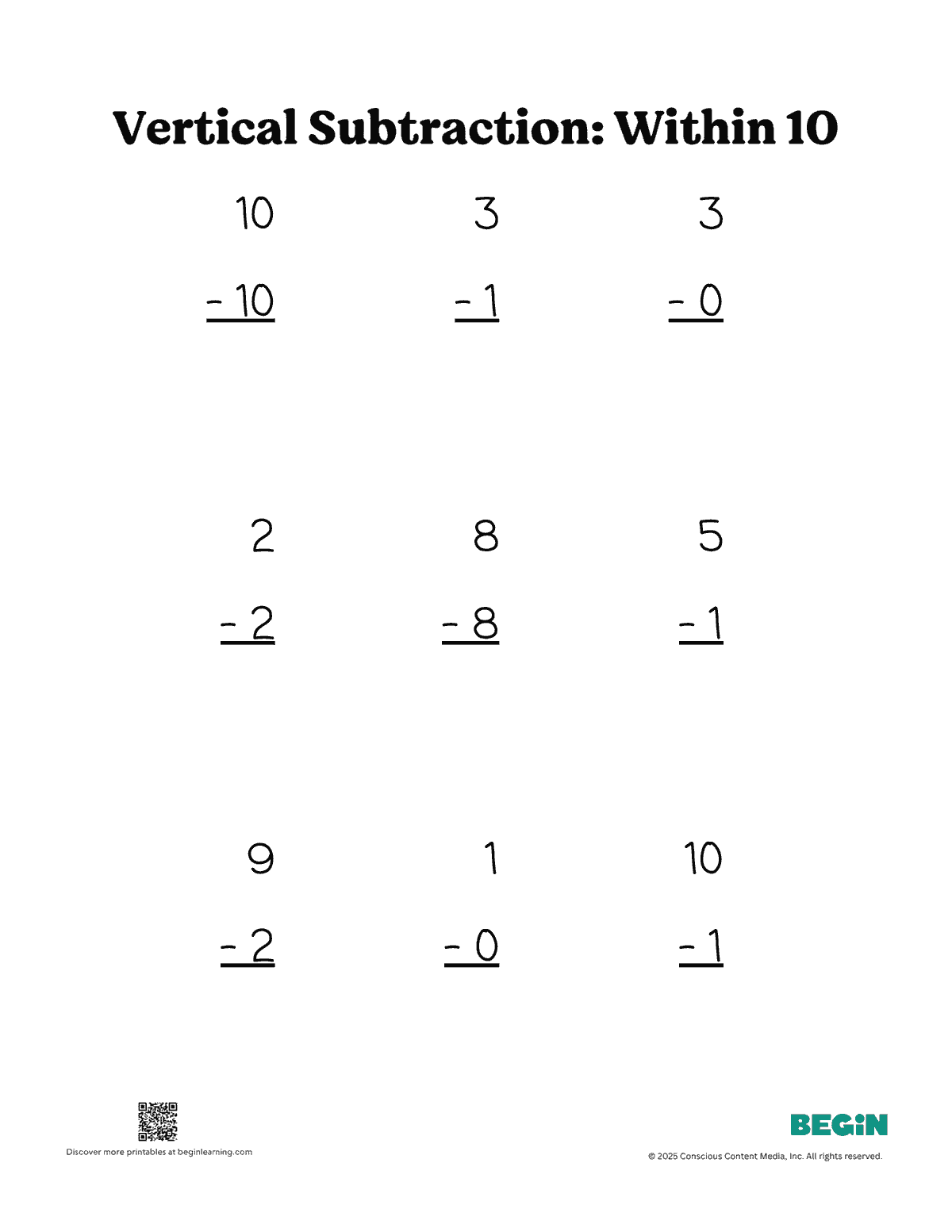
Vertical Subtraction 1 – 10: Worksheet #5
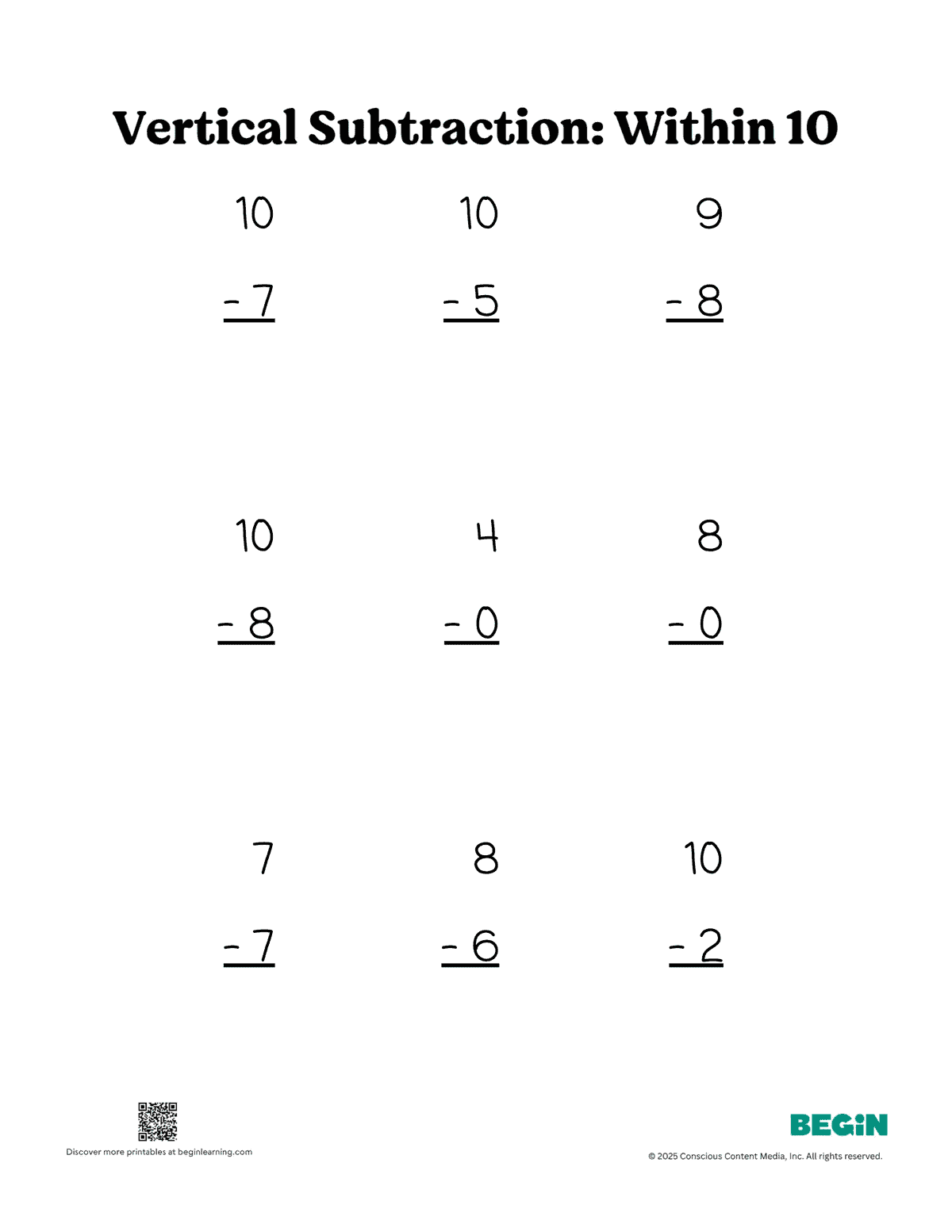
Frequently Asked Questions (FAQs)
What is vertical subtraction?
Vertical subtraction is when numbers are written stacked on top of each other in a column instead of written side by side. The larger number goes on top, the number being taken away goes below it, and a line underneath shows where the answer belongs. This layout helps children keep their work neat and focused, and it prepares them for subtracting bigger numbers later when digits need to line up correctly.
Why does the bigger number go on top?
In subtraction, we always start with what we have and then take some away. Placing the larger number on top mirrors this logic: it represents the total we begin with. The number below represents what we remove. This consistent structure helps children understand the order of subtraction and prevents confusion about which number comes first.
This is common when children first encounter the vertical format. The answer line at the bottom can be confusing when they are used to writing answers at the end of a horizontal equation.
What if my child tries to subtract the top number from the bottom?
This is a common mistake when children first see vertical format. Gently remind them that we always start at the top and take away the number below. You might say, “The top number is what we have. The bottom number is what leaves.” Using physical objects can help: stack five blocks, then remove two from the top of the stack. The visual of “removing from the top” reinforces the correct direction.
My child understands horizontal subtraction but struggles with vertical. Why?
The math is identical, but the visual presentation is new. Some children need time to adjust to seeing numbers stacked rather than in a row. Try showing the same problem written both ways and pointing out that they mean the same thing.
Practice reading vertical problems aloud together: “Five take away two equals what?” Once your child sees that vertical problems ask the same questions, the format usually clicks.
Can my child draw pictures to help solve vertical subtraction?
Yes, and many children find this helpful. They can draw circles or dots next to the top number, then cross out the amount being subtracted. The remaining shapes show the answer. This visual strategy reinforces what “taking away” means and gives children a concrete way to check their work. As they gain confidence, they often rely less on drawings.
What if my child guesses the answer instead of working through the problem?
Guessing is normal, especially if a child feels rushed or uncertain. Without judgment, ask them to show you how they got their answer: “Can you count it out for me?” This encourages them to slow down and think through the problem.
If they cannot explain their answer, work through it together using fingers, drawings, or objects. Over time, building the habit of checking their thinking reduces guessing.
How do I keep my child motivated when subtraction feels hard?
Keep sessions short and celebrate effort rather than just correct answers. Acknowledge when your child tries a problem, even if they do not get it right: “I like how you really thought about that one.” Mix easier problems with slightly harder ones so your child experiences regular success.
Games, stories, and real-world examples can also make subtraction feel less like work and more like play. The goal is to build confidence and a positive attitude toward math, not to rush mastery.

Want to support your child’s early literacy, math skills, and creativity?
Try HOMER free for 30 days