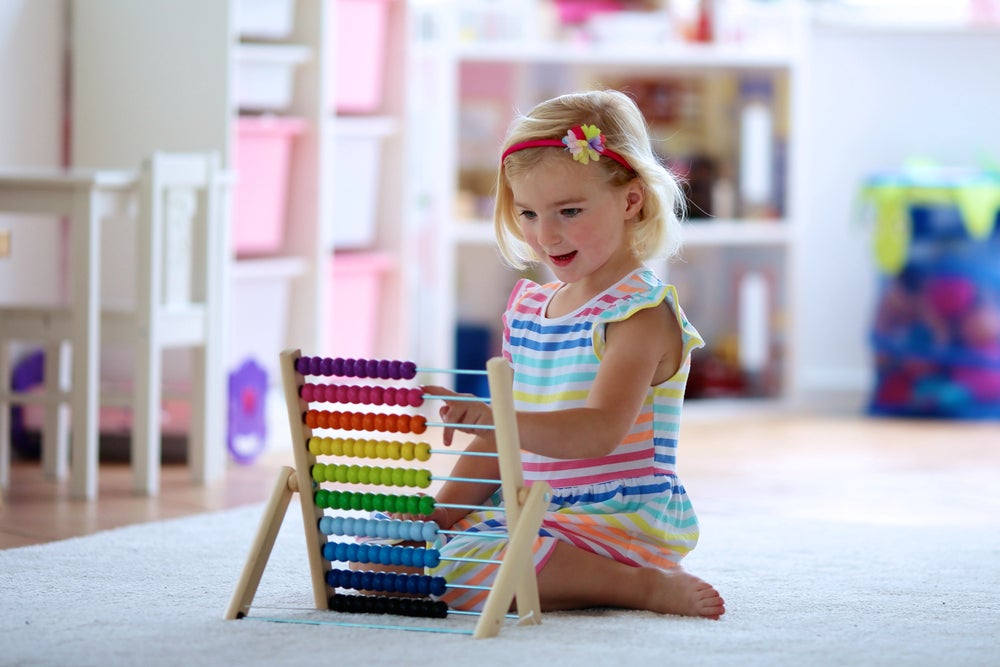
Counting is one of the first math skills children learn, and mastering it lays the foundation for concepts they’ll be introduced to later. But at what age do kids start counting? In this article, we share the specific milestones to look for as your child learns to count and some tips for making it fun.
Key Takeaways
- Kids start learning the skills necessary for counting from as early as six months old. By the time they’re five years old, most kids have a good grasp of counting and using numbers.
- According to studies, kids who build early math skills have better academic outcomes, such as learning to count, problem-solving, and even reading.
- To develop early number sense and numeracy skills, kids need to understand the concepts of quantity, rote counting, one-on-one correspondence, and cardinality.
- You can help your child by counting with them throughout the day, modeling the practicality of counting, and playing counting games.
Table of Contents
- Why Is Learning to Count Important?
- What Age Do Kids Start Counting: Milestones
- 6 Tips to Help Your Child Learn Counting
Why Is Learning to Count Important?
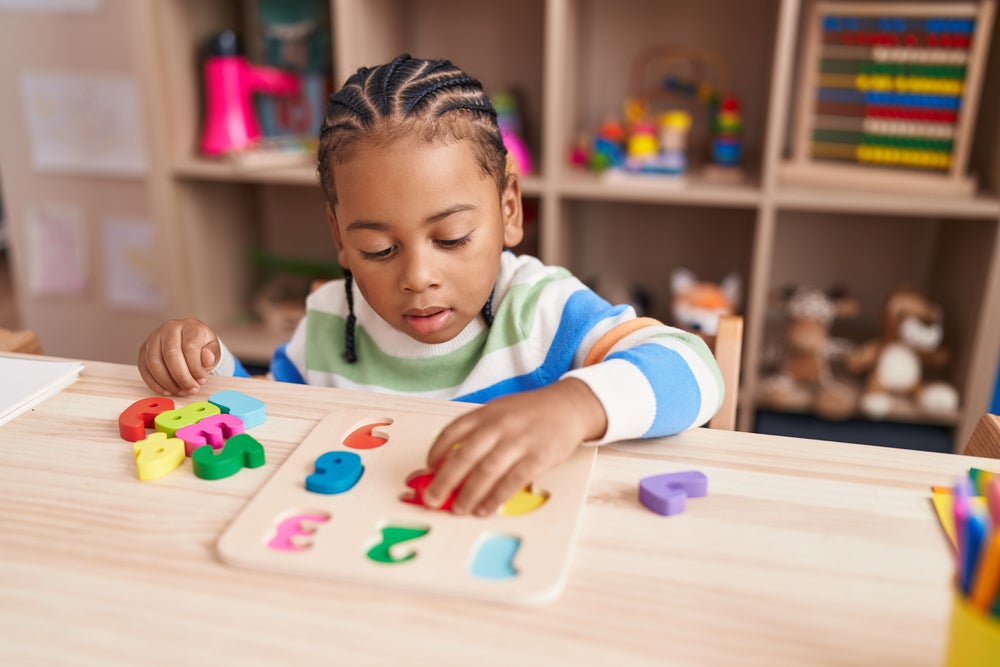
A study done by the National Research Council underscores the importance of early number learning. Kids who interact with math when they’re young tend to do better in school than those who don’t.
Number literacy is not only connected to better outcomes in math but also reading. Additionally, kids who get a head start with math concepts, like learning how to count, have better problem-solving skills when they’re adults, too.
What Age Do Kids Start Counting: Milestones
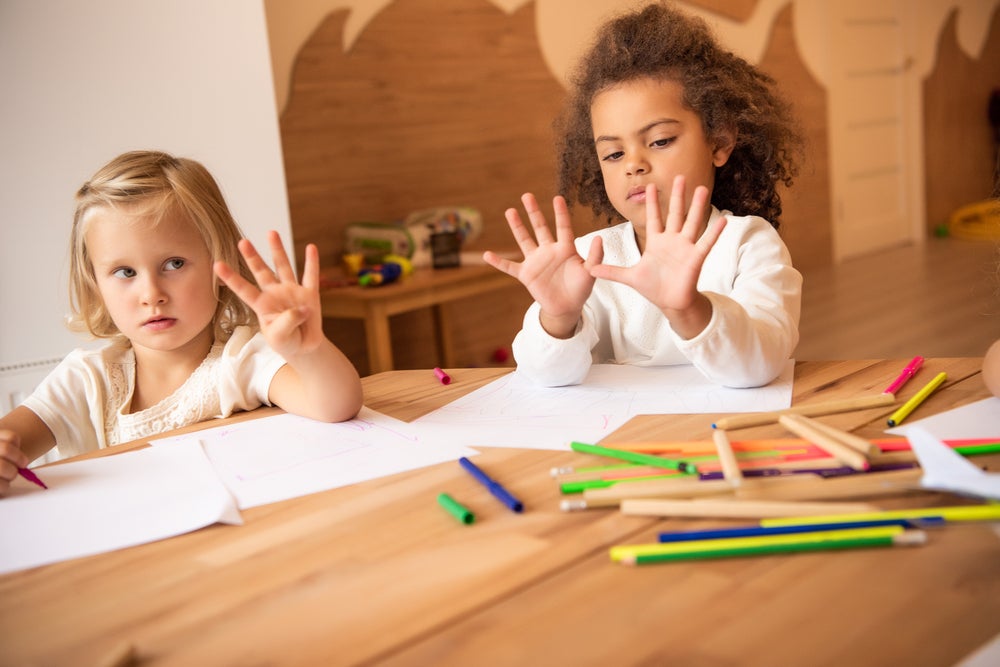
There’s a big difference between knowing a few number words and knowing how to count. Counting is a group of different skills all building on one another. Let’s dive into what that looks like.
0-12 Months
The foundation for counting is laid early. By six months old, babies may be able to understand the concept of quantity and might even start to sign for “more” of something. Around the time they turn one, they may also be able to say the word “more” when they want more.
1-2 Years Old
At around two years old, toddlers may be able to memorize the numbers 1 through 10. They might even be able to say them in sequential order, but they may not understand the meaning of the numbers.
This is called rote counting. It’s similar to what happens when kids learn the alphabet. While they can sing it with all the letters in the correct order, they don’t know how to use the letters to make words.
Kids begin to pick up on patterns at this age, too. They notice the stripes on their socks or the stars on their ball. Pattern recognition leads to predicting and problem-solving, both of which are critical for learning how to count.
2-3 Years Old
This is a busy time for your toddler. Math skills are blooming. They learn about one-to-one correspondence: the idea that one object corresponds with one number. They can look at one apple on a plate and one banana on a plate and know they’re the same amount.
This knowledge may inspire a lot of counting in your house! But don’t be surprised if your child still gets some of the numbers wrong or only knows how to count to three (and then repeats the sequence). This repetition is creating number literacy pathways in their brain.
3-4 Years Old
Once kids are around three or four years old, they are getting the hang of cardinality: the idea that the number assigned to the last object in a counting sequence equals the total number of objects.
So, let’s say you’ve placed five crayons on the table. If you ask your child to count them, they’ll recite “one, two, three, four, five” and know that five crayons are there.
4-5 Years Old
By the time kids have reached between four and five years old, they’re approaching total number comprehension. They may be able to respond to questions that involve amounts. If you ask them to pick out three books, they’ll go to the bookshelf and come back with three books!
6 Tips to Help Your Child Learn to Count
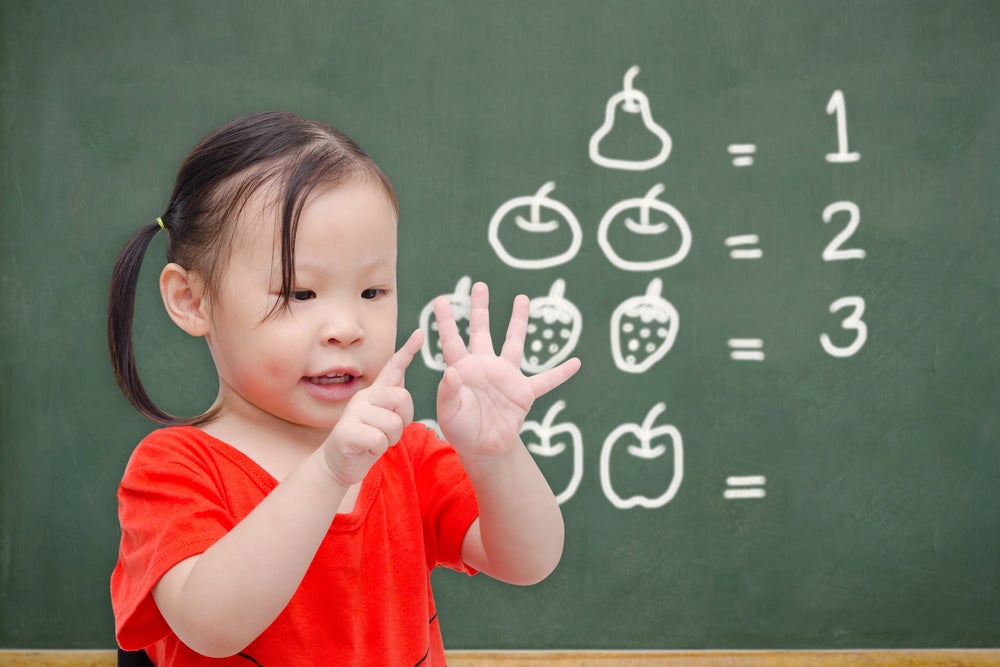
Repetition is key to learning many early childhood skills, and counting is no exception. Being intentional about counting with your child can go a long way toward achieving a sense of competency.
Here are some ways you can encourage counting skills with your child.
1) Count Objects All Around You
Count anything. Count often. From rattling off how many pieces of macaroni are on your child’s plate to tallying the pairs of socks in your laundry basket, try to find ways to incorporate counting every day.
You could even make a game out of it! Ball your clean pairs of socks up and let your child toss them in a laundry basket, counting as they do.
Don’t be afraid to count above 10. Your child may not remember these numbers right away, but you’ll be exposing them to the way numbers repeat. They’ll begin to see the patterns. For example, that 19 contains the number 9.
If your dog sneezes a few times in a row, count the “ah-choos!” Counting things you hear as well as those you can see adds some fun to your counting practice.
2) Finger Count
Finger counting can help your child learn that a number said aloud is equal to the actual number of objects. For example, try pointing to three blocks one at a time and holding up a finger each time you point until you have three fingers up.
Pairing hand gestures with spoken words is a powerful way to give your child clarity about the relationship between number words and quantities. Seeing and hearing information at the same time makes it easier to grasp.
3) Count in Anticipation
Try counting before you do something your child wants to do. For example, if you’re at the park, you might say something like, “Count the number of swings, and then pick a swing!” The anticipation of doing something fun adds a level of motivation!
4) Use Math Language
Use math vocabulary with your child whenever you can. Building familiarity with words like “smaller than,” “more than,” “equals,” and “add,” gives them a leg up on the formal math learning they’ll get at school.
For example, if your child is helping you put laundry away, you could say something like, “There are more pants than shirts. Let’s count them,” Or, “Dad’s shirt is bigger than yours.”
5) Group Items
Subitizing is recognizing the quantity of a small group of objects without counting them. Think about a die from a board game. You roll and it lands on the side with dots in each corner and you know it’s a four.
You can help your child learn this concept by skipping counting and saying the quantity number out loud. So, when your child brings you books to read at bedtime, you can say, “You want me to read four books?”
6) Play Number Games
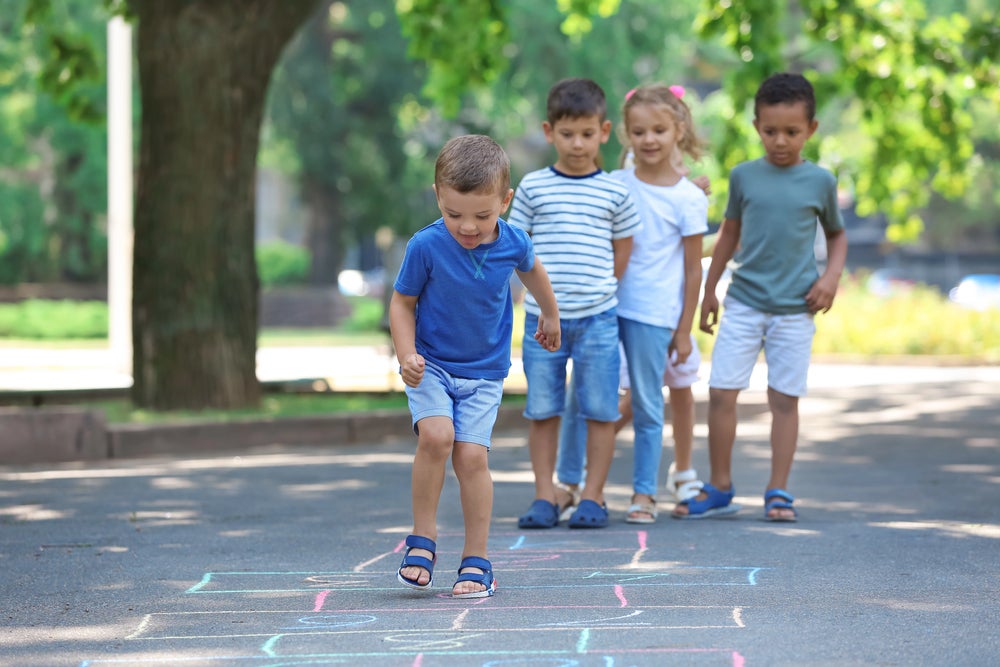
Kids learn through play, and many games involve numbers. Hide and Seek is a good one. Make sure your child has a turn being “it” so they practice counting. Hopscotch is great, too. After they throw the rock onto the board, they can count the squares as they hop.
Almost any game or activity can be adapted to include counting!
You Can Count on Begin
Our HOMER app has super fun and engaging games (and adorable characters) that make math fun! And check out our parent resources for games and activities that reinforce concepts and help them stick. We’re here to support your child’s math learning journey!
Frequently Asked Questions
What are some signs that my child is struggling with counting?
Even though the age range for early math learning falls between six months and five years, your child may be older before they learn all of the basics. That’s OK! Every child learns in their own way, on their own timeline.
However, if you’re noticing that your child has difficulty recognizing numbers and patterns, loses track while counting, and can’t connect symbols (4, 5, 6) with words (four, five, six), you might want to check in with their doctor.
At what age can kids count backward?
Kids learn to count backward when they’re around four years old. While it might seem like a simple reversal of counting forward, it requires a high level of comfort with numbers.
Counting backward lays the foundation for subtraction and mathematical problem-solving. It’s also used in everyday life. Think about counting down before the start of a race!
Is learning how to measure a counting skill?
Although they are different skills, all forms of measuring rely on your ability to count. Once kids understand counting, they can learn to read measuring tools, like a ruler, a scale, and a measuring cup.