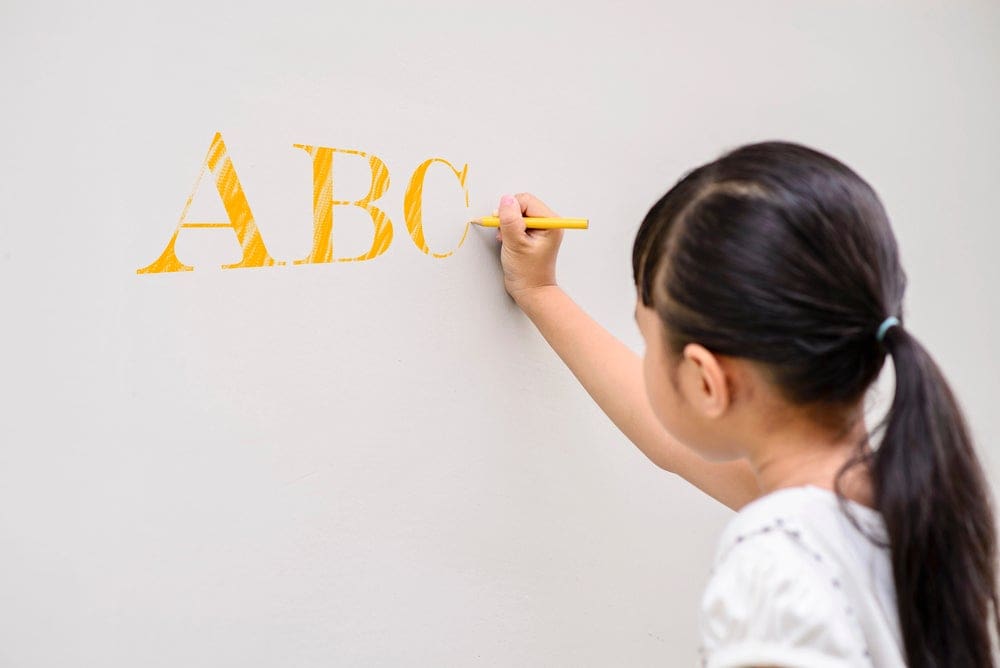
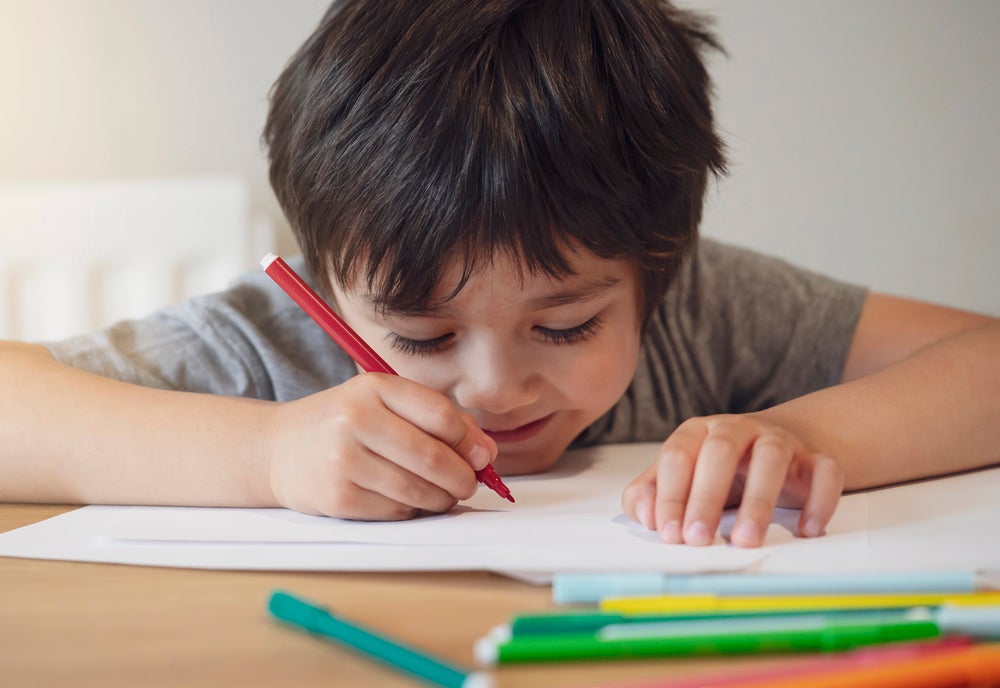
Writing is a multilayered endeavor. Kids need fine motor skills, finger and hand strength, and organizational skills. And those are all before they learn how to actually form letters or spell words. So, when exactly do kids learn to write?
They learn in stages. Each step along the way is critical for building the skills that are essential for the next one. Here we’ve broken down the different writing stages so you can best support your child in becoming a confident writer.
Key Takeaways
- Kids learn how to write between the ages of one and seven years old.
- Learning to write is essential to developing communication and content skills, two of the 6Cs* that inspire the Begin Approach to helping kids thrive in school and life.
- Emergent writing practice helps your child develop the physical, cognitive, and emotional skills (like patience and perseverance) to learn how to write.
- You can help your child enjoy learning to write by providing them with fun opportunities to develop fine motor skills, playing writing games, engaging in storytelling, and creating a journal jar.
Table of Contents
- Why Is the Emergent Stage Important?
- When Do Kids Learn to Write?
- Tips to Help Your Child Learn to Write
Why Is the Emergent Writing Stage Important?
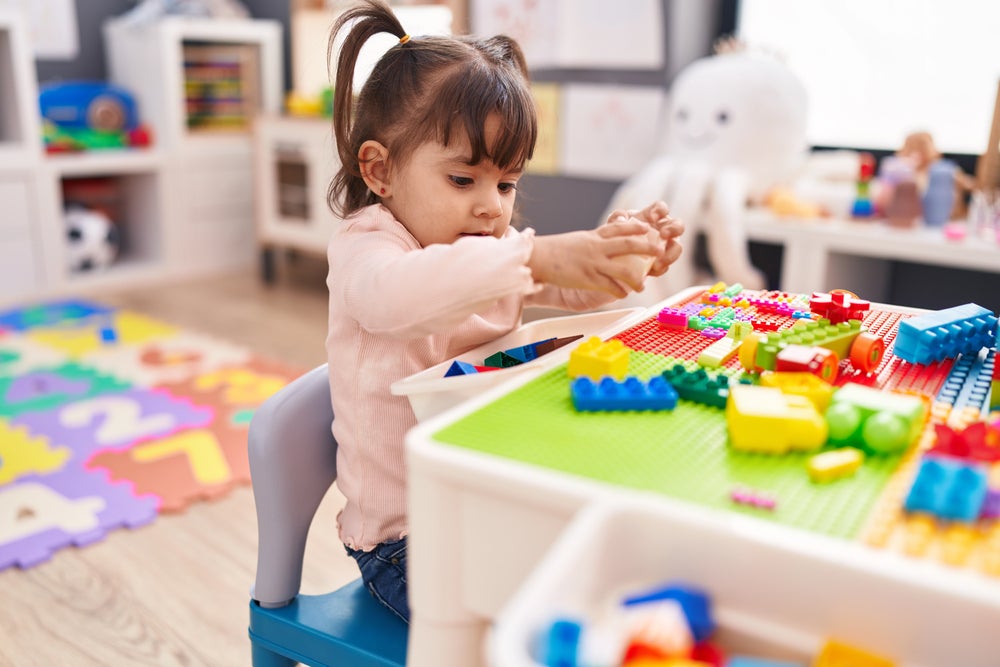
Your child begins the process of learning how to write early. Think about them sitting in a high chair, swirling yogurt in circles with their fingers. This is your child beginning to develop their fine motor skills, which is foundational to emergent writing!
Emergent writing (the earliest attempts to use writing to convey meaning) consists of physical, cognitive, and emotional learning.
- Physical: Kids need to strengthen the muscles in their fingers and hands before they can hold a writing utensil in the right position. They also need to practice fine motor skills (like learning how to hold a pencil or crayon).
- Cognitive: Along with some basic writing skills, like learning how to recognize letters and spell words, your child needs to be able to organize their thoughts. They think of something they want to communicate first, and then they try to express it.
- Emotional: Writing takes patience, practice, and perseverance!
Because writing brings so many skills together at the same time, try to let your child develop at their own pace.
Below is a breakdown of the writing stages and the range of ages when kids might start displaying them. But try not to forget that every child’s timeline and process will be different.
When Do Kids Learn to Write?
Toddler (1-2 years)
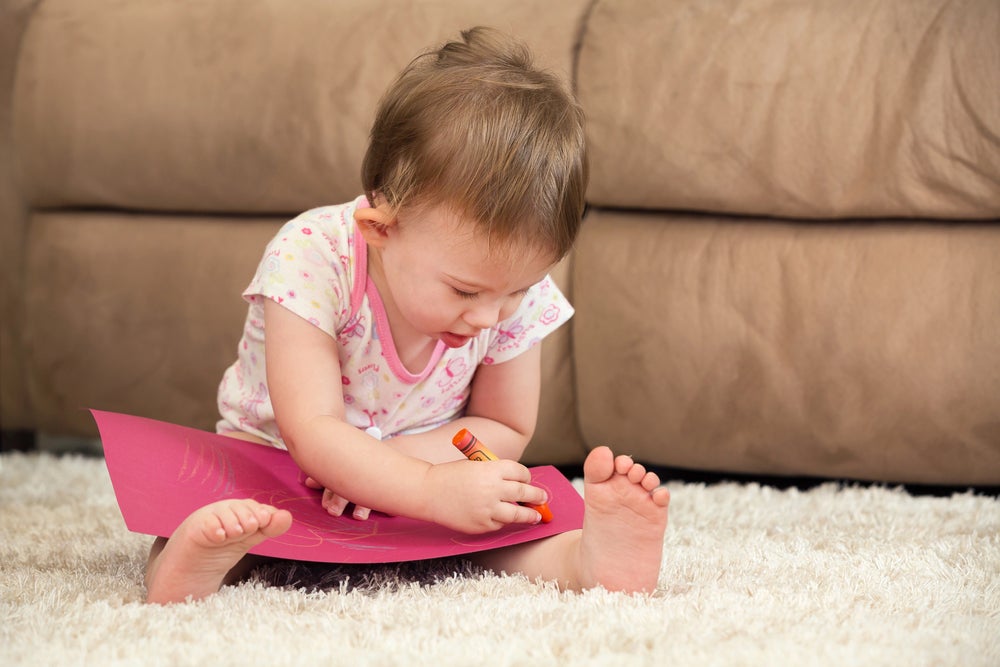
Between the ages of one and two, your child may begin experimenting with using writing utensils.
They’ll typically start with a larger writing utensil, like a big crayon or marker, holding it in their fist. It looks just like it sounds. They squeeze their hand in a fist around the crayon. This is also called the palmar grasp.
When they scribble on a piece of paper, they’ll make big movements, using their whole arm to write.
Preschooler (3-4 years)
When your child becomes a preschooler, they’ll begin to use a five-fingered grasp. The tips of all five fingers and the thumb touch the writing utensil. They’ll start experimenting with tracing and drawing lines.
They may even write some actual letters and understand the sounds they represent. They might also draw pictures and label them with words. It’s an exciting moment for your child because they’re starting to understand that a drawing and a word can mean the same thing.
Support your child’s curiosity around writing, but don’t worry about them learning how to write just yet.
It’s also important to note that at the end of this preschool stage or early in the younger grade stage, your child may favor one hand over the other.
Younger Grades (5-7 years)

By this stage, your child’s hands are stronger and their fine motor skills are sharper. They’re working on holding a pencil with a tripod grasp, which means using their pointer and middle fingers and thumb.
The cognitive piece of the writing process is clicking into place. Because your child’s phonics skills have progressed, they may be able to pronounce and spell a handful of words. They may also be able to write some of their sight words.
During this stage, kids are getting the hang of when to use uppercase and lowercase letters. At five years old, they may be able to write simple sentences, and when they’re seven, they might start writing short paragraphs. (Asking your child to write about themselves is a great way to support this.)
Older Grades (8-10 years)
As your child gets older, their knowledge will expand and they’ll understand that writing is a way to tell a story. They may begin to combine what they know about spelling and grammar to write with intention, using subject-verb agreement and correct spacing.
Additionally, they’ll learn more words, begin to understand prefixes and suffixes, expand their spelling vocabulary, and create more complex sentences.
This will lead to experimenting with different styles of writing (like narrative and informative writing). Soon, your child will start learning to write about topics, research and synthesize information to write, and edit writing with feedback.
Tips to Help Your Child Learn to Write

All children develop emergent writing skills at a pace that works for them. But you can help cultivate a creative and fun attitude toward writing so they’re motivated to get their crayons and pencils moving!
1) Practice Fine Motor Skills
Fine motor skills are a foundational part of learning how to write. You can help your child develop these skills by encouraging them to play with objects they need to grasp and manipulate.
For example, threading large beads, pasta, or buttons onto string or pipe cleaners is great practice. Building a track and racing cars means holding and maneuvering small objects. And finger painting is all about finger movement and hand strength.
2) Play Writing Games
Playing writing games is a great way to encourage kids in their learning and motivate them to try writing.
Consider using different media to practice writing. Tools like chalk, shaving cream, and string bring an exciting sensory element to the process.
3) Nurture Storytelling
Reading supports writing, and writing supports reading, so continue reading to your child. As much as you can! Ask your kid to retell a story after you’ve read it. Or have a conversation about it. (What happened in the beginning? What was the main character feeling?)
These reading enhancements strengthen your child’s storytelling skills. You can do this without books, too. Ask your child to retell a story by acting it out. Add costumes, props, and friends. Even just engaging in conversation strengthens these critical skills.
4) Make a Journal Jar
Keeping a journal is a great way to practice writing. But if that feels too overwhelming for your child, try making a journal jar together. Clean out a jar (a peanut butter jar, for example) and decorate it together.
Write some fun prompts on slips of paper and put them in the jar (objects to make a story with, unique characters to write about, etc.). And then your child can pick one and talk with you about it, draw it, or even write about it.
Help Your Child Tell Their Story
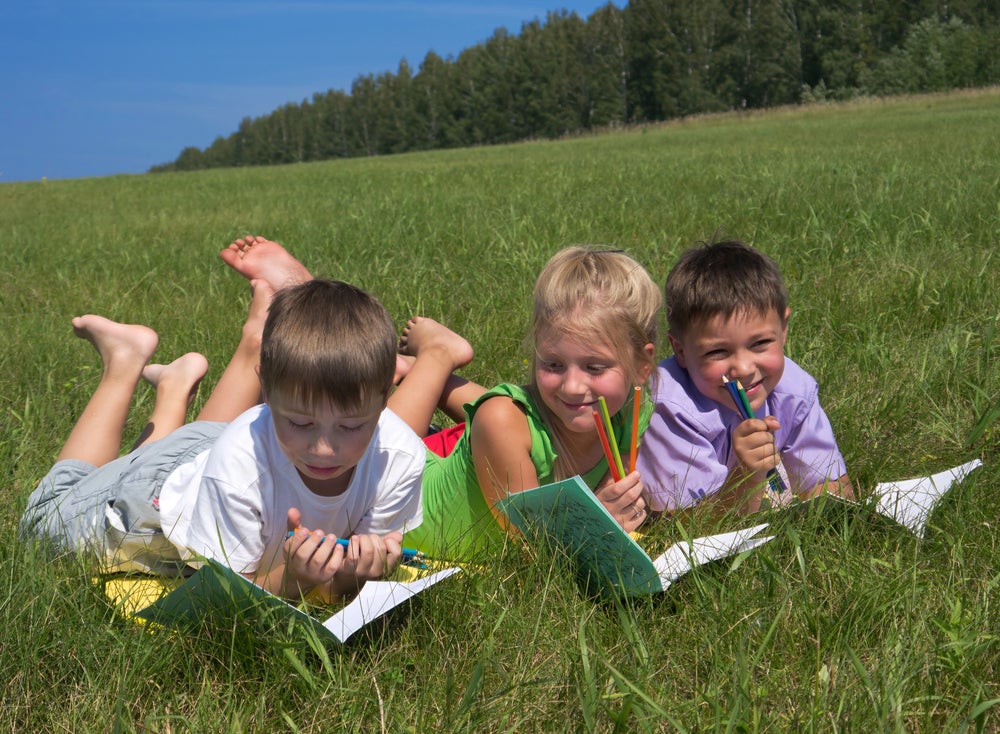
The process of learning to write has so many layers. This is why it’s important to find ways to inspire your child to keep at it. Fast or slow, moving through each stage strengthens their writing skills.
And once your child can write, they can find their voice and figure out what they want to say. Begin can support that journey. Our Early Learning Kits are a great way to hone your child’s emergent reading and writing skills.
Or if your child wants to try working on a tablet, the HOMER app can grow with them, reinforcing their writing skills every step of the way.
*The 6Cs Skills Framework is a science-backed framework designed by acclaimed developmental psychologists and learning scientists Dr. Kathy Hirsh-Pasek and Dr. Roberta Michnick Golinkoff (Becoming Brilliant, 2016)
Frequently Asked Questions
When do kids learn to write their name?
Many kids can write their names by the time they’re four. But some learn to do it earlier, and some take more time. Start with helping them trace their name, and they’ll be writing it on their own before you know it!
When do kids learn to write cursive?
Not all schools offer cursive writing as part of their curriculum. But if they do, it’s usually taught in third grade.
Do kids learn better writing in a paper notebook or typing on a mobile device?
The tactile experience of writing by hand not only has physical benefits (strengthening fine motor skills and hand and finger muscles), but also cognitive ones.
Studies show that handwriting the ABCs instead of typing them creates better and longer-lasting letter recognition. In addition, it improves a child’s ability to remember words.
So while computer literacy is critical for kids to learn today, writing by hand is still equally as relevant.