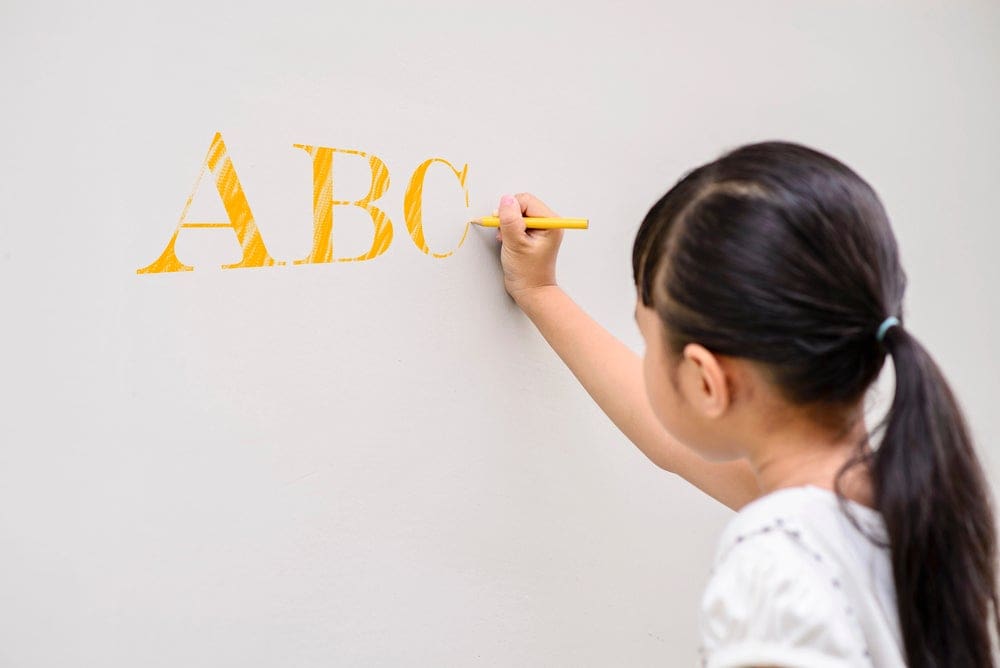

Learning the alphabet is one of the first critical steps in your child’s literacy development. Once they develop a solid relationship with all 26 letters, they’ve laid the foundation for not only their reading and writing now, but their future success in school and life!
This guide offers engaging ways to boost your child’s relationship with the letter C. We’ve got a wide range of words that begin with the letter C, as well as fun facts and activities about this important third letter of the alphabet.
Come with us as we cruise through creative ways to coach your child on the letter C!
Key Takeaways
- As you begin teaching your child about the letter C, make sure you help them understand that C can create both a hard /k/ sound and a soft /s/ sound.
- To ignite your child’s creativity and curiosity, try introducing them to alphabet games and activities as they learn the letter C.
Table of Contents
- Fun Facts About the Letter C
- Beginning Vocabulary: Kindergarten and 1st Grade C Words
- Growing Vocabulary: 2nd and 3rd Grade C Words
Fun Facts About the Letter C
The letter C is a tricky consonant because it can make 6 different sounds:
- A hard /k/ (as in cat)
- A soft /s/ (as in cent)
- A /ch/ (as in cello)
- A /sh/ (as in ocean)
- A /q/ (like cue)
- And no sound at all (as in muscle)
That’s a lot of sounds! Too many to learn all at once. Most often, the letter C makes the soft /s/ sound and the hard /k/ sound. Your child will focus on learning these two pronunciations first.
A good rule of thumb is that the sound that C makes depends on what letters follow it. When it’s followed by an A, O, or U, it takes on the hard sound, and when it’s followed by an E, I, or Y, it sounds soft.
Here are some additional fun facts about the letter C that may capture your child’s curiosity:
- The letter C was started by the ancient Phoenicians. It was first called a gimel, which sounds like the Phoenician word gamal (camel), and it used to look like the symbol for a camel with two humps.
- It’s one of only seven consonants that have at least two sounds.
- In Morse code, C is dash-dot-dash-dot (−·−·).
- In math, C represents the speed of light.
Beginning Vocabulary: Kindergarten and 1st Grade C Words

For kindergarteners and 1st graders, choose simple words that may be familiar to your child. The more they see the words out in the world and the more they use them, the more they’ll remember them.
Here are some examples of kindergarten and 1st grade words that start with the letter C and make the hard /k/ sound:
- cage
- cake
- cat
- car
- cup
- cot
- cow
- cub
- cut
- cap
And here are some examples of kindergarten and 1st grade words that start with the letter C and make the soft /s/ sound:
- cell
- city
- cereal
- cider
- citrus
- cent
- circle
- celery
- cellar
- circus
Activities
As you go about your day with your child, try to make a point of naming the C words you “run into!” Focus on the first sound in the word. You might even want to remind your child that C has two typical pronunciations.
Use a variety of media: Encourage your child to try different materials to make the letter C. For example, they can build it out of play-dough, use finger paints, or draw in the dirt with a stick.
Play C-Spy: Play I Spy with your child, only focus on the letter C. Take turns finding and guessing the object.
Play Alphabet Basketball: Write the letter C on one paper cup. Then line it up with two other paper cups (on the floor or table). Using a small beanbag, ball, or even a wad of paper, ask your child to stand a few feet away and try to make a basket into the letter C cup.
Growing Vocabulary: 2nd and 3rd Grade C Words

As your child gets older, you can introduce more complex vocabulary words. Just like we suggested before, try to choose words that are familiar to your child. Maybe they often come up in conversation, or maybe they are names of objects your child knows well.
Here are some examples of 2nd and 3rd-grade words that start with the letter C and make the hard /k/ sound:
- cabin
- cable
- cactus
- candle
- camel
- castle
- curve
- crush
- cream
- candy
And here are some examples of 2nd and 3rd-grade words that start with the letter C and make the soft /s/ sound:
cinema
cycle
cyclone
cymbal
celebrate
cinnamon
citizen
centipede
certain
ceremony
Activities
A lot of learning happens in the times between intentional literacy sessions. See if you can pay attention to when you use the letter C in your conversations with your child. When you do, repeat them, or ask your child to guess which word you said begins with the letter C.
Create a homemade alphabet book. Use 28 pieces of paper (one for each letter, one for a cover page, and one for an end page) to make your book. Attach them together. A couple of ideas: stapling them, punching holes in the pages, and tying them together with a ribbon.
On each spread, you or your child can draw a letter on one side and draw or cut out an image that begins with that letter on the other. Then your child can decorate the cover and end pages.
Put the book in your reading rotation! You might want to make it a work-in-progress and add new images over time.
Make an alphabet hopscotch game. Make a hopscotch grid outside using sidewalk chalk. Write one letter in each box. Ideally, you want to use letters your child has already been learning. Make sure you’ve got at least one vowel in the mix.
As your child jumps from box to box, have them say the letter and make its sound. (For C, for example, they would say “C” and then either “C says k-k-k-k-k-k” or “C says s-s-s-s-s-s.”)
If your child is learning to spell words, see if you can draw letters they know on the grid. Then you can ask them to hop from one letter to the next to spell a word.
Play alphabet bowling. Label empty water bottles or cans with letters of the alphabet. Set them up on one side of the room, and your child can roll a ball from the other side. Ask them to name and make the sound of the letter their ball knocks over.
You can also make the game a little more challenging by giving them a specific letter to knock over!
Give your child these Letter C worksheets to try!
“C” You Soon!

Helping your child develop a strong vocabulary is an important part of their literacy development. When they learn groups of words, like words that start with the letter C, they are laying a foundation for reading and writing.
Begin’s personalized, play-based programs like Learn with Sesame Street and HOMER bring an element of fun into your child’s educational process. Fun turns into engaged, and engaged turns into learning!
Let our award-winning products give your child a leg up on core academic and life skills, so they can feel confident and capable as they continue to grow.
Frequently Asked Questions
Should I introduce letters in alphabetical order?
No, it’s actually better to introduce high-utility letters first, so your child can begin reading words as soon as they can. The letters M, A, T, S, P, and h are considered high utility.
In addition, it’s helpful to begin teaching your child sound-letter relationships with the consonants that are easiest to pronounce in isolation. These include F, M, N, R, and S.
How many letters should I teach my child at a time?
While each child learns differently, it’s usually helpful to teach two or three single consonants and one or two vowels at a time. It will also be easier for your child if you begin by only using the short vowel sounds.
How long should you take for each alphabet lesson? Again, you’ll know if your child needs to move more slowly or quickly, but the general rule is to teach two to four letter-sound relationships per week.
How do I make my home “letter-learning” friendly?
Using the fun activities and games we’ve described above is a great way to make alphabet learning an engaging process. We’ve also compiled a list of materials to have on hand. Keep them within reach for your child, so they can use them when they feel inspired.
- Magnetized alphabet letters
- Crayons, pencils, chalk, and paper
- At least one alphabet book
- At least one rhyming book
- Stack of picture books (bought or borrowed)
- An app (like HOMER) that teaches the alphabet through games