
Sometimes it’s nice to change things up in your child’s reading routine. But what are fun ways to teach reading while staying on course? And how can you teach reading while also inspiring your child to love books?
Here are eleven ideas that get you and your child moving, energized, and engaged while taking that next step in their reading journey.
Key Takeaways
- Creative ideas for teaching reading are a part of communication, one of the research-based 6Cs* that inspires the Begin Approach to helping kids thrive in school and life.
- Hands-on activities can reinforce and improve reading skills.
- Fun ways to teach reading include acting out stories, playing a word matching game, decorating words, and making a homemade book.
- You can also consider playing a word version of checkers, playing an imitation game, finding hidden words, writing to a pen pal, and making an alphabet poster, a library, and a book mobile.
Table of Contents
How Hands-on Learning Helps Kids Learn to Read
When you make reading a routine part of your child’s day, you help them develop their ability to read. Even 20 minutes a day makes a huge difference in their learning! But when kids need a break from sitting still, there are other ways to work on reading skills.
Combining reading with hands-on activities engages more of your child’s sensory system. Try adding kinesthetic movement, imaginative play, art projects, and games to your child’s reading routine. Their reading will improve, and they’ll have fun!
Hands-on activities offer lots of benefits, including:
- Strengthening retention: Because hands-on learning is multisensory, your child is taking in information in more than one way. This helps them retain what they learn.
- Growing attention span: Your child is actively involved in the learning process with hands-on activities, so they are more likely to pay attention.
- Building communication skills: When you engage your child in a hands-on project, you’re going to be talking together! Speaking, writing, and reading skills strengthen each other.
- Increasing motivation: The more your child participates in their fun learning, the more excited they’ll be about it.
- Developing self-esteem: As your child makes decisions and solves problems, they gain a sense of independence and ownership.
What Are Fun Ways to Teach Reading?
1) And… Action!
One of the easiest ways to bring a little excitement and drama into your child’s reading time is to act out the story you’re reading together.
If your child loves to perform or play pretend with their toys, this might be a fun way to make the stories you’re reading literally come to life! If you want to try this idea, ask your child which character they would like to play and which one you should play.
This idea is also super customizable. You can keep it simple and perform in your pajamas right in your child’s bedroom. Or, if you choose to make a project out of it, you and your child can work together to pick out costumes.

Maybe they could even draw scenery from the story to tape around your performance area. It’s completely up to you! Choose whatever offers the most fun and functionality for your family.
If the book has multiple characters, you could also ask other grown-ups or kids to join you. Pick a short story to read in a round-robin fashion, and then everyone chooses a character to play.
Adding more readers to the mix can be even more fun and helpful for your child, as they’ll have the chance to join a special community of readers.
But, again, this is completely optional! You and your little one can have just as much fun with only each other goofing around, perhaps using silly voices and exaggerated motions to make the story and characters hop off the page and into your home.
By reading the story aloud and acting it out, your child can visualize the story and bring the characters to life. It will help them engage with the story on a totally new level and get their brain working!
2) Match Up
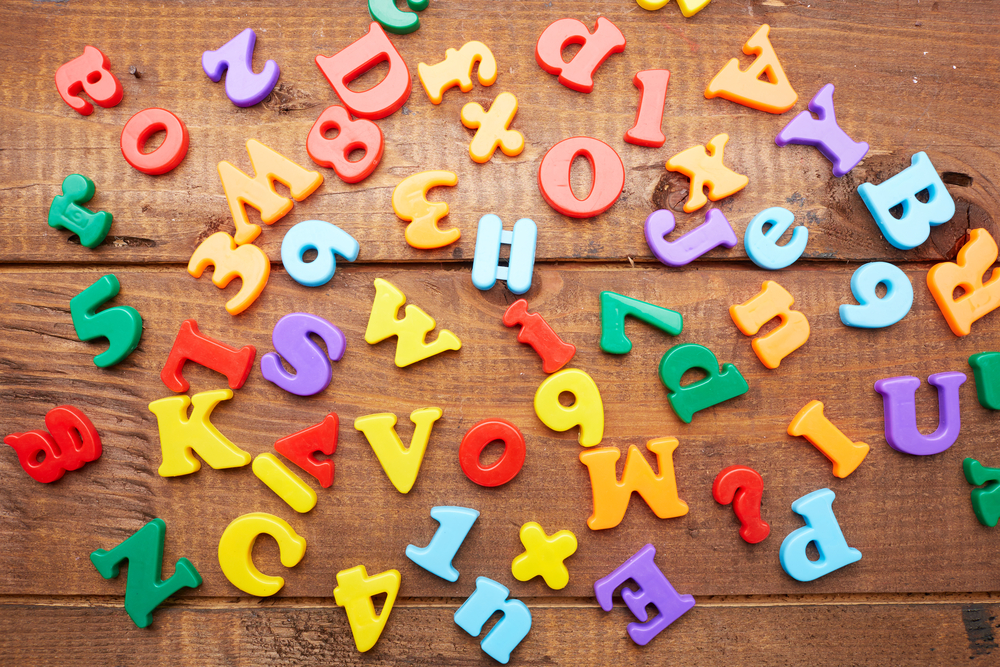
Those little plastic letter magnets that are probably hanging out on your fridge will come in handy for this one! If you choose to do this activity, collect things around your house with names that your child may be able to read.
Focus on items that are spelled with three or fewer letters — such as a cat stuffed animal, a toy car, a pot, or a baseball bat. When children have experience with the game or are a bit older, you can increase the number of letters per word up to five or more, depending on their reading level.
Next, gather the plastic letters from the fridge that match the items you’ve chosen. Spell out the name of each item using the letters. You may need to start with one or two items at a time, depending on how many letters you have on hand.
Lay the names of the items out on a flat surface with plenty of space in between each word so your child notices the distinction. Finally, have your child line up each item underneath the right word.
And when they’re finished, they can make a game out of playing with all the things whose names they read!
3) Rainbow Words

This exercise is great for children who may already have some words in their vocabulary vault but are still exploring how to read independently and need to familiarize themselves with a few more words.
If your child chooses to try this exercise, ask them to grab a poster board and several different colored markers. For our example, we’ll use all the colors of the rainbow!
Ask your child what they really, really love but aren’t sure how to spell yet. For example, your child might really love certain species of dinosaurs, so you could pick the word “stegosaurus.”
Or maybe they really love playing in the mud after a day of rain, so they could pick “puddles.”
Whatever they choose, aim for a word that is just a little bit outside of their current reading vocabulary, but is something they want to know!
Once you’ve singled out a word to focus on together, you can help them spell out the word in huge, bubble letters, colored like the rainbow. They can then color in the bubble letters with their coordinating rainbow colors — or get creative with multi-colored designs!
This gives them the chance to exert independence, which can help build their reading confidence. It also gives you some insight into the words they can practice and what subjects you can use to motivate them to learn more words.
It’s a win-win!
4) A Book of Your Book

If you’d like to try this exercise, start by grabbing six or so pieces of paper. Write a number (1 – 6) at the bottom of each. Then grab a (short) book your child loves and is familiar with.
This activity may take some getting used to, but once your child gets the hang of it, they can try the method with a new book they’ve enjoyed.
Next, work together to create your own version of the book with your child. Suggest that they draw the cover and then on each remaining page, a part of each scene (with your help if needed, of course!). As you discuss what happened in the book with your child, write down their narration.
And if your child has a different idea for the way the book ends (or for any part of the plot, for that matter!), they can edit the story to create a new ending.
This book will be extra special to them. They already loved it before, and now they will have a version of their own!
This is a fun way to teach reading because it lets kids get creative and artistic while developing their sense of reading comprehension. Visualizing the parts of a story on paper can help remind them what they just read and allow them to engage more deeply with the story.
You can also encourage your child to use this tactic as they grow older. If they ever need to recall the events of a story, they’ll have learned from you to visualize important moments and assemble them in the right order, “recreating” the book in their head.
5) Checkers With A Twist
For this activity, you’ll need your trusty Checkers game! Before playing, place a word on each square (or some of the squares if your child is younger). Sticky notes are great for this, or you can cut up small pieces of paper and tape them to the board.
Be sure to use words your child can sound out or sight words they’ve been learning. Play as always, but each player must read any word they land on.
This concept also works with Tic-Tac-Toe for younger kids!

6) Label the House
Turn your home into a word-learning environment by labeling everyday objects like door, bed, chair, and sink with index cards.
Throughout the week, point to the labels and read them together as you move around the house. Later, take the labels down, mix them up, and have your child put them back where they belong.
This activity strengthens word recognition by connecting print to real-life objects, making reading meaningful, relevant, and practical for young learners.
7) Find the Word
For this fun way to teach reading, make a list of six words that are at your child’s reading level — that means three-letter words for younger children and four- or five-letter words (or more) for older kids.
Make sure these are words your child can sound out or are high-frequency words they’re learning so they don’t get discouraged. We want them to have fun with this game!
To play, write each word on a sticky note. While your child has their eyes closed, hide the Post-Its around the room. Your child’s job is to find (and read) all the words. Each time they find one, they get to cross it off the list!
8) Pen Pals
Letters are fun to write and even more fun to receive! This pen pal activity lets your child experience the way reading and writing can be both personal and purposeful.
Write a note to your child, and find a surprising place to hide it. Maybe put it under their pillow for them to find in the morning, or in a pocket of the clothes they’re going to wear the next day.
When your child finds the note, see if they can read it to you. If they need help, read it with them. Have fun while you do it! Be expressive. Be funny. Be full of energy. The hope is for your child to link excitement to the process of reading.
Suggest to your child that they write a note, too. They can write it back to you, but they don’t have to. Who are they missing? A grandparent or a friend who’s away? Who would be fun to communicate with? Their teacher? Their sibling? Their dog?
If they can’t write yet, have them dictate the words they want to say to you.
Ask the people who receive your child’s notes to write back. (You may need to help the dog!)
Communication includes both reading and writing. As your child becomes a better writer, their reading improves. And as they become a better reader, their writing improves, too.
9) Personal Alphabet Poster
You can buy a biking-themed alphabet poster, an environmentally-themed alphabet poster, an animal alphabet poster, and so many more. But what about making a personal alphabet poster with your child?
Get a big piece of paper. (Poster boards work well, but so does cardboard, the back of an old poster, or even pieces of paper taped together.) Write the letters of the alphabet as big as you can, leaving space for words and pictures.
Once the alphabet is in place, brainstorm words. Choose one word for each letter, making sure each one is meaningful to your child. For example, their name can represent one letter. Their favorite food can represent another. Then ask your child to draw a picture for each word.
Hang the poster where you and your child can see it every day. Read different words together as part of your daily routine. Play a game where you ask your child to find a specific letter, find a word, or spell a word.
10) Library Time
Make a library nook in your home. You could place a bookshelf in the corner of your living room or a basket full of books in your child’s bedroom. Wherever you decide to put the library, focus on making it cozy and comfy!
Maybe your child wants a pile of stuffed animals to sit in it. Or maybe they want fairy lights lining the shelves. Add a few chairs or pillows for sitting. Get as creative as you can!
When you’re finished, spend some time with your child each day reading in the new library. Pretend one of you is the librarian. Take turns “checking out” books by stamping index cards and placing them inside the books like bookmarks.
Creating a designated reading space elevates the reading experience and turns it into something more special.
11) Book Mobile
Making a book mobile is a fun way to focus on the different parts of a story: characters, setting, important objects, and events. Ask your child questions about the story, like:
- Who was your favorite character?
- What inspired you in the book?
- What scene was the most exciting?
- What was the weather like?
- What place from the book would you like to visit the most?
Once you’ve generated a list of important details from the book, you and your child can turn them into a mobile in a bunch of different ways.
Draw each element on a separate piece of paper. Or make them out of modeling clay. Or go on a nature walk and pick up objects you find. Once you make the components of the mobile, hang them securely with string from a coat hanger, a dowel, or a stick.
Hang the mobile where your child can see it every day. Use it as a conversation starter. Ask your child to retell the story, sequence events, or share what parts of the book they love. After you talk, your child may want to go back to the book and read it again!
Fun And Effective Reading
Sometimes, the most helpful thing you can do as part of your child’s reading journey is to let loose and shake things up. We hope these creative ideas give you some easy options for new, fun ways to teach reading to your child!
We want to leave you with the reassurance that every child is different, and different teaching methods may work better for some kids than for others. With time, you and your child will work out a balance, routine, and set of techniques that set them up for success.
And in the meantime, if you ever need an extra helping hand, consider signing up for a free trial of our HOMER app! It’s full of interactive, personalized, and fun learning exercises for your child!
*The 6Cs Skills Framework is a science-backed framework designed by acclaimed developmental psychologists and learning scientists Dr. Kathy Hirsh-Pasek and Dr. Roberta Michnick Golinkoff (Becoming Brilliant, 2016).
Frequently Asked Questions
Is it OK that my child wants to read and reread the same books every day?
It’s more than OK! If your child wants to reread some of their favorite books, let them. They’re giving themselves multiple opportunities to improve their literacy. Rereading books has a ton of benefits.
It helps build new vocabulary. When your child is learning a new set of words, seeing them in the same context over and over again makes them easier to learn.
Fluency increases when your child rereads a book. As they read the same sentences many times, their reading develops from choppy decoding to a more fluid understanding of the meaning of the words.
Story comprehension improves when kids reread a book. The sequence of events makes more sense. Character development becomes clearer. Because your child can anticipate what’s going to happen next, they can read into the text more deeply.
Some other, less concrete but equally important, reasons to encourage rereading include the freedom that comes from your child being able to pick their own books, even if they pick them three, eight, or 20 times in a row. Feeling free to read inspires a love of reading!
Can I help my child learn math by using the same kinds of creative ideas?
Yes! Like reading, math can be taught in so many creative ways.
Pretend play, like imagining you’re running a store, is a fun way to learn about math concepts like counting and sorting. Building with blocks makes the concepts of adding, subtracting, and grouping easier to learn. Musical activities can integrate patterning and sequencing.
Your child can learn all sorts of math concepts in everyday life, too. Activities like cooking, cleaning, and grocery shopping offer plenty of opportunities for your child to practice with numbers.
What are the invisible skills that help lay the foundation of reading?
Fluency, vocabulary acquisition, phonics, and other tangible components of literacy aren’t the only skills your child needs for reading. Invisible skills like perseverance, focus, self-esteem, and problem-solving are equally important.
You can help your child learn these skills without a book in hand. Over the course of a day, your child has opportunities to practice all of them in various contexts, from doing a puzzle to taking a walk to engaging in their bedtime routine.