The question of how to make learning fun for kids often feels daunting to parents, but the answer is simpler than you might think. This guide is your blueprint for transforming your home into a place where your child can embrace creativity and curiosity with hands-on activities.
Discover easy, practical tips and engaging activities that blend education and everyday life to foster a lifelong love of discovery and knowledge in your child.
Key Takeaways
- Fun learning activities include kitchen chemistry, journaling, playing with flash cards, cooking and baking, mapping your neighborhood, and playing board games.
- To further encourage fun learning, shift the focus from work to exploration, create specific learning zones, use technology wisely, and follow their interests.
- Fun and games boost motivation and retention, reduce the stress that surrounds learning, and reinforce life skills.
6 Fun Learning Activities

1) Kitchen Chemistry
There are lots of different ways to incorporate kitchen chemistry into your child’s learning adventure. You can make playdough or slime out of common household items.
One of the most fun ways to practice kitchen chemistry is to make a vinegar and baking soda volcano. Here’s what you’ll need:
- Baking soda
- Vinegar
- Small container (like a canning jar)
- Liquid dish soap (to create lots of foamy bubbles)
- Food coloring (optional)
- Water (1-2 ounces, depending on the size of the container)
Place the container in the center of a deep baking dish or tray to catch the overflow. Pour an inch of warm water into the container, add a small squeeze of dish soap, and a few drops of food coloring.
Add 1 to 2 tablespoons of baking soda and stir carefully until it’s mostly dissolved. Then pour about ¼ to ½ cup of vinegar into the container to set off the chemical reaction.
Watch, enjoy, and then talk to your child about the scientific method.
2) Journaling
Having your child keep a journal helps them become a detective and an observer of the world around them, not just process their feelings.
Give them a notebook and some colored pencils and encourage them to observe, draw, and identify local wildlife, plants, or stars. As your child grows, they can expand their journaling into whatever they’re interested in.
3) Timed Flash Cards
Flash cards are great for practicing facts, but they can get boring fast. The key to making them fun is to add a challenge and a clock!
Turn math facts (like multiplication) or vocabulary words into a personal race.
Have your child go through a pile of flash cards as fast as they can, trying to beat their “personal best” time. This adds an exciting element of competition, and the repetition is great for learning.
4) Cooking and Baking
Cooking and baking aren’t just for making delicious food. They also require basic science and math skills.
The next time you’re cooking a meal or baking a batch of cookies, let your child measure out the ingredients. By doing so, you can help your child practice fractions, volume, and following directions carefully.
5) Map-Making
A fun geography and spatial reasoning project for your child is creating a detailed map of your neighborhood. Ask them to start with your house, then draw the streets, the park, and the houses of friends. Have them include landmarks like stop signs, big trees, or mailboxes.
This activity teaches concepts like scale, direction, spatial organization, and critical thinking.
6) Board Games
Board games aren’t just for rainy days. They’re packed with educational value, teaching everything from counting and strategy to reading and money management.
Here are some suggestions for fun and educational board games.
Scrabble®: A fantastic way to boost vocabulary and spelling. Plus, adding up the scores for each word is great math practice!
Flip 7™: This simple card game involves accumulating as many cards as possible before getting a duplicate number, making it a fast and fun way to practice number fluency.
Yahtzee®: Great for practicing strategy, addition, and grouping numbers.
4 Tips for Making Learning Fun for Kids

The world is full of fun learning activities for kids. But, in most cases, it’s the way you approach learning that makes the biggest difference for your child.
Here are four tips for making any activity a fun learning experience.
1) Shift Focus from Work to Exploration
Regardless of their age, the word “work” often sounds heavy and boring to kids. Replace it with words like “discover,” “investigate,” and “explore.”
Similarly, encourage “why” questions about everything. Think of every, “Why?” as a chance to learn something new (for both you and your child). If they ask something you don’t know the answer to, say, “That’s a great question! Let’s find out!”
Throughout it all, praise your child’s effort, not just the results or the number of answers they get right. Tell your child, “I love how hard you tried on that puzzle!” instead of just “You got eight out of ten right.”
When they know their effort matters more than a perfect score, they’ll be more willing to try hard things.
2) Create Specific Learning Zones
Designating different areas for different subjects can make learning feel less like one long session and more like a series of fun visits to cool and interesting spots.
For example, get your child a comfy chair or a pile of cushions on the floor for reading, and clear a place on the kitchen counter or table for math and science. Then, move to these zones when it’s time to switch topics.
Regardless of where your child learns, have the right tools and supplies on hand. This may include things like colored pencils, a magnifying glass, sticky notes, and building blocks. Tools like these encourage creativity and hands-on engagement.
3) Use Technology Wisely
Used correctly, technology can be a powerful doorway to knowledge for your child! Introduce them to apps that teach coding or reading through games. Look up virtual tours of famous museums or national parks. Watch documentaries about animals or history.
That being said, avoid viewing technology as a full-time babysitter. Set clear boundaries for how long and when screens can be used to ensure a healthy balance with hands-on activities and outdoor play.
4) Follow Your Child’s Interests
As an adult, you may want to stick to the plan when it comes to helping your child learn. But it can be incredibly powerful to let kids follow their own interests.
For example, if they suddenly get hooked on trucks, pause your plan and learn about engineering and how big machines work. If they suddenly show an interest in dinosaurs, set aside the times tables for a while and dive deep into paleontology research.
When you let them follow their interests, kids become super-charged learners. Why? Because knowledge that connects to something they already love is much more effective than just facts and figures.
The Fun and Learning Never End!
Discovering how to make learning fun isn’t a one-time thing. It’s a lifelong adventure for you and your child!
Whatever methods you choose, embrace curiosity, use hands-on activities, and celebrate your child’s effort. By doing so, you’ll be building a powerful foundation for your child’s success. And be sure to include apps full of fun and games to keep the excitement going.
The HOMER app by Begin uses personalized stories and games for kids ages 2–8 to boost important skills like early reading and math. Little Passports sends monthly boxes that let kids explore the world or dive into science with cool experiments.
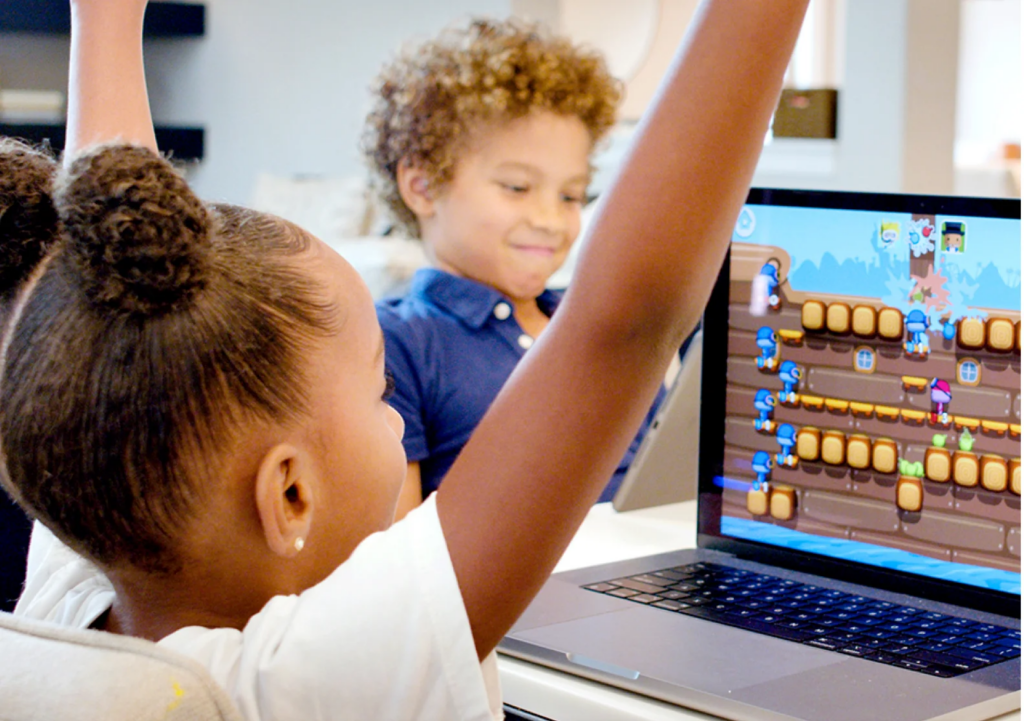
Lastly, the codeSpark app teaches kids as young as three the basics of coding through fun puzzles and creative play.
Let the learning fun begin!
Frequently Asked Questions
What are the four types of learning styles?
Every child learns a little differently. Knowing their style can help you choose the best activities for them. The four types of learning styles are:
Visual: Children who prefer this style learn better through charts, pictures, videos, and demonstrations.
Auditory: Children who prefer this style learn better through discussions, reading aloud, and listening to lectures and podcasts.
Reading/writing: Children who prefer this style learn better by taking notes, reading textbooks, and writing out information to remember.
Kinesthetic: Children who prefer this style learn better through hands-on activities such as doing experiments, moving around, building things, and role-playing.
How long should fun learning sessions last?
Keep your fun learning sessions short and high-energy. Most sessions should last between 20 and 45 minutes, depending on your child’s age and attention span.
Harness the power of their preferred learning style(s), but always include movement breaks such as a quick stretch, a jump rope session, or a trip outside. For your younger learner, switch to a completely different activity to keep the energy high and prevent boredom.
Are hands-on activities better for learning than worksheets?
While worksheets have their place for practicing repetition, hands-on activities are usually better.
Hands-on activities increase engagement because your child is actively doing something and making brain-body connections. They also strengthen problem-solving skills because your child has to figure out how to make something work, not just what the answer is.
Finally, hands-on activities encourage curiosity because your child can experiment and see immediate results.
How do I tell if an activity is age-appropriate?
Do your best to find the sweet spot of an activity that’s challenging enough to be interesting, but not so hard that it causes frustration.
First, consider age-related milestones for your child. Think about what they can physically and mentally do at their age. For example, your 5 year old might not have the fine motor skills for intricate map drawing, but they can draw a simple, colorful path from the house to the park.
Finally, observe your child during the activity. If they are smiling, focused, and asking questions, it’s probably a perfect fit! If they are upset, quiet, or completely checked out, it’s time to switch to something else.