
To work up to counting, adding, subtracting, and multiplying, your child will first master a universally helpful skill—number recognition! Core skills like math are part of the 6Cs at the heart of the Begin approach that helps kids thrive in school and life.
Kids with well-developed core skills early in life tend to have greater academic success down the road.
But what does it take to help your child learn to recognize numbers? We’re here for you with research-based tips and games perfect for developing your preschooler’s skills at home (while having lots of fun!).
Key Takeaways
- There are many number recognition games you can play with your child to reinforce the skill. These include Number Bubbles, Number Scavenger Hunt, Drawing Numbers With Shaving Cream, Number Basket Toss, Number Cookies, Number Golf, and Number Crush.
- Parents can help kids with numbers by practicing the language of math, reinforcing number sequencing, using counting principles, taking numbers out of context, and practicing with digital games.
- In their first year, kids learn descriptive words for quantities and measurements, such as more and bigger. By three years old, children can recognize numbers from 1 to 10, and by four years old, they recognize numbers to 20. By age five, they can write numerals up to 10, and by age six, they can write numerals up to 20.
Table of Contents
- What Is Number Recognition?
- The Importance of Number Recognition
- Number Recognition Milestones by Age
- Tips for Encouraging Number Recognition
- Number Recognition Games
What Is Number Recognition?
Number recognition is recognizing numerals and written numbers. It is also learning how to write numbers and match them to their representative quantities. It’s no easy feat!
Number recognition is an essential core skill needed to solve basic mathematical problems.This process takes time, patience, and lots of practice. But with encouragement, kids can master it!
The Importance of Number Recognition
Number recognition is the foundation of arithmetic. Before your child can add, subtract, multiply, or divide, they’ll need a strong understanding of what numbers are and how they function. This includes:
- Quantity recognition
- Number name recognition
- Numerical digit recognition
- Ability to write numbers
Number Recognition Milestones by Age
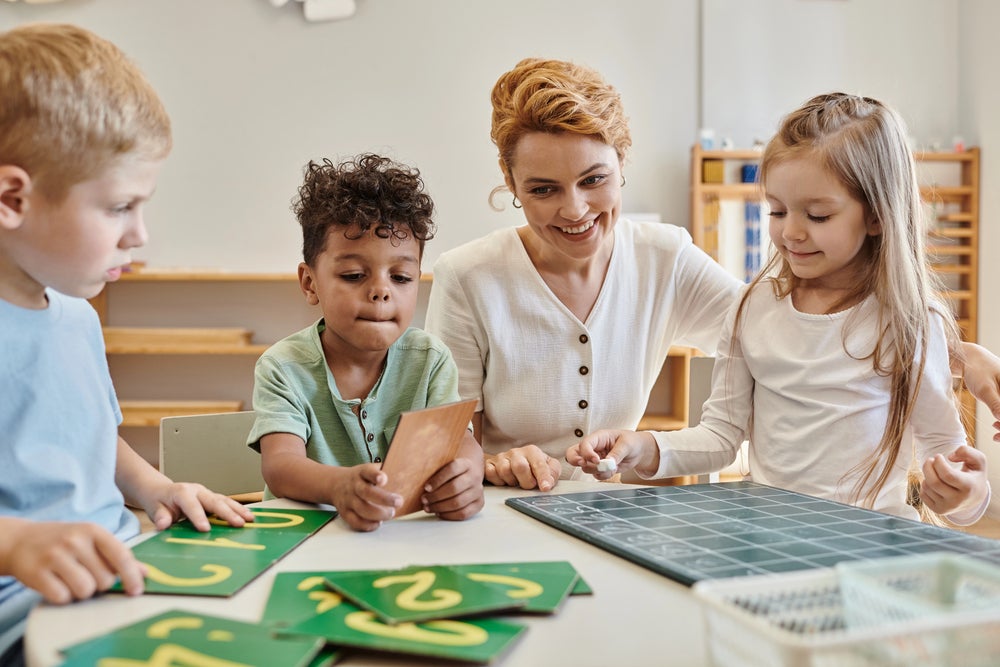
Typically, children are exposed to numbers in their first year of life and start recognizing them by age two or three. Keep in mind, however, that all kids learn differently, so use the following only as a general guide.
Birth to 12 Months
Right from the get-go, your baby is exposed to numbers. During the first year, they’ll start to understand that certain words describe quantities and measurements.
One to Two Years
By one to two years old, kids typically begin to realize that numbers correspond to how many there are of something. While they’re not reliably counting accurately or understanding exact quantities, this lays the foundation for the number sense they’ll gain later on.
Two to Three Years
By two or three years old, kids may start to recognize, identify, and count numbers from 1 to 5. Tools like flashcards, counting games, and number-centric stories can help boost their recognition.
Three to Four Years
By age three to four, your child may recognize, identify, and count numbers up to 10. By this age, they’ll start to understand comparisons between numbers like more or less. They are also learning to match quantities to a written number.
Four to Five Years
By age four to five, kids start to recognize, identify, and count numbers up to 20. They are also beginning to understand sequential order (e.g., first, second, third).
Five to Six Years
By age five or six, kids understand the concept of addition as “adding to” and subtraction as “taking from.” They also can also describe and compare measurements.
Six to Seven Years
By this age, kids are beginning to understand place value and how to solve addition and subtraction problems.
Tips for Encouraging Number Recognition
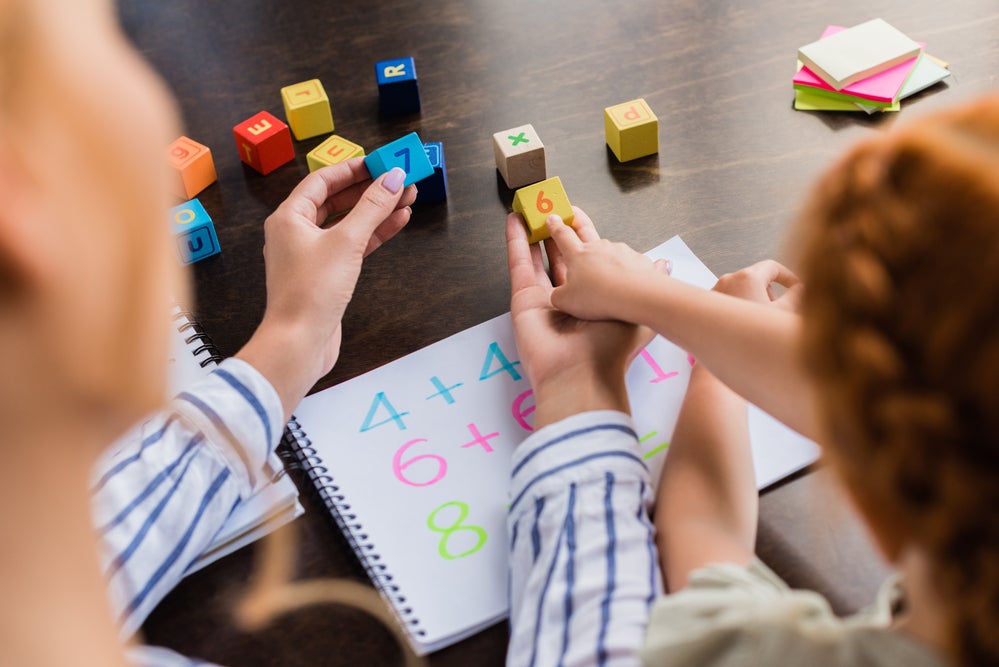
Practice the Language of Math Together
Thinking of math as a separate language may sound funny at first, but think about it — as we advance in math, we’re always learning new terms, like primes, composites, and absolute value.
While your child won’t be solving quadratic equations just yet, at their age, numbers can be equally confusing. By speaking to your child using “math language,” you can help this new world of numbers and symbols feel more familiar.
We recommend incorporating number names, counting, and basic addition or subtraction terms into your daily conversations.
Keeping it short, simple, and sweet can be super effective in these early learning stages.
For example, you can sneak math experiences into small moments you share with your child.
If you are making dinner together — let’s say assembling pizzas — you can ask your child to help you count the number of pepperoni slices you want on your pie.
You can create math conversations anywhere using words such as:
- More
- Less
- Straight
- Curved
- Longer
- Shorter
- Heavier
- Lighter
Try doing this while folding laundry (How many blue socks do you have?), running errands (There are two red cars beside us, but there are four black cars ahead of us. Are there more red or black cars?), or just watching a movie (Which character is the tallest?).
Showcasing how common numbers are in our daily lives, as well as how they can spark conversations, will motivate your child to learn number recognition! well as how they can spark conversations, will motivate your child to learn number recognition!
Reinforce Number Sequencing
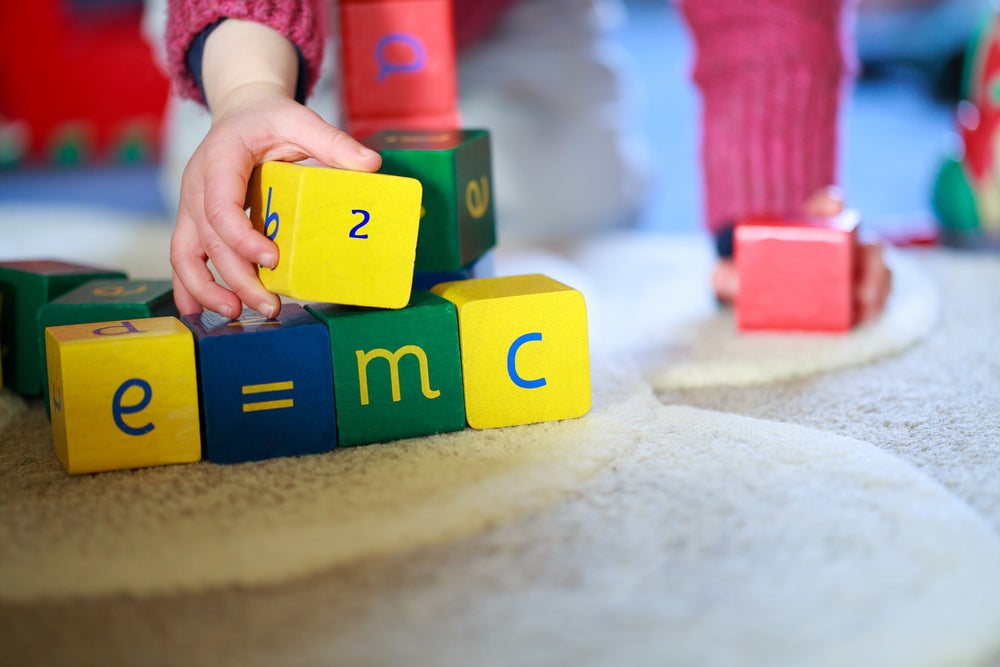
Knowing what numbers come before and after one another will help things make sense in your child’s mind. As they begin working on number recognition, we encourage counting and organizing numbers in order, i.e., in sequence.
Their skills will grow over time. Once that happens, you can play around with numbers together by counting by twos, fours, or even counting backward.
The possibilities are endless! But we recommend mastering the basics of sequence counting first.
Use Counting Principles
Even as your child learns to count in sequence, they will also learn that as numbers ascend, their values increase as well.
When counting objects, your child will learn that only one number is “assigned” to each object they count. To identify how many items are in a single group, they will assign a number to each one, in sequence, until they’ve all been counted.
This is a difficult aspect of number recognition. Have no fear, though! With time (and the fun, easy games we’ve listed for you below), your child will get there.
Take Numbers Out of Context
You want to make sure your child isn’t just memorizing a sequence but truly understands each number on its own. Choose a number and have your child write it and demonstrate a grouping of that number. For example, ask them to write the number six and then get six blocks.
Practice with Digital Games
Another way to reinforce your child’s learning of number recognition is through digital games. Our HOMER app is a great way for children learning the foundations of math to practice skills such as number recognition, sequencing, and counting.
Number Recognition Games
Number Bubbles
What You’ll Need
- Chalk
- A bubble blower
- Some sunshine! (You’ll be playing outside)
What to Do
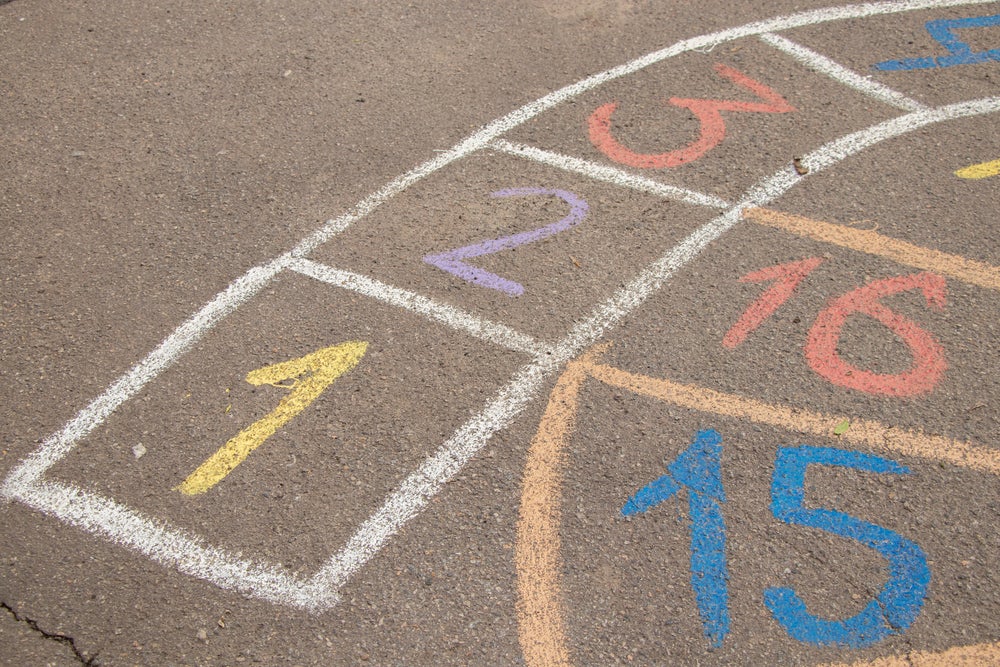
Draw numbers on the sidewalk with chalk. Don’t be afraid to start small with numbers 1–5. You can gradually expand the numbers your child works with as they get more comfortable with small numbers. Next draw a circle (the “bubble”) around each number.
Now call out a number for your child to identify.
For example, you might call out the number 4. Your child’s job is to run to the number 4 as fast as they can. If they identify the number correctly, shower them with bubbles from the bubble blower!
Repeat until you finish all the numbers or run out of bubbles.
Number Scavenger Hunt
What You’ll Need
- Walk-worthy weather
- Number cheat-sheet (optional)
What to Do
The best part about this game? You can take it anywhere! Go on a stroll with your child. Around the block, in a park, through the grocery store—really any place will do.
Hunt for numbers in sequence. For example, if your child sees the number 1 on a neighbor’s mailbox, they must point to it and shout, “One!”
Then search for the number 2, 3, and so on. Each time you play, you can aim to reach a new “high score” by identifying the numbers that follow the number you ended with in the last game.
When your child is just starting out, it may be helpful to have a cheat-sheet handy with numbers and names. That way, in case they can’t identify the number they spot, you’ll be there to lend a helping hand!
Drawing Numbers with Shaving Cream
What You’ll Need
- Shaving cream
- A flat, dry surface (like a baking pan)
- Lots of paper towels for cleaning up
What to Do
This activity is a surefire hit. Mostly because kids love any excuse to get messy! They’ll have fun and hone their number recognition skills at the same time. It’s a win-win!
To start, cover a flat, clean, dry surface with a good bit of shaving cream. Try to keep the shaving cream somewhat level and flat so it’s easy for your child to see what they’re drawing.
Your job is to call out number names. Your child will try to draw the number you gave as a prompt. For every correct number they draw, they receive a point. Be sure to smooth out the shaving cream either after each number or when the tray gets full.
The tactile nature of the activity means your child is sure to be engaged, excited, and absorbing all the numbers they draw!
Number Basket Toss
What You’ll Need
- 2 or 3 laundry baskets or buckets
- Sticky notes
- A marker
- Paper balls (at least 20)
What to Do
Using the marker and sticky notes, label each of your baskets or buckets with a different number. We encourage you to change it up to make the activity more challenging!
For example, if your child is just starting to work on number recognition, you could label them 1, 2, and 3; but to advance in difficulty, you could choose 4, 7, and 10.
Scrunch up pieces of paper into balls. Your child’s goal will be to throw the correct amount of paper balls into each receptacle until they hold a matching number of balls. So, the #3 basket or bucket would hold three paper balls.
Once all of the baskets or buckets are full, your child’s reward is to dump the balls over their head—or yours. Make sure to play up the excitement!
As we mentioned before, there are all types of ways to make this activity unique to your family.
You can add or subtract the number of receptacles, use colored paper to signify different number values for the paper balls, add in bonus points for trick shots… the list goes on!
Number Cookies
What You’ll Need
- Sugar cookie batter
- Number shape cookie cutters (optional)
What to Do
What’s better than a math activity with a sweet prize at the end?
Together, you and your child can not only be master bakers but master mathematicians, too. Using an easy sugar cookie dough recipe, you and your child will make and form cookies into small number shapes.
It might take some creativity and handiwork to figure out how to make the dough look like numbers. But don’t worry; if the process ever becomes too difficult, that’s what the cookie cutters are for!
Number Golf
What You’ll Need
- Paper
- Marker
- Play dough or clay
- Craft stick
What to Do
Number Golf is a sporty way for your child to practice their number recognition.
First, draw circles on a piece of paper to represent the holes. Each circle should have a number written on it. You can start with nine-hole golf (the circles would be numbered 1-9) and make your way up to 18 when your child is ready.
Set the paper on the floor. Next, have your child make a golf ball out of the play dough or clay. Now it’s time to play!
Call out a number. Ask your child to find the number on the paper and hit the ball with their craft stick “golf club” so that it lands in the correct circle. It’s OK if they get the number wrong or the ball doesn’t land in the correct circle on the first “swing.” That’s part of the fun!
Number Crush
What You’ll Need
- Play dough
- Paper
- Marker
What to Do
With Number Crush, it’s OK to smash and squash; in fact, it’s encouraged! Start by making lots of balls with the play dough. Then call out a number and encourage your child to crush that number of balls. When they’ve crushed them all, they can re-roll them and play again.
You can make this game harder by asking kids to first write the number that you called before they start smashing.
Number Recognition with Begin
With number recognition under their belt, your child will be able to master those first tricky aspects of pre-K math in no time.
And check out the HOMER app, which has fun and effective number recognition games built right in. Let Begin make identifying numbers as easy as 1, 2, 3!
Frequently Asked Questions
What’s the difference between number recognition and number formation?
Number recognition is the ability to identify numbers. Number formation, on the other hand, refers to writing numbers. By the time your child is in elementary school, they will begin to have both of these important number skills.
What if my three-year-old cannot recognize numbers?
Kids learn at their own pace. Don’t worry if your child is taking a little bit longer to acquire this skill! Even though they might not recognize written numbers, they may have developed number sense—for example, knowing if there are three people having lunch, three plates are needed.
To help your child progress, give them extra support at home by playing games and doing number-related activities.
How many numbers should my child recognize by fourth grade?
By fourth grade, your child will likely be able to identify numbers up to 10,000 and skip count to 100 by 3s, 4s, 5s, 6s, 7s, 8s, 9s, and 10s.