Teaching social skills to kids is one of the most complex, confusing, yet rewarding aspects of parenthood.
It’s no secret that preschoolers and kindergarteners are naturally egocentric, even when playing or interacting with others. Many children have difficulty sharing, empathizing, collaborating, and cooperating.
Begin is here to help you learn crucial social skills for kids, as well as how to incorporate them into your family life.
Key Takeaways
- Ten critical social skills to teach your child are sharing, listening, following directions, collaboration and cooperation, patience, empathy, respecting boundaries, positivity, conflict resolution, and resilience.
- You can support your child’s learning by modeling social skills for them, but you can also help your child by normalizing mistakes, building emotion-based language, and encouraging sharing.
- You can also pay attention to your child’s ability to listen, give simple directions, and show empathy as you teach them social skills.
Table of Contents
10 Important Social Skills for Kids
1) Sharing
Sharing is a necessary part of daily social interactions. That doesn’t mean it’s easy! It’s a difficult concept for young children. Toddlers, preschoolers, and kindergarteners have a particularly difficult time, as they’re more focused on their own needs and desires than those of others.
2) Listening
Active listening is an important skill that even some adults struggle with. Properly deciphering and absorbing information requires significant focus. We all know this can be challenging for young kids, but active listening can strengthen their receptive language skills (the ability to comprehend spoken language).
Receptive language skills help your child:
- Handle social interactions
- Answer questions
- Understand stories
- Comprehend what they’re reading
- Understand gestures
While developing their social skills, your child will come to see how important it is to actively listen when others are speaking. Paying attention to what someone is saying and responding directly to their statements or questions is a big part of healthy communication.
3) Following Directions
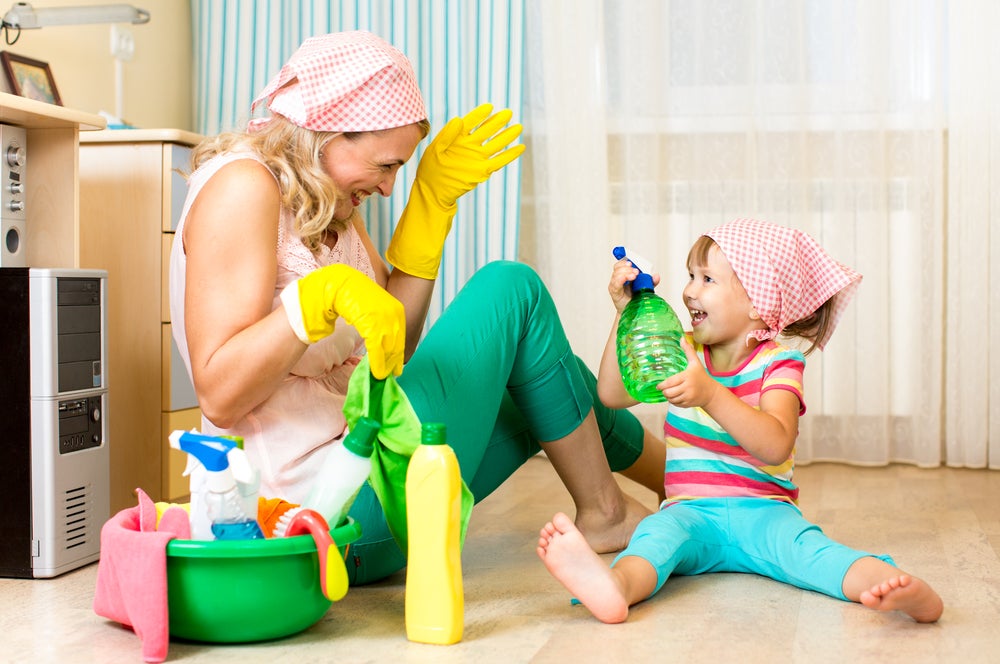
The cousin of good listening skills is executing the instructions your child heard (a.k.a., following directions!)
Following directions becomes particularly important once your child enters into their school years. It’s one thing to follow directions at home where they’re innately comfortable; it’s another task entirely to follow directions from adult authority figures they may not know well.
Your child will learn how listening and following directions overlap with one another. If they listen well, it becomes easier for them to follow directions accurately. And when they follow directions accurately, they’ll often be rewarded for their hard work!
Keep in mind, however, that multi-step directions are challenging for young kids. To help them develop the ability to follow directions, give them one direction at a time.
4) Collaboration & Cooperation
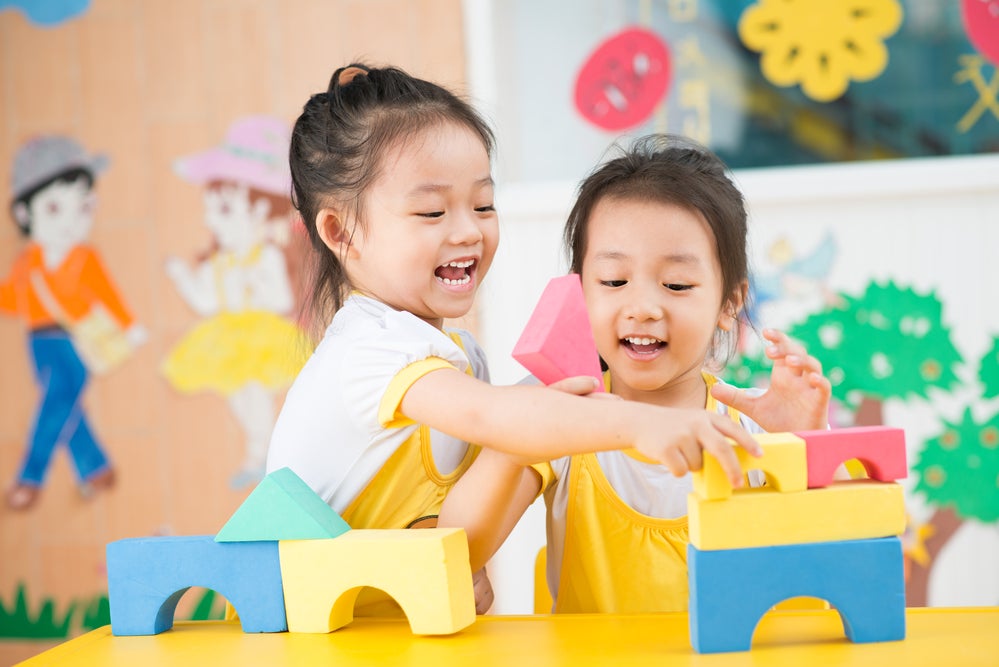
Similar to sharing, your child will learn to move beyond sharing objects to sharing ideas, stories, and work.
With good collaboration and cooperation skills, kids will learn that working in a group gives them a chance to express their ideas and listen to the ideas of others. It allows them to see that it can be fun to work on a shared project!
This may sound simple, but for young children, cooperation can often require real effort. It will take time for them to learn to respect others’ opinions even when they’re different.
By working together toward a common goal, kids can advance their sharing skills to integrate intellectual and physical tasks—like clearing the dinner table with a sibling!
5) Patience
Patience may be a virtue, but it’s not an easy one to acquire! It’s normal for young children to be impatient. However, patience is an especially rewarding social skill for kids that will serve them well for their whole lives.
Patience is critical for many things, including maintaining relationships and achieving big goals that can only be completed over an extended period of time. This is where the concept of delayed gratification comes into play.
When you help your child understand that good things often take time, you nurture them into a patient person. How to Teach Kids Patience: Tips and Activities can be challenging for enthusiastic, passionate kids who live in the moment and want things right away! Persevere in the practice of patience. It will come!
6) Empathy
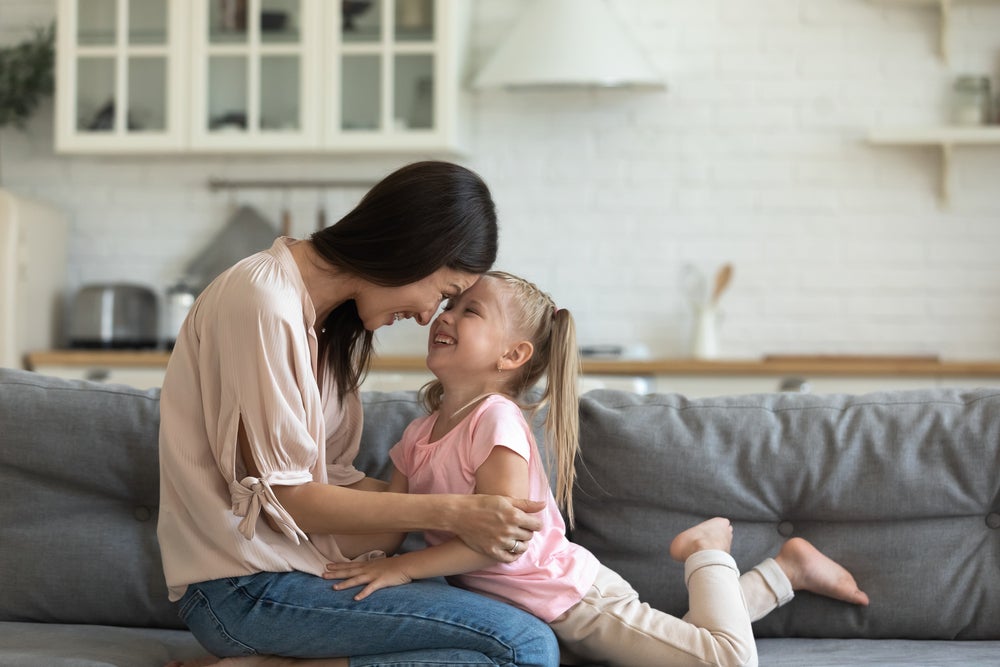
Empathy means the ability to understand and share the feelings of another person.
Your child will learn how to appreciate the similarities and differences between their lives and those of people they meet. They will also learn how to empathize with these people, no matter how different they are.
For young children, this can mean small gestures. For example, if your child is playing with a specific toy, and their friend or sibling cries, they may pause and say, “I know you want to play, too. Don’t be sad. We can take turns!”
But this sense of empathy will likely not appear overnight. Empathy develops over time. The easiest way to promote your child’s development of empathy is by showing it in action. When you extend grace to your child often, they will learn how to extend it back.
7) Respecting Boundaries
Some people require different emotional and physical boundaries than your child.
This can be a particularly difficult concept to learn, especially for very young children who receive most of their socialization from within the household.
Likely, if your child is extroverted, they may assume everyone is OK with hugs, questions, or lots of chit-chat. In some cases, they may be right! In others, they may accidentally cross boundaries in their efforts to be friendly.
Teaching your child how to ask permission and identify boundaries helps them establish a sense of respect between themselves and others.
The same goes for helping them establish boundaries for themselves. Let your child know that it’s OK to say no to hugs, kisses, or other displays of affection from someone, no matter who it may be, if they feel uncomfortable.
Model this idea by asking questions yourself (“Would you like a hug?”). When they make their boundaries clear and ask others to do the same, it will make both parties feel much more at home.
8) Positivity
Working on positivity can make it exponentially easier for your child to tackle many of the other social skills for kids we’ve mentioned, especially patience, boundaries, listening, and sharing.
With a positive attitude, your child will find it easier to make and keep friends, succeed in school, and achieve their goals. The more positive you are about your child’s social skill development (including their inevitable slip-ups), the more positive they will become themselves.
This doesn’t mean you have to be positive all the time. In fact, a healthy amount of honest criticism can be beneficial in helping your child learn to express their feelings.
To do this, start with your own emotions. Let them know how you’re feeling and how you’re managing it in real time if you can. Kids need to know it’s OK to be sad, angry, or mad sometimes and how to handle it.
By acknowledging and processing difficult feelings together, it’s easier to turn them into a positive lesson for the future.
9) Conflict Resolution
It certainly isn’t easy to resolve conflicts. Even for adults! So many other skills have to be solidly in place to give it a real try. You need to be able to identify your own emotions. You need to be able to see someone else’s perspective. You need empathy and imagination.
That’s a lot, right? But conflict resolution skills are incredibly valuable! They’re the cornerstone of productivity and the foundation for building community. If your child can solve problems with their friends, family, schoolmates, and others, they can do a lot in the world and for the world.
You can help your child build conflict resolution skills. Show them how to recognize and name emotions, both their own and those of the other person. Teach them how to see the other person’s perspective. Guide them in identifying the source of the problem.
How do you support all of these skills? Model them, for one thing. If your child is there when you’re in the middle of a conflict, let them have a front seat to the process of resolving it. Talk to them about your past experiences with it. Read books about it. Role-play it.
And when your child is in the middle of a conflict with someone, like a friend, for example, mentor them through it. Ask both your child and their friend questions like:
- “What do you think about that?”
- “How did you feel?”
- “How do you think [the other person] felt?”
- “What did you say or do (or not say or do), and why?”
- What can you say or do (or not say or do), and why?”
Finally, you can brainstorm with your child and their friend ways to solve the conflict. Let’s say they both want to be teachers during their pretend school day. Maybe they take turns. Or maybe they compromise and let their stuffed animal be the teacher.
Or maybe they come up with a totally different and wonderful idea themselves!
10) Resilience
A common denominator in these social skills is that they take time to learn. Your child might not get them right the first time, the second time, or even the third. But that’s how it’s supposed to be! Your child should make mistakes. Plenty of them. It’s how they’ll master these skills.
This means your child needs to build resilience. And part of the way to do that is by feeling safe doing things outside of their comfort zone. Make sure they know that it’s OK to make those mistakes. It’s OK to try something new. Urge them to let go of “what if I do this wrong?”
Try to nurture the mindset that trying equals success. Kids who are comfortable with (and even embrace) challenges can learn more and go farther. Their resilience gives them opportunities, again and again, to build problem-solving skills, patience, and self-esteem.
How to Teach Social Skills to Kids

Normalize Mistakes
Your child should know that you do not expect perfection. There is no way to execute all of these social skills every time, everywhere, without mistakes. That is OK! In fact, it’s encouraged. Mistakes are normal; they’re how we learn what went right or wrong.
Make sure you normalize this for your child. If they know all humans learn lessons this way, it’ll be easier for them to push through the sting of a mistake and try again.
Share Language for Expressing Emotions
Regardless of whether your child makes a mistake or doesn’t, knowing how to express what they feel in that moment is vital.
Let’s say your child and their friend are drawing side by side. Then their friend leans over and scribbles on their paper. Your child begins to cry. Making a connection between what happened (their picture being ruined) and how they feel (sad) brings a sense of self-comfort.
After your child identifies their sadness, they communicate it to their friend. “I feel sad because you scribbled on this picture I’m drawing.” Now their friend knows how they feel, too. This common knowledge creates space for empathy and possible positive change.
Having the language to identify and then communicate a feeling builds self-awareness and interpersonal awareness. Research shows that this ability to “use words” improves independent and cooperative play, teaches better sharing skills, and reduces unprovoked aggression.
How can you help your child learn how to express themselves? Here are a few ideas:
- Model naming emotions
- “I feel frustrated…”
- Narrate your child’s actions using emotion-based language
- “You’re yelling. It seems like you’re angry…”
- Connect body language with emotions
- “I heard you stomp your foot on the ground. Does that mean you’re angry?”
- Create a simple framework for practicing naming emotions
- “I feel [emotion] because [reason].”
Encourage Sharing (Without Violating Boundaries!)
Although sharing is great and should be encouraged, there may be some things that are special to your child that they don’t want to share. This can be especially true of stuffies, blankets, or special toys. This is OK, too! It’s great for your child to set boundaries that everyone respects.
To encourage sharing, try not to force it. Encouraging without forcing also demonstrates to kids how boundaries can be created, acknowledged, and respected between people.
This will motivate them to share with those around them by taking comfort in the fact that what is special to them has been kept sacred and separate. It will also encourage them to be direct about their and others’ boundaries when it comes to play, school, or emotional issues.
Check Their Listening
During social interactions within your own family or outside of it, pay attention to your child’s listening skills. You can observe them to see if they are listening carefully. Do they seem engaged? Are they asking questions?
If they’re having trouble listening, try simplifying your speech and saying just one thing at a time. And remember it is just as important to listen to your child. This shows them that what they are saying is important and encourages them to listen to you in return.
Think About How You Give Directions

In teaching social skills for kids, the parent or authority figure is responsible for ensuring the directions they give are something a young child can execute successfully.
When giving instructions, be clear, firm, and gentle. As we mentioned earlier, young kids have a very difficult time executing tasks given with many directions all at once. Start with one direction at a time that your child can focus on.
When giving instructions, have your child repeat what you want them to do. Only give an additional instruction when the first has been completed. Repeat until the task is complete.
Your child can give you directions, too! That way, they have a sense of what it takes to delegate, manage, and execute a task from start to finish. Have fun with it! Popular games like Simon Says are a fun way to play and practice the skill of following instructions together.
Give Empathy to Get Empathy
Show your child that you think about other people’s emotions, too! This is less of a teaching moment and more of an authentic display of empathy.
If you see that your child is expressing an emotion, validate it for them. “Oh, I see that you’re excited. I love that you’re so eager and happy to do this!”
You can acknowledge negative emotions, too. For example, you might say, “I know that must make you angry. What can we do together to make you feel less unhappy?”
This not only helps them feel seen and heard in the moment, but it also gives them a direct example of how to tackle empathy with others in similar situations.
Social Skills for Kids with Begin
The more your child experiences the benefits of social skills, the more intuitive these skills will become for them. With practice (and patience!), we know they’ll get there.
Ultimately, social skills, such as sharing, patience, and empathy, are about cultivating healthy relationships. Learning them now will help your child throughout their school life, in sports, and anywhere they grow.
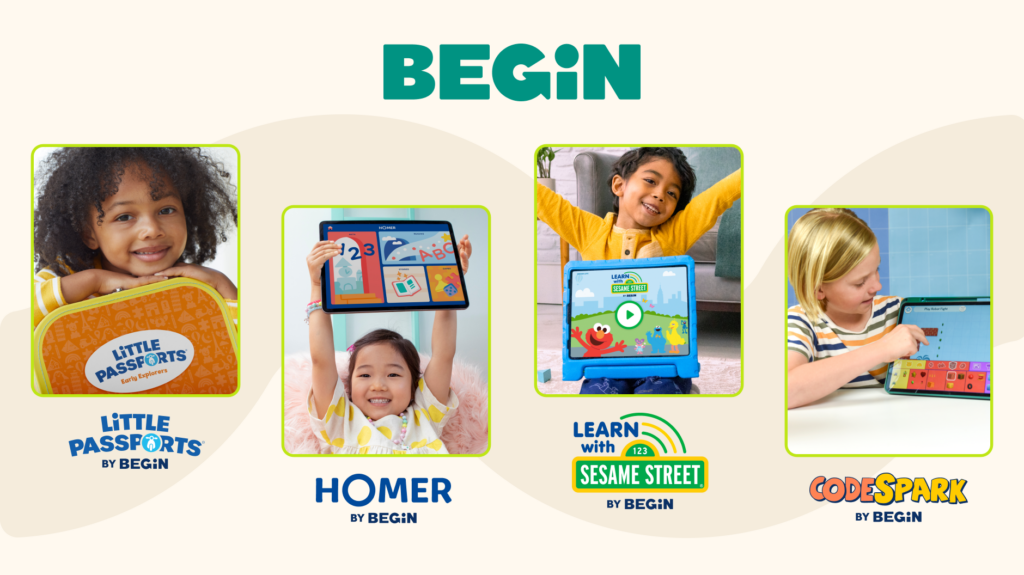
We include social skill-building activities in almost all of our Begin products, whether it’s stopping a donut thief in codeSpark, learning to take turns on the slide in HOMER, or expressing emotions with the help of their Sesame Street friends in Learn with Sesame Street.
Frequently Asked Questions
How do I help my child learn social skills if they’re shy?
Respect your child’s boundaries. Being shy does make it harder to practice some of the more “social” of the social skills. Collaborating, for example, may be a challenge. Try taking it slow. Ask your child to take small steps forward, such as collaborating with a sibling.
Brainstorm some alternatives with your child. How can they communicate without talking? Maybe they can draw what they want to say. Or act it out. Or have their stuffies act it out.
And celebrate the social skills they can practice! Some of the ones we mention above, like following directions, empathy, positivity, and resilience, might be easier for your child to learn because they may be in your child’s comfort zone.
How can I teach my child social skills without “teaching?”
Kids often know when we’re trying to make a “lesson” out of something! Sometimes that’s the best choice, though. Teachable moments are important to embrace. In real time, you can slow down, name emotions, perspective-take, and brainstorm solutions.
But you can “slant” teach, too. When you’re watching a movie or a TV show with your child, talk about what the characters are feeling and doing. Read a book together and do the same thing. Or tap into your child’s creativity and create social situations with stuffies or dolls.
When should I start teaching my child social skills?
The short answer is as early as you can. Kids can begin learning social skills when they’re babies, and they continue from there. Just set your expectations at your child’s age level:
- Baby: mimicking facial expressions and making eye contact
- 2-3 year old: share toys side by side and mimic each other
- 4-5 year old: helping friends, taking turns, and showing empathy
- 6-7 year old: communication, resolving conflict, and compromise