When your child can read, they can explore new worlds and learn about anything they want to study. As their first teacher, you play an important role in their early literacy development. One way to support them is by introducing sight words for kindergarten.
In this guide, we’ll examine these words and explain why they’re essential for your child’s reading success. We’ll also provide a list of common sight words for kindergarten and tips for helping your child master them.
Key Takeaways
- Sight words are a group of common words that we memorize, or recognize “by sight”.
- Some examples of sight words for kindergarteners are “be,” “do,” “four,” “good,” and “must.”
- Tips for teaching sight words include starting with only a few words at a time, keeping practice sessions short, and sorting sight words into categories.
- More tips for teaching sight words include getting creative with your teaching methods, using multiple senses, staying positive, and linking the words to your child’s life.
- Activities for practicing sight words include spelling with magnetic letters, playing games with flashcards, writing sight word songs, and creating art as part of the sight-word learning process.
- Phonics teaches your child to decode words by sounding out letters, and sight words teach them to remember whole words.
Table Of Contents
- What Are Sight Words?
- Sight Words for Kindergarten
- Tips for Teaching Sight Words
- Activities for Practicing Sight Words for Kindergarten
What Are Sight Words?
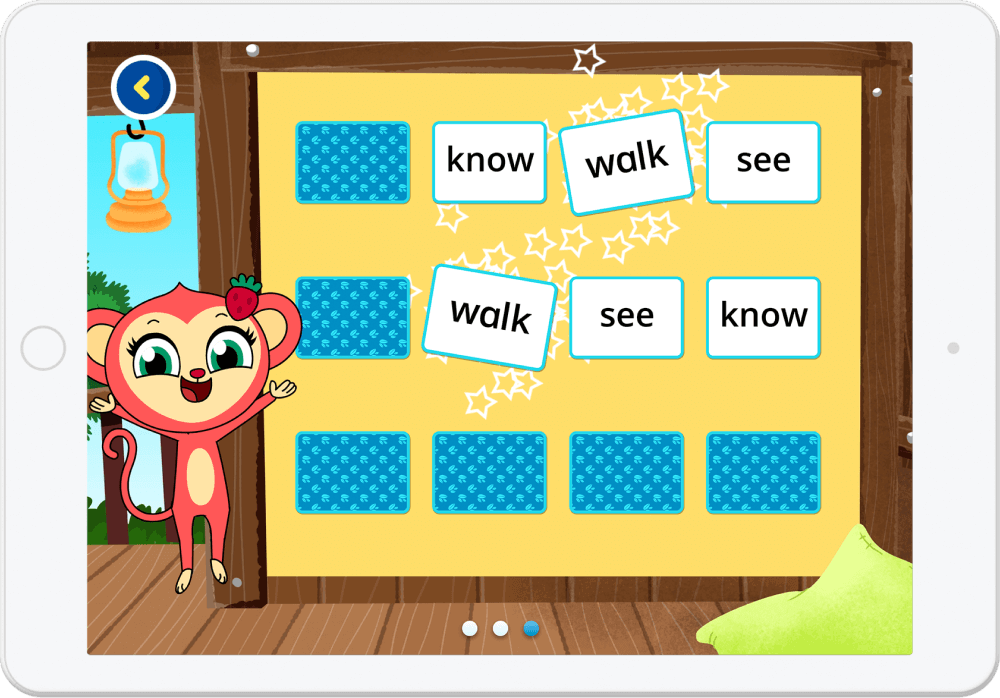
Sight words are common words that we memorize “by sight”. If your child learns to recognize these words automatically, it’ll help them read more fluently. This means they can focus on comprehension and understanding the meaning of the text rather than struggling to decode each word.
Two different sight word lists dominate early reading instruction: the Dolch Word List and the Fry Word List. Each is broken down into different levels based on difficulty.
Dr. Edward William Dolch developed the Dolch Word List by studying children’s books in the 1930s and 1940s. His list has 315 total words. Of those, 220 are divided into grade levels. The other 95 words are high-frequency nouns students will be exposed to as they read.
Dr. Edward Fry created the Fry Sight Words list in the 1950s using a method similar to Dr. Dolch’s. He then updated his list in 1980. Today, the Fry Sight Word list has 1,000 words in total. They’re divided into bands of 100 words based on how often they occur in the English language.
If you’re not sure which of the two lists to use, ask your child’s school or teacher if they have a preference. Or, you can simply pick one and begin using it. Many of the words overlap.
Sight Words vs. Phonics
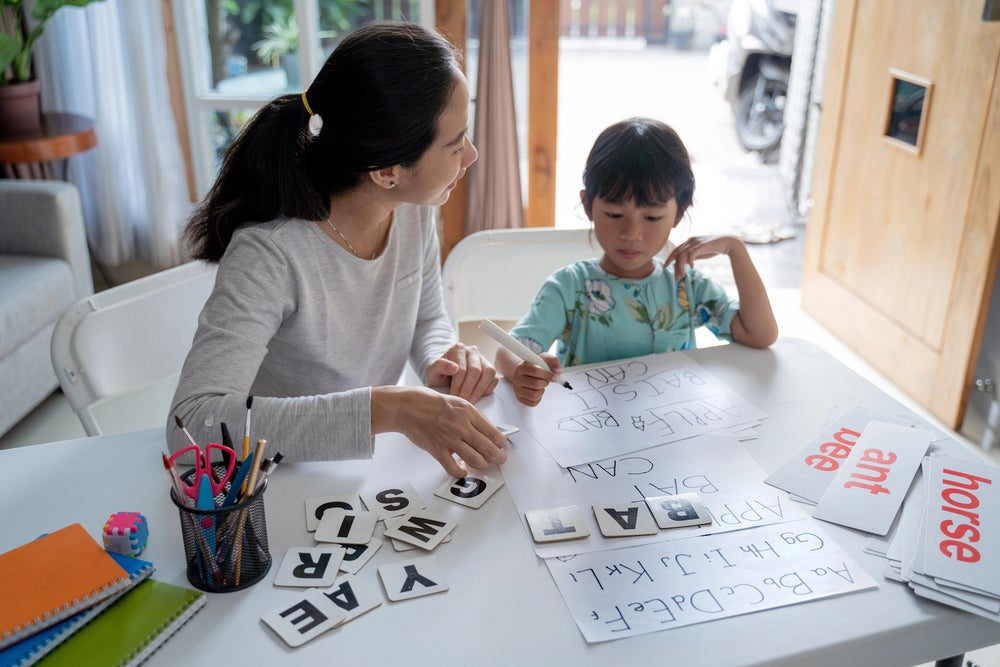
You know that phonics is an important part of reading, and you want your child to understand how to sound out unfamiliar words. So why do you need to teach sight words?
The debate on phonics vs. sight words has been ongoing among educators for decades. But the truth is, both approaches are essential for reading success.
While phonics teaches your child how to decode words by sounding out letter sounds, sight words teach them to recognize whole words through visual memory and pattern recognition.
Plus, it’s important to note that many sight words are rule breakers, meaning they don’t follow the typical phonetic patterns. Here are a few examples:
- The
- Said
- Was
You can’t sound out any of those words and arrive at the correct pronunciation. Teaching your child to recognize them by sight will help them read more efficiently.
Sight Words for Kindergarten
Now that you know more about sight words for kindergarten, it’s time to look at some specific words to start teaching your child.
Here are the 52 kindergarten words from the Dolch Word List in alphabetical order:
- All
- Am
- Are
- At
- Ate
- Be
- Black
- Brown
- But
- Came
- Did
- Do
- Eat
- Four
- Get
- Good
- Have
- He
- Into
- Like
- Must
- New
- No
- Now
- On
- Our
- Out
- Please
- Pretty
- Ran
- Ride
- Saw
- Say
- She
- So
- Soon
- That
- There
- They
- This
- Too
- Under
- Want
- Was
- Well
- Went
- What
- White
- Will
- With
- Yes
These words may seem simple, but they’re essential building blocks for your child’s reading skills.
Tips for Teaching Sight Words

If you’re unsure about teaching your child to read sight words, here are some helpful tips.
Start Small
Your child has 52 words to learn, so trying to teach them all at once can quickly become overwhelming for both of you.
To keep the process more manageable, pick five words to start with. Once your child can recognize them instantly and can read them without hesitation, it’s time to add five more words into the mix.
Keep Practice Sessions Short
Young learners don’t have long attention spans. Short daily lessons are more effective at this age than long, infrequent ones. Aim for 15 minutes of practice each day. Soon, these practice sessions will become a habit you both look forward to.
Tip: Just 15 minutes a day of using HOMER is proven to increase kids’ reading scores by 74%!
Sort Sight Words into Categories
Try sorting your child’s sight words into categories. Name one group “Rule Followers” (words that are more easily decodable, such as “can”) and the other group “Rule Breakers” (words that are harder to decode, such as “said”).
Talk about how some words follow regular phonics patterns, but others need to be memorized as a whole unit because they’re irregular. Show your child examples of both kinds of words.
Then write both groups of words on index cards to play a few games. For example, you can make doubles of each card, turn them all face down, and play a matching game.
Get Creative
Kids learn best through hands-on activities, so get creative when teaching sight words. You can use flashcards, memberships to educational apps, puzzles, or even sidewalk chalk to make learning more interactive and engaging for your child.
We’ll give you some ideas for fun activities later, so keep reading!
Use Multiple Senses
When your child uses more than one sense (sight, sound, smell, taste, and touch), they’re more likely to retain the information they’re learning. Using a multiple sensory approach to memorize sight words allows your child to connect with the words in many different ways.
This is especially useful if your child is not a traditional learner or if they need a more hands-on approach.
For instance, if they’re learning the word “like,” you might ask them to trace the letters on a piece of paper, write them in shaving cream, write them in the air with a finger, build them with play-dough, and even put them together with interlocking blocks.
Stay Positive
It can be frustrating when you think your child has a word down but misses it on your next review. If that happens, remember to stay calm and positive. Your child can sense how you’re feeling, and if they see you upset, it can make them feel stressed or anxious about learning.
Instead, take a deep breath and encourage them to try again. Learning sight words takes practice, so be patient and celebrate their progress!
Link Words to Your Child’s Life
Words that have a deeply personal meaning are easier to remember. In the world of pedagogy, these words are called “key vocabulary,” which means they come from a place inside a child; they are easily recognizable from personal experience.
Although these words are probably not sight words, using them with sight words can sometimes make the process of learning more effective. For example, if your family has a pet dog named Spot, learning the sight word “ran” becomes simpler if you’re talking about how Spot ran into the yard.
When your child encounters words that have a direct connection to their life, the incentive to read and write becomes much more powerful. When you give your child free rein to create sentences (or stories) made up of a combination of personal words and sight words, learning blooms.
Activities for Practicing Sight Words for Kindergarten
Spell with Magnetic Letters
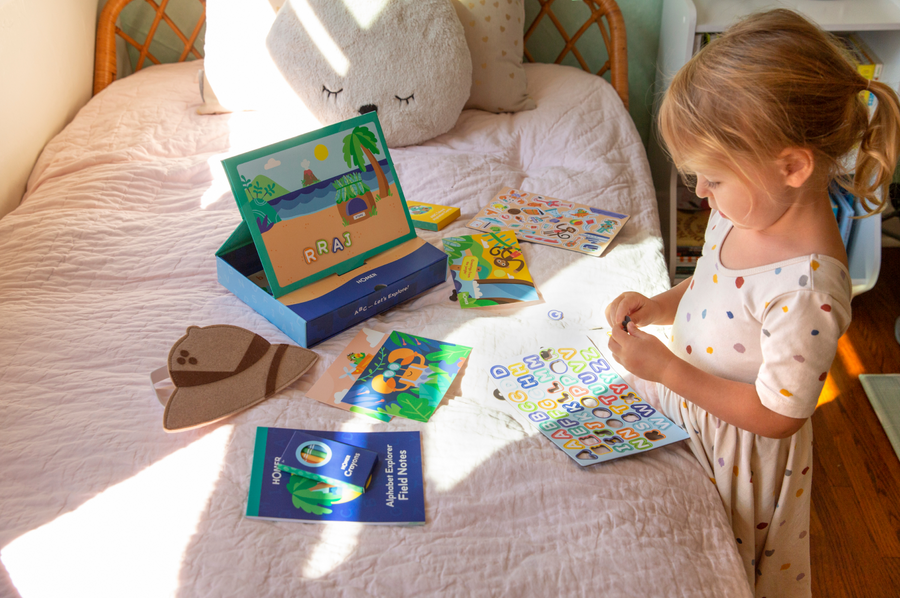
With a set of magnet letters and a surface to play on, your child can spell lots of words. Kids love the colorful letters in the HOMER Explore Letters Kit!
Once you have your magnets, try one of these activities:
- Magnet hide: Hide all the letters for a specific word and ask your child to go find each letter. Once they have them all, ask them to assemble the word on a cookie sheet or another play surface and then read it to you.
- Magnet match: Hand your child a flashcard with a sight word, and ask them to find each letter magnet they need to spell the word.
- Magnet race: Spread out the letters in one area of the room and have your child stand in another. Call out the first letter in the word and ask them to race across the room to find the correct letter.
Play Games with Flash Cards
If you don’t have flash cards for the sight words for kindergarten, don’t worry. You can easily create your own with a stack of index cards and a thick permanent marker. Simply write one word on each card.
When you’re ready to play, give these games a try:
- Sight word slap: Spread the cards face up on a flat surface. Hand your child a fly swatter and ask them to slap the word you call out.
- Sight word trail: Spread the cards across the floor, creating a trail of words. Ask your child to start at one end and read their way to the other.
- Reading race: Start a timer and see how long it takes your child to correctly read all the words in their stack. Did they beat their time from yesterday?
Write Sight Word Songs
Our brains can store and recall words better and faster if they’re in the form of a song. This is because music and language are similar: they both use patterns, rhythms, and the repetition of sound.
But music and language are different, too. While talking and reading use the left side of the brain, music uses both sides, which boosts memorization.
Music also tends to be calming and relaxing, making the learning process less stressful and more fun. So when a tune is connected to a vocabulary lesson, the new words are easier to internalize and then recognize later.
Here’s how you can incorporate songs into sight word study:
- Make up a silly song using some sight words and teach it to your child
- Add hand or body movements to accompany it, such as clapping
- Try a call and response song: you create one line of lyrics and then your child creates another
Draw Pictures Alongside Sight Words
Sometimes presenting a visual representation of a sight word makes it easier to remember. This is especially true at the beginning of the learning process. A picture can engage an additional part of the brain, which makes the sight word more memorable.
Try using a picture-word combo as part of a process:
- Write the same sight word on both sides of an index card
- Ask your child to draw a picture on one side that defines or describes the word
- Use the picture side of the flash card to teach the word at first
- Then transition to the word-only side
Paint and Reveal
Combine an art project with a science experiment! Write sight words in white crayon on white paper, and then give your child some watercolors. Ask them to paint over the paper to reveal the words.
You can make games out of the painting process:
- Ask your child to paint over one letter at a time and try to guess the word before it’s fully uncovered.
- Take turns writing the words and guessing them
- See if your child can paint a picture with the watercolors as they discover the word
Spin Words with Easter Eggs
You know those colorful plastic eggs people fill with candy at Easter time? They can have a second life as a sight word game! Separate the two halves, and write the end of a word on the fat end of the egg and various first letters around the narrow end.
For example, you might write “ood” on the fat end and then “G,” “H,” and “W” on the narrow end. As your child turns one half of the egg, they make new words. Make sure one word is a sight word. The others will be rhymes of it, like “good,” “hood,” and “wood.”
You can also:
- Reverse it and write one first letter on one side of the egg and multiple endings on the other. (This way your child can practice a few sight words with one egg.)
- Mix and match egg halves to make new words.
- Fill the eggs with surprises for extra fun!
Make a Word Wall
Find a place on a wall to display the sight words your child is learning. It’s fun to see tangible evidence of their progress! Try using butcher paper or poster board to make a mural. Your child can draw directly onto it or write each word on an index card and tape them up as they learn.
If your child is a visual learner or they love to draw, you might ask them to create illustrations to go with the words. Either way, seeing evidence of their hard work can help boost their self-esteem, too.
For more engagement and fun, try:
- Putting the words on the mural in alphabetical order
- Creating an ongoing scene using the words
- Incorporating pictures into the actual letters of the words
Include Intentional Screen Time
Screen time gets a bad rap these days, but it can be a useful tool for teaching kindergarten sight words. HOMER is our favorite. It’s screen time you can feel good about! The lessons, games, and activities are personalized to your child’s age and level, and grow with them as they learn.
With HOMER, you can:
- Tell us about your child’s interests to ensure they enjoy the games.
- Give your child a chance to practice sight words independently.
- Sit back and know your child is developing a love of learning through play!
Read Together
Modeling good reading is one of the best ways to help your child learn sight words. Pick a children’s book and sit together.
As you read, ask your child to:
- Point out the sight words they see
- Read the sight words they know aloud (you’ll read the other words)
- Say the sight words in a silly voice
- Answer questions to ensure their comprehension
Unlock a Love of Learning with Begin
Sight words for kindergarten are important stepping stones for early reading success. As you’re helping your child master these words, remember to make it fun and engaging. Keep the practice sessions short and sweet, and stay positive.
Before you know it, your little one will read whole books alone. Check out all of the Begin programs to help them have fun while learning!
Frequently Asked Questions
What’s the difference between sight words and high-frequency words?
While the definitions of sight words and high-frequency words are often used interchangeably, they are actually two distinct things. A sight word is, as it sounds, a word that your child literally knows by sight. For example, they might know how to spell their own name.
A high-frequency word, on the other hand, is one of a predetermined list of words that are used frequently in literature. Many sight words are high-frequency words, but not all.
Are sight words learned through memorization or decoding?
Some sight words can be learned through both memorization and decoding, while others don’t follow the rules and must be recognized by sight.
When your child interacts with sight words over and over again, the repetition is helping them remember the words. And when your child learns a word by sounding out each letter, they’re taking the word apart and putting it back together.
How do I know if my child has “mastered” a word?
While there’s no hard and fast rule that determines yes, your child has officially learned a specific word, one general rule of thumb is if they remember a word three times in a row for three days in a row, they’ve got it down.
Another way to notice your child may have a solid grip on the word is if they can recognize the word out in the “wild” (as opposed to reading off of an index card) and if they can recognize it quickly.
Do sight words replace phonics?
No. Your child needs to learn how to decode words so they can figure out unfamiliar words.
But learning sight words does make that decoding process much easier because if they can move more smoothly through a text (by knowing the sight words), they can better understand the context of what they’re reading. This makes decoding easier.