
Reading is a vital skill for kids to develop. It builds cognitive stamina, develops empathy and self-awareness, and improves mental health. But unless reading is fun for your child, they may resist it.
So, how do you help your child find joy in picking up a book and losing themselves in a story? In a lot of different ways!
Here we’ve collected 11 easy activities designed to make reading fun for your child. Choose a few of these ideas (or all of them!) to get your child excited to pick up a book and read.
Key Takeaways
- Make reading fun for kids by building a book nook, creating a cookbook, making bookmarks, drawing story highlights, and starting a reading club.
- Other ideas for making reading fun include playing “letter of the day” games, holding family Olympics, creating a scrapbook, playing with maps, building word towers, having a picture caption contest, and making a reading jar.
- To further encourage reading, keep books near toys, start a series, share the reading experience, talk about books, and bring books to life by tying them into real experiences.
- To keep your child excited about reading, read to pets, follow your child’s interests, freshen up favorite reads, leave notes, and play reading bingo.
- Reading for fun leads to higher scores on reading achievement tests, as well as better sleep and mental health.
Table of Contents
- 12 Easy Activities to Make Reading Fun for Kids
- 10 Tips to Encourage Reading
- Why Fun Is More Important than Perfect
12 Easy Activities to Make Reading Fun for Kids
1) Build a Book Nook
Entice your child to read by creating a cozy space perfect for curling up in with a book.
What You’ll Need
- Books
- Space to hold books, like a bookcase, box, or basket
- Lamp
- Pillows
- Rug
- Stuffed animals
What to Do
- Choose a place in your home to set up a book nook, such as a section of your living room, space in your child’s bedroom, or even a corner in your kitchen.
- Use a rug to define the space.
- Put a bookcase against the wall, or a basket or box on the floor.
- Add a lamp for concentrated lighting.
- Use pillows to create a comfortable seat for your child.
- Ask your child to bring a few of their favorite stuffed animals into the book nook so they have someone to read to.
2) Make Bookmarks
Reading a book that will take several days to finish is more fun for your child with a homemade bookmark to keep their place!
What You’ll Need
- Tissue paper
- Cardboard
- Glue
- Scissors
What to Do
- Cut a piece of cardboard into a 6” x 2” rectangle.
- Cut the tissue paper into small squares.
- Spread glue across the cardboard.
- Place a variety of tissue paper squares onto the cardboard. They can hang over the edges of the cardboard.
- Let the bookmark dry.
- Cut the excess tissue paper.
3) Create a Cookbook
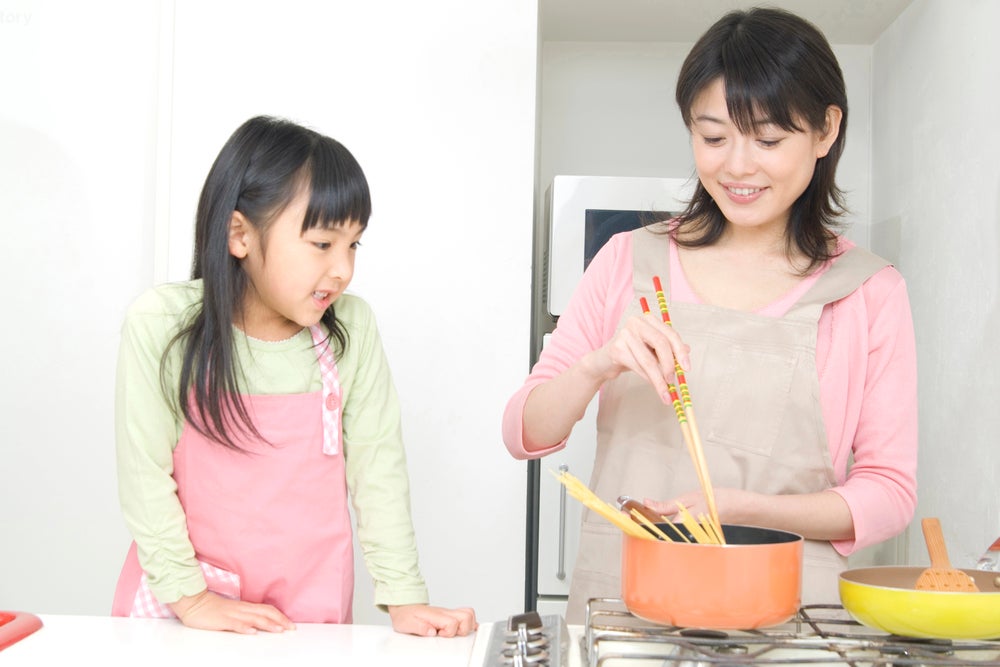
After you cook with your child, work together to make a cookbook with some of their favorite recipes.
What You’ll Need
- Various recipes
- Cooking utensils, like mixing bowls, pans, spatulas, and spoons
- Ingredients
- Paper
- Hole punch
- String
- Markers
- Optional: found images and glue
What to Do
- Choose a recipe you and your child can make together.
- Gather ingredients and cooking utensils.
- Ask your child to read the portions of the recipe instructions they can. See if they can match written amounts (2 teaspoons of baking soda) with the actual objects (finding a teaspoon and measuring two of them into the bowl).
- If the recipe is a keeper, write it on paper or an index card. If your child is learning to write, let them write some of it.
- Give your child the opportunity to illustrate the recipe. They can draw a picture or cut out images from magazines or online.
- Add a cover page for the cookbook.
- Repeat the whole process!
- Punch holes in the recipes and attach them with a string. (Tie bows so you can add recipes to your cookbook easily.)
4) Draw Story Highlights
Focus on your child’s favorite part of a story, and give them a chance to be creative. Bonus: this activity will help your child learn sequencing and plot structure!
What You’ll Need
- Paper
- Markers
What to Do
- Read a book with your child and discuss their favorite parts. For instance, this could be a specific character they love or a particular scene in the story.
- Give your child a piece of paper and markers and ask them to draw their favorite part.
- Hang the drawing in their book nook!
- You can also do this activity together. After you read a book, each of you can choose a favorite part and then, without telling each other, draw it. Take turns guessing which part of the book you both drew!
5) Start a Book Club
Creating a book club is a great way to inspire reading.
What You’ll Need
- A few copies of the same book (check your local library)
- Time set aside for reading and/or discussion
- Snacks
What to Do
- Choose a book to read with a group of people, like your family, your child’s friends (and their caregivers), or even just you and your child.
- If you’re reading a shorter book, like a picture book, you can all read it in one sitting. If it’s a longer chapter book, you can read it over time.
- Come together to discuss the book. It’s a great idea to bring questions to the discussion, such as “What was your favorite part of the book?” and “How would you change the story?”
- Add some snacks to make the discussion more festive.
6) Make a Reading Jar

Bring some spontaneity to your reading routine by switching up where you read.
What You’ll Need
- 10 Popsicle sticks
- Markers
- Jar
What to Do
- Brainstorm fun places to read with your child. Some ideas include lying on the grass, under a tree, or in the bathtub (you may want to hold the book for that one!)
- You or your child then write down 10 of those reading locations on popsicle sticks and put the sticks into a jar.
- Pick one a day to try. After you experience them all, ask your child to choose their favorite. Maybe you can include it in your reading routine!
- (Note: if you don’t have popsicle sticks, you can use index cards, sticky notes, rocks, or anything else you can write on.)
7) Incorporate Letter of the Day
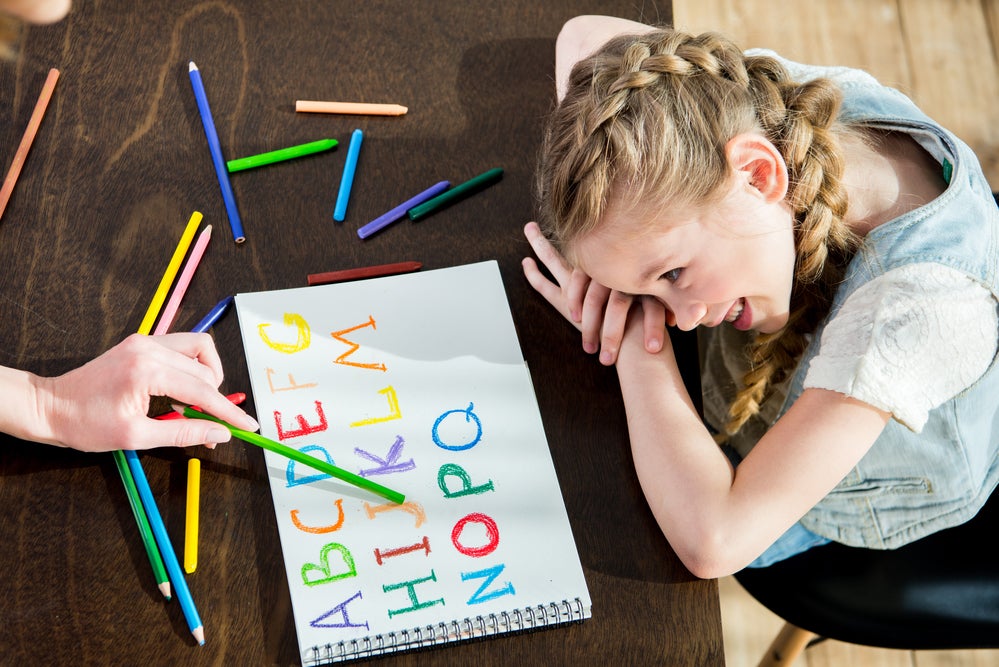
Choosing a letter of the day builds literacy by using repetition to accelerate learning the alphabet.
What You’ll Need
- Paper
- Markers
- Jar
What to Do
- Write all of the letters of the alphabet on separate pieces of paper.
- Fold them and put them in a jar.
- Ask your child to pull a letter out of the jar each day.
- Talk about the letter, brainstorm some words that it begins, and then choose one of these activities to try:
- Labeling objects that begin with the letter
- Eating a food starting with the letter
- Making a poster depicting things that start with the letter
- And whatever other creative ideas that come to mind!
- If every day is too much, you can pull a letter once a week.
8) Hold Family Olympics
Yes, any activity can involve reading and writing!
What You’ll Need
- Paper
- Glue
- Markers
- Ribbon
- Scissors
What to Do
- Choose activities for a family Olympics day. The specific activities will vary, depending on the ages and interests of your child, but some ideas to try include:
- Farthest jump
- Obstacle course
- Hopping on one foot
- Staring contest
- Have your child make flyers announcing the Olympics, create tickets, and even make medals for the participants.
- You can even ask your child to make a big chart displaying times, distances, and winners as your family participates in the Olympics activities.
9) Create a Scrapbook
This is an ongoing project you can focus on for a summer, a season, or a whole school year!
What You’ll Need
- Scrapbook (you can buy one, use a notebook, or make one)
- Hole punch, stapler, ribbon, etc if you make the scrapbook
- Photos
- Glue
- Markers, pens, and pencils
What to Do
- Buy a scrapbook, use a notebook, or make a scrapbook by collating a stack of paper. You can punch holes and use ribbon to bind it, or staple the pages together.
- Take and print photos of family events, like birthday parties, vacations, dance recitals, sports games, and whatever else your child spends time doing. It’s fun to include photos of run-of-the-mill days too, marking phases of your child’s life.
- With your child, pick out the photos to include in the scrapbook and glue them in.
- Ask your child to draw pictures to complement the photos (For example, maybe you have a photo of your child on the beach, and they can draw the ocean.)
- Help your child write short descriptions of what they see in the photos. Depending on your child’s writing skills, they can write them on their own, you can write them together, or they can even dictate to you.
- Read the scrapbook from time to time!
10) Map It
Remember maps? They’re a great tool for reading and writing, not to mention spatial awareness skill-building!
What You’ll Need
- Printout of a map
- Paper
- Markers
What to Do
- The next time you travel, print a copy of the map to get there. (You can print a map of the general area, or you can map your route using an app and print that.)
- Once you’re on the road, give your child the map and ask them to follow along as you go.
- See if they can “help” you by naming cities, rivers, or highways along the way.
- As a variation, help your child make a “map” of your house, your yard, or a walk you often take together.
- Ask them to draw and label landmarks.
- You can make a treasure hunt out of this activity, too. See if your child can make a map that you need to follow!
11) Build a Word Tower
Tap into your child’s gross and fine motor skills as they practice spelling and reading.
What You’ll Need
- Alphabet blocks
What to Do
- Build a word tower with alphabet blocks. If you don’t have alphabet blocks, you can draw letters on sticky notes or paper and attach them to a set of blocks.
- Read the words out loud before knocking the tower down.
- (Note: the words need to be read from the bottom to the top of the tower.)
- See who can spell the longest word and build the biggest tower!
- (Another note: you or your child can write the words on paper first if you want.)
12) Have a Picture Caption Contest
Pick a night to play this fun literacy game with the whole family.
What You’ll Need
- Photos (or images from magazines or online pictures you print)
- Paper
- Pens or pencils
What to Do
- Gather a group of photos together.
- Pick one and place it in the middle of the group.
- Ask everyone to write a sentence (or more) about it.
- Once everyone is done, go around the group and read the sentences.
- Choose whose story is the funniest.
- If you want to add some excitement, try timing the writing session.
10 Tips to Encourage Reading

In addition to the above activities designed to spark your child’s imagination and curiosity about reading, here are some tips to encourage your child to pick up a book. Or ask you to pick one up!
1) Keep Books Near Toys
Keeping books near your child’s other toys makes it easy for them to include reading in their play time. They might read to their stuffed animals or build a school out of blocks and pretend to be a teacher. Their imagination will automatically make connections.
2) Start a Series
Revisiting the same characters is a great way to hook your child on reading. They’ll want to learn more about the characters’ lives, anticipate adventures, and get that unique feeling of “coming home” when they read a familiar story.
3) Share the Reading Experience
Take turns reading. You can read a page, and then your child can read a page. Or you can each take on specific characters. Don’t be afraid to use different voices or speeds. Animating a book will draw your child in.
4) Talk about Books
Encourage your child’s books to live off the page. Talk about characters when you’re not reading. Ask questions. Wonder together about what might happen next in a story you’re reading.
5) Bring Books to Life
You can take the idea of your child’s books living off the page even further by doing related activities. If you read a book about a zoo, for instance, take a trip to a real zoo.
6) Read to Pets
Pets are the best. They love unconditionally and hold no judgment, so engage those wonderful qualities! Your child can feel safe and secure as they read to them. And even if they can’t quite read yet, if they “tell” a story to their pet while holding a book in their hands, they’re practicing reading.
7) Follow Your Child’s Interests
Let your child’s curiosity lead the way. Make connections where you can. For example, if your child loves superheroes who can fly, bring that up as you read a book about birds.
And if you don’t have a book on a particular subject, go on a treasure hunt to the library, yard sale, or used bookstore to try to find it!
8) Freshen Up Favorites
Kids love what they love. And when they love a book? You end up reading it lots of times! Try to embrace that repetition. Make those old favorites new by using silly voices or taking turns reading. Or make a game out of trying to find something you’ve never seen on the page before.
Reading books over and over again is a great way to encourage reading. In fact, it helps your child develop reading comprehension, story recall, and cause-and-effect understanding.
9) Leave Notes
Seeing a note on your bathroom mirror or finding one in the sleeve of your jacket creates such a sweet feeling: a mixture of surprise, joy, and so much love. Try leaving notes for your child in places they may not expect, such as under their pillow, in their lunchbox, or even in a sock!
Then encourage your child to leave some for you. If they can’t write yet, you can suggest that they “draw” notes for you.
10) Choose Books Using Fun Categories
Sometimes, all it takes to get kids interested in reading is using fun categories to choose which books to read!
When it’s time to sit down with a book, ask your child to find one based on a category they might like, such as “space books” or “books with talking animals.” And if your child has a favorite color, like red, ask them to choose a book with red on the cover.
Why Fun Is More Important than Perfect

The equation is pretty simple. The more your child finds reading fun, the more they’re going to do it. And the more they do it, the more their reading skills will grow. Helping your child fall in love with books is a foundational piece of their literacy development.
Studies show that kids who read for fun score higher on reading achievement tests than those who don’t. And reading for pleasure by the time kids are nine years old leads to better mental health and even better sleep.
More Ways to Make Reading Fun

When your child runs up to you with a book in their hand, or when they sit down at the dinner table and can’t stop talking about a story they’re reading…well, it doesn’t get much better than that! We hope we’ve left you with some effective strategies for making reading fun.
If you need more exciting ideas, consider trying one of Begin’s award-winning programs.
Our HOMER app uses personalized stories and games to boost early reading. Little Passports sends monthly boxes for hands-on learning that complement reading, and our codeSpark app inspires kids to read as it teaches them coding. Talk about fun!
Frequently Asked Questions
Is it OK to ask my child questions as they read?
Kids typically love being interactive as they read! You can let your child take the lead and stop you to talk about the book, or you can ask them questions as you go. Asking questions can help with reading comprehension.
What are the ABCs of active reading?
- The ABCs of active reading are:
- Asking questions (see above!)
- Building vocabulary
- Connecting the stories you read to your child’s world.
How can I incorporate creativity, like acting or drawing, into reading time?
Getting your child up and moving while reading allows them to absorb what they’re reading in a different way. This makes all the difference for some kids.
Ideas to try include acting out scenes from the book, creating a puppet show, extending the story by coming up with what happens after the book ends, and drawing favorite parts of the story.
Are audiobooks or online read-alouds good for children?
Yes! Audiobooks and online read-alouds are a great way to expose kids to literature. And just like incorporating creativity into reading time, listening to sentence rhythms, vocabulary, and word usage can help your child’s reading comprehension.
What if my child won’t sit still when they’re reading?
It’s OK if your child can’t sit still while they’re reading. Try giving them a fidget toy to play with or a ball to bounce as they read. Or you can try reading to them when they’re engaged in another physical activity, such as eating a meal or taking a bath.
Wiggling or not wiggling, the important thing is that they’re reading (or listening) to a story!
Should my child practice writing at the same time they’re practicing reading?
The physical act of writing cues the brain’s reading pathways, so any time you can encourage your child to write is time well spent. But you don’t need to be “teaching” your child to write while they’re practicing reading as much as giving them opportunities to practice the action.