
Fun facts are like tiny fireworks: they light up your child’s imagination and creativity! They’re also a great introduction to a wide variety of subjects and can inspire curiosity, support critical thinking skills, and build a foundation of learning.
Share these 200 fun and educational facts with kids anywhere and any time: at the dinner table, before bed, or during bath time! And when one (or two or twelve!) captures your child’s attention, you can encourage them to dive deeper and learn more.
Table of Contents
- Ocean Facts for Kids
- Sports Facts for Kids
- Insect Facts for Kids
- Space Facts for Kids
- Math Facts for Kids
- History Facts for Kids
- Human Body Facts for Kids
- Place Facts for Kids
- Food Facts for Kids
- Animal Facts for Kids
200 Fun Facts for Kids
Ocean Facts for Kids
- The ocean covers 71% of the Earth’s surface.Ocean currents regulate the Earth’s climate by circulating heat and moisture.
- 50 people could stand on a blue whale’s tongue.
- 2.2 million species of animals live in the ocean.
- Turtles date back to the time of dinosaurs.
- Humpback whales sing loud, complicated songs that last up to 30 minutes.
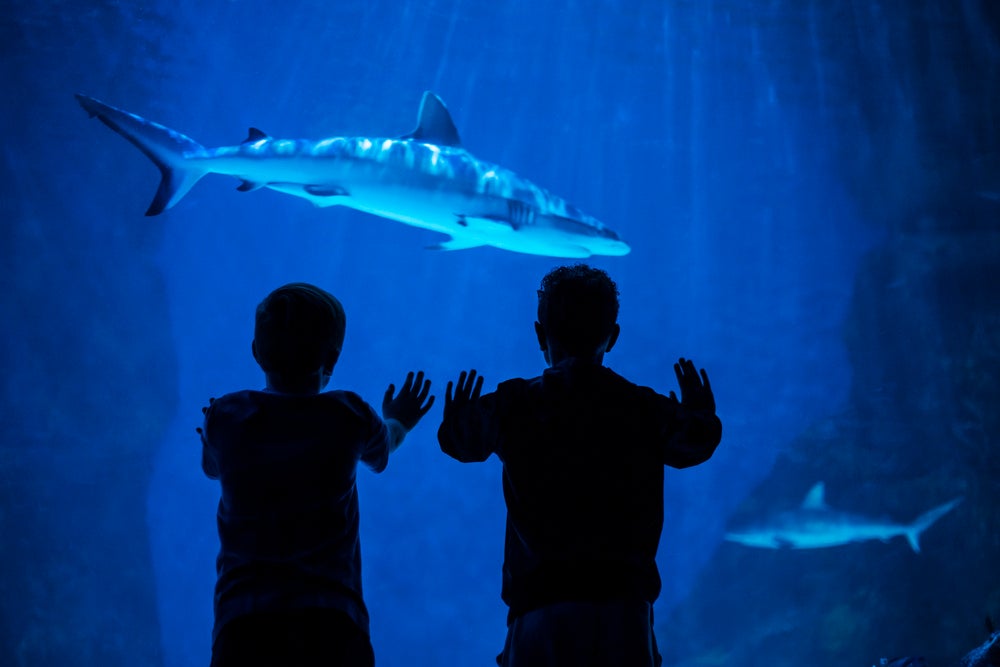
- Because of their powerful tails, great white sharks can travel through the water at over 37 miles per hour.
- Killer whales are called “wolves of the sea” because they hunt in packs like wolves.
- A female seahorse lays her eggs (sometimes more than 100!) in a male seahorse’s “brood pouch” on his belly. He carries them for up to 45 days before they hatch.
- Jellyfish have no brain, heart, bones, or eyes.
- The sea is home to the world’s largest living structure: the Great Barrier Reef, which measures around 2,600km and can even be seen from the Moon.
- About 70% of the oxygen we breathe is produced by the oceans.
- There is really only one big ocean on Earth. Scientists and geographers divide it into 5 smaller oceans: Pacific, Atlantic, Indian, Southern, and Arctic.
- The average ocean is 2 miles deep.
- Ocean water is always in motion.
- The largest ocean animal is a blue whale.
- Much of the world’s oxygen is created by phytoplankton and algae.
- Ocean pollution reduces oxygen in the water.
- The largest mountain range is underwater.
- The Pacific Ocean borders more than 50 countries.
Sports Facts for Kids

- The Olympic Torch Relay is a tradition where runners take turns carrying the Olympic torch from Greece to the host city of the Olympics.
- Instead of gold medals, first-place Olympic winners used to be awarded a silver medal and an olive branch.
- Between 1900 and 1920, tug-of-war was an Olympic event.
- There are only 18 minutes of action in a typical Major League Baseball game.
- The largest bowling alley in the world is in Japan. It could fit about five regular-sized bowling alleys inside!
- The famous basketball player Michael Jordan didn’t make his high school basketball team until his junior year.
- To date, the world record for the most nonstop push-ups is 10,507, set by Minoru Yoshida of Japan in 1980.
- Frozen cow poop was the first “puck” used in an ice hockey game.
- When basketball was first invented, players used peach baskets and soccer balls.
- Toe wrestling is a competitive sport, with a championship held each year in England.
- At Wimbledon, tennis balls are kept in the refrigerator to preserve their bounce.
- Golf was invented in Scotland.
- Baseballs last an average of 7 pitches.
- Golf is one of the only two sports ever played on the moon. The other sport was the javelin toss.
- Kite flying is a professional sport in Thailand.
- Figure skating is the oldest Olympic sport.
- Underwater mountain biking is a sport in Wales.
- Early lacrosse matches sometimes had 2000 people playing!
- Golf balls used to be stuffed with bird feathers.
- Skateboarding used to be called sidewalk skating.
Insect Facts for Kids
- Ladybugs can be red or blue.
- Ladybugs play dead to avoid predators.
- Fruit flies were the first living creatures to be sent into space.
- Butterflies taste with their feet.
- Caterpillars have 12 eyes.
- Bulldog ants can leap seven times their body length, which is around one inch long.
- Grasshoppers were on Earth before dinosaurs.
- Houseflies’ feet are 10 million times more “taste sensitive” than human tongues.
- Honeybees make 10 million trips to collect nectar to make one pound of honey.
- Bees can fly up to 60 miles in a day when they are gathering food.
- Also, a bee’s wings beat up to 190 times a second!
- Crickets hear through their knees with a unique organ called a tympanum.
- Bees can see things five times faster than humans.
- Ticks can grow from the size of a grain of rice to the size of a marble.
- 200 silkworm cocoons make a pound of silk.
- Mexican jumping beans contain a bean moth caterpillar.
- Insects have been around for over 350,000 million years.
- About 8800 species of ants exist in the world.
- Large groups of fireflies sometimes flash all at the same time.
- Greater water boatman bugs breathe through their bottoms!
Space Facts for Kids
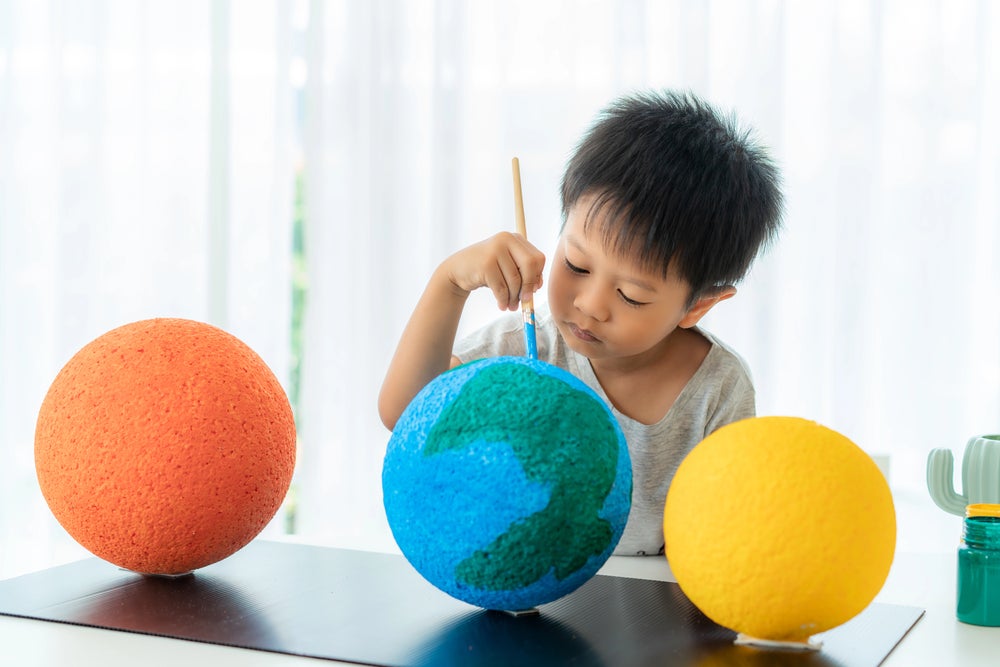
- One million Earths could fit inside the sun.
- An asteroid the size of a car enters Earth’s atmosphere about once a year, but burns up before it reaches us.
- The moon is actually shaped like a lemon.
- A whole year on the planet Mercury is shorter than one day on Earth.
- Pluto hasn’t even completed one full orbit around the sun since humans discovered it. (It was discovered in 1930 and takes 248 years to orbit!)
- It would take an astronaut 800 years to fly to Pluto.
- There’s no sound in space. It’s completely silent!
- Because Saturn is made mostly of the gases helium and hydrogen, it could float in water.
- The moon is slowly drifting away from the Earth.
- Venus spins in the opposite direction to every other planet.
- Our Sun is a yellow dwarf star.
- A moonbow is a rare nighttime rainbow!
- The wind doesn’t blow on the moon.
- But the wind on Neptune can blow 1600 miles per hour!
- Mars has the largest volcano in the solar system. It’s almost 3 times higher than Mount Everest!
- The sunset on Mars is blue.
- The biggest asteroid is 600 miles wide.
- The International Space Station is the size of a soccer pitch.
- The Milky Way is 105,700 light-years wide.
- Suction cups can’t work in outer space because there’s no air.
Math Facts for Kids
- Almost every star we see in the sky has a planet around it.
- “Jiffy” is a real unit of time: 1/100th of a second.
- A baseball diamond is a perfect rhombus.
- Cheetahs can run up to 76 miles per hour.
- A year isn’t quite 365 days. It’s actually 365.2564 days!
- Mathematical symbols weren’t invented until the 16th century. Before that, every math problem had to be written using words.
- The only number with its letters in alphabetical order is forty.
- The sum on opposite sides of a die is always 7.
- A Baker’s Dozen is 13, not 12. This originated in medieval England, when it was against the law to give customers different-sized loaves of bread. To avoid breaking the law, bakers threw in an extra loaf of bread.
- Most soccer balls are made of 12 pentagons and 20 hexagons.
- The concept of zero was invented in India.
- In English, all odd numbers have the letter “E” in them.
- There are 293 ways to make change for a dollar.
- There are 31,557,600 seconds in a year.
- In a room of 23 people, there’s a 50% chance that two people share the same birthday.
- Zero is the only number that can’t be represented by a Roman numeral.
- A palindrome number reads the same backwards and forwards, like 12321.
- There are more ways to arrange a deck of 52 cards than there are atoms in the universe.
- An icosagon is a shape with 20 sides.
- Triangles are often used in construction because their shape makes them strong.
History Facts for Kids

- Ketchup was once sold as medicine.
- Abraham Lincoln stored important papers in his tall black hat.
- The Leaning Tower of Pisa in Italy never stood up straight. As it was being built, it began to lean.
- People once used corncobs instead of toilet paper. They were soft, easy to hold, and there were a lot of them!
- An 11-year-old boy named Frank Epperson invented the ice pop, later named a Popsicle®. He left a cup of soda with a wooden stirrer in it outside, and it froze!
- The Statue of Liberty was first created as a lighthouse.
- The largest dinosaurs were vegetarians.
- The Romans used to eat with their hands while lying down. (They never used a fork or knife, but sometimes would use a spoon.)
- In 1957, the Soviet Union sent the first living creature into space: a dog named Laika.
- In 1850, the famous nurse Florence Nightingale rescued an owl and carried it in her pocket when she went to sick people’s houses.
- Buzz Aldrin was the first person to pee on the moon.
- The Super Soaker water gun was invented in the 1980s by Lonnie Johnson, who was an aerospace engineer for NASA.
- The Eiffel Tower was supposed to go to Spain, not France.
- In the 1840s, people said “Prunes!” instead of “Cheese!” when their picture was taken.
- The 3 Musketeers candy bar got its name because it originally came in three different flavors: vanilla, chocolate, and strawberry. But after World War II, they had to cut it down to one flavor to save money.
- The Emu War was a short military operation against emus who were damaging large amounts of crops in Western Australia. The war was unsuccessful. The emus won!
- Some gladiators in Ancient Rome were women.
- The last letter to be added to the alphabet was “J.”
- During World War II, a Great Dane dog got a Blue Cross Medal for extinguishing a bomb. How? By peeing on it!
- Tablecloths used to be used as one huge napkin. Everybody shared!
Human Body Facts for Kids
- Our eyes process more than 120 million bits of information per second.
- A quarter of our bones are in our feet.
- Hair grows faster in warm weather.
- Your mouth produces over four cups of saliva every day.
- The word muscle comes from a Latin term meaning “little mouse“ because Ancient Romans thought flexed bicep muscles looked like mice!
- Human teeth are as strong as shark teeth.
- Human noses can recognize a trillion different scents.
- The average person has 67 different kinds of bacteria living in their belly button.
- Just like fingerprints, every single tongue has a different pattern.
- Muscles always work in pairs. When one contracts, another relaxes.
- 99.9% of each person’s DNA is the same.
- If you eat too many carrots, your skin will turn orange!
- The human brain is over three times larger than the brains of other mammals with bodies of a similar size to ours.
- Your brain has around 100 billion nerve cells.
- The strongest bone in the human body is the thigh bone.
- The chance of your fingerprint being the same as someone else’s is 1 in 64 billion!
- Humans are made of over 60% water.
- The brain can’t feel pain.
- Eating cheese after you eat breakfast, lunch, or dinner helps neutralize the acids in your mouth, which means it can reduce the chance of tooth decay!
- Your brain is more clever, curious, and creative than any computer ever built.
Place Facts for Kids
- The national animal of the United States is the American bison.
- The Missouri River is 2,341 miles long, making it the longest river in the U.S.
- The Nile River is the longest in the world, spanning over 4,100 miles.
- The place with the longest one-word name is in New Zealand and is Taumatawhakatangihangakoauauotamateaturipukakapikimaungahoronukupokaiwhenuakitanatahu.
- Earth isn’t the only planet that has volcanoes. Other planets and moons have them, and the largest volcano in our solar system is Olympus Mons, found on Mars.
- The floor of the Amazon (the largest rainforest in the world) has so many trees that it takes about 10 minutes for rain to reach the ground when it falls.
- Because of Earth’s tilt, the Arctic has one full day of darkness and one full day of light each year.
- The Philippines has more than 7,600 islands.
- Africa is the only continent that sits in all four hemispheres.
- It snows in the Sahara Desert. Not a lot, but sometimes!
- Greenland is the world’s largest island.
- Maine is the closest state to Africa.
- Oceans help spread the sun’s heat around the world.
- It takes 23 hours, 56 minutes, and 4 seconds for the Earth to rotate on its axis once.
- One teaspoon of soil can hold several hundred million bacteria.
- Antarctica is a continent, but the Arctic is not.
- The Earth isn’t quite a sphere. It’s flattened a little at each of its poles.
- Approximately a quarter (25%) of the ingredients in medicine come from rainforest plants.
- Water freezes faster when it’s warm. Not cold!
- There is more water in the atmosphere than in all of the rivers on Earth combined.
Food Facts for Kids
- Peanut butter can be made into a diamond gem.
- You can fry an egg on a hot sidewalk (when it reaches 158°F).
- Applesauce was the first food eaten in space by an astronaut.
- Raspberries are part of the rose family.
- Cucumbers are 95% water.
- Rhubarb grows so fast, you can sometimes hear a creaking sound as its buds open.
- Fruit-salad trees can grow up to eight different fruits at a time.
- Lemons float, but limes sink. This is because lemons are less dense than water, and limes are denser.
- The first oranges, which came from Southeast Asia, were green, not orange.
- Food tastes different when you’re on an airplane because altitude changes your body chemistry and makes it a bit harder to detect tastes.
- Apples are in the rose family.
- Popcorn is 1000 years old.
- Peanuts are actually not nuts. They’re legumes.
- French fries are Belgian, not French.
- Tomatoes and avocados are fruits, not vegetables.
- There’s a type of lemon called a baboon.
- When cranberries are ripe, they bounce like a ball.
- Ripe bananas look blue under black light.
- Strawberries are the only fruit with their seeds on the outside.
- Almost all ears of corn have 16 rows of kernels.
Animal Facts for Kids

- The bumblebee bat is the lightest mammal on the planet, weighing only as much as two M&M’s®.
- Fleas are so small that they can fit on the head of a pin, and they can jump up 100 times their body length. That’s like a kid jumping more than 1,000 feet in the air!
- A snail moving nonstop takes about 220 hours to travel a mile.
- Dogs can only sweat through their paws. They have to pant to cool down.
- Rabbits purr like cats when they’re happy.
- There are three species of vampire bats, but they prefer livestock such as cows over people. Phew!
- 99% of pandas’ food is bamboo.
- Tigers are the largest wild cats in the world.
- Koala bears sleep the most of any mammal! They sleep up to 22 hours a day, while sloths sleep up to 20.
- Elephants make their own “sunscreen” out of a mixture of mud and sand.
- Lizards use their tongue to smell!
- Polar bears have black skin.
- The ears of an African elephant can be 6 feet long.
- Axolotls can regenerate limbs. This means they can regrow their legs!
- Naked mole rats live longer than any other rodent. They can live for up to 30 years.
- More naked mole rats! They have teeth that move independently like chopsticks.
- Tarantulas shed their skin and even replace their inner organs every once in a while.
- Hummingbirds are the only birds that can fly backward.
- Some lizards shed their tails when being attacked by a predator.
- Grizzly bears can run up to 30 miles an hour.
Begin Loves Helping Kids Learn (and That’s a Fact!)

Share these educational fun facts with your child and see which ones spark their curiosity. Maybe they’re fascinated by ocean creatures, or maybe they can’t stop asking questions about space. Whatever it is your child loves, go with it!
Begin can help by giving your child an opportunity to dive deeper into world cultures, science, and animals with our engaging hands-on Little Passports activity kits. Each kit is filled with facts plus a hands-on project to bring learning to life!
Frequently Asked Questions
Can I make a game for my child out of fun facts?
Sure! Fun facts are fun on their own, but creating a game around them is even better! You can make up all sorts of games, but here are two to try:
- Two Truths and a Lie
- Tell your child 2 fun facts that are actually facts, and one that is not.
- Ask them to guess which is the lie. (You can ask them why they made their choice, too.)
- Explore the facts!
- Then try the game with your child, choosing the truths and the lie.
- Charades
- Write a bunch of fun facts on strips of paper and put them together in a bowl.
- Ask your child to pull one out of the bowl and act it out.
- You can do this in pairs if your child is younger.
How do I choose the facts that will excite my child the most?
You know your child best, which means you know the things they love! Are they into animals? Are they always pointing out trees, rocks, and flowers when you go for a walk? Do they want you to read the book about space over and over (and over!) again?
Find facts about those things that fascinate your child. And be ready to follow up with a deeper dive. Maybe go to the library and check out a few books on the topic. Watch a video about it. Follow your child’s lead. The idea is to keep the spark burning.
But don’t be afraid to try facts about topics that are brand new for your child, too. Their next favorite thing may be just around the corner!
How do I incorporate fun facts into my child’s daily routine?
Any way you can! You can drop fun facts into so many parts of your child’s day. Try going around your dinner table, and ask each person to offer a fact. Or choose one to explore at bedtime (maybe with a book you read as part of your bedtime routine).
You can pass the time in a car with a fun fact discussion, talk about them on a walk, or explore them when your child is taking a bath. Any window of time is the right time!