Reading isn’t just a matter of sounding out words on a page. It’s a complex process that involves multiple skills and abilities that build on each other and work together. To help your child become a strong and confident reader, you’ll want to understand the five components of reading.
These components are crucial for building a solid foundation and developing advanced reading skills. In this guide, we’ll break down each component and offer tips to help you practice them at home with your child.
Key Takeaways
- Reading is part of communication and content, two of the 6Cs* that inspire the Begin Approach to helping kids thrive in school and life.
- The 5 components of reading are phonemic awareness, phonics, fluency, comprehension, and vocabulary.
- You can help your child learn the 5 components of reading by engaging in activities at home, like playing I Spy with rhyming words, creating a reader’s theater from a favorite book, and using Begin’s HOMER app or subscribing to Little Passports.
Table of Contents
The 5 Components of Reading

Reading is part of communication and content, two of the 6Cs* that inspire the Begin Approach to helping kids thrive in school and life. When kids read, a whole world of learning opens up to them.
Reading can introduce them to new places and people and help them discover new facts, ideas, and points of view. With books and stories, kids can follow their curiosity, exercise their imaginations, and make connections between their lives and the lives of others.
But how do you actually teach your child to read?
- Phonemic Awareness
- Phonics
- Fluency
- Comprehension
- Vocabulary
Though each is a unique skill, they’re interconnected and build upon each other as your child progresses through their reading journey.
Phonemic Awareness
A phoneme is the smallest unit of sound in a language. For example, the word mat has three phonemes: /m/ /ă/ /t/. Phonemic awareness is recognizing and using these sounds in written and spoken words.
How It Helps Kids Learn to Read
Phonemic awareness allows your child to:
- Break words into sounds
- Put sounds together to form words
These skills help build a solid foundation for future reading and spelling success..
Ideas for Practicing at Home
You can start practicing phonemic awareness with children as young as two or three. Here are some fun ideas to get you started.
Play I Spy with a Twist
This quick-playing game is a twist on the classic I Spy. Take turns being the spy, saying, “I spy something that starts with the sound /c/.” Once your child finds the object, you can switch up the letter.
Make Alphabet Soup
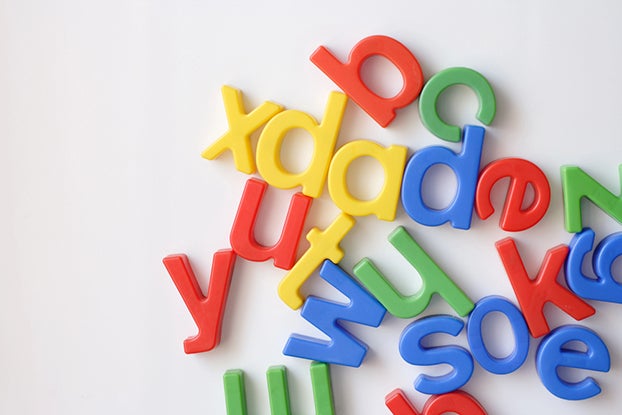
Take some magnetic letters and mix them up in a bowl of water. Have your child “fish” out a letter with a slotted spoon and say its sound. Then, see how many things you can think of that start with that sound.
Introduce Alliteration
Alliteration occurs when two words with the same beginning sounds (usually a consonant sound) are used in close proximity to each other, as in “hungry, happy hippos.” Alliteration almost always brings rhythm—and fun—to whatever is being read.
To introduce alliteration, play a name game where you find a word to add to your child’s name that has the same beginning sound (e.g. Sappy Sam, Brave Brady). Then ask your child to do the same thing for you!
Humor helps kids engage in learning, so the sillier your word choices, the better!
Pack for a Trip
Pretend you and your child are going on a vacation, and you need to pack your bag. But instead of packing the usual socks and shirts and slippers, you’re going to pack items that begin with specific letters.
For instance, you might ask your child to pack one item that begins with the sound /t/ and then two items that begin with the /m/ sound. You can use a real bag and pack real items, but you can also make a drawing of a bag and write the names of the items inside it.
Once your real or imaginary bag is full, you can pretend you’ve reached your destination and “unpack” everything, naming each item as you take it out.
Search at the Grocery Store
Use an outing with your child as an opportunity to practice letter sounds. For instance, pick a letter and make a game of finding as many things as you can that begin with that letter at the grocery store. (Make sure your child knows you aren’t buying them all!)
Phonics
Phonics is the connection between letters and sounds. It teaches children how to decode words and read them correctly. This is important because it’s the foundation of all reading and writing.
How It Helps Kids Learn to Read
Phonics helps children:
- Understand the alphabetic principle: spoken words are made of individual sounds (phonemes) and these sounds are represented by letters or combinations of letters in written words
- Connect the sounds of spoken language to letters or groups of letters in written language
- Sound out words by breaking down unfamiliar words into smaller, more manageable parts
- Recognize patterns in words
Ideas for Practicing at Home
Though similar, there are differences between phonemic awareness and phonics. Phonemic awareness is hearing and manipulating sounds in spoken words. Phonics is when children connect those sounds to letters — learning that the letter b makes the sound /b/, or that sh makes /ʃ/.
Once your child can read and recite the alphabet and understand phonemic awareness, they can work on phonics. This typically happens in preschool or kindergarten, though your child may be ready before then.
Use these fun activities to practice at home.
Hunt for Word Families
Before you play this game, write several words from the same word family on index cards. For example, if your child is working on the “an” word family, you could include:
- van
- can
- fan
- clan
Then, hide the cards around the room and ask your child to find them. As they find each one, have them sound out the word.
Build a Word
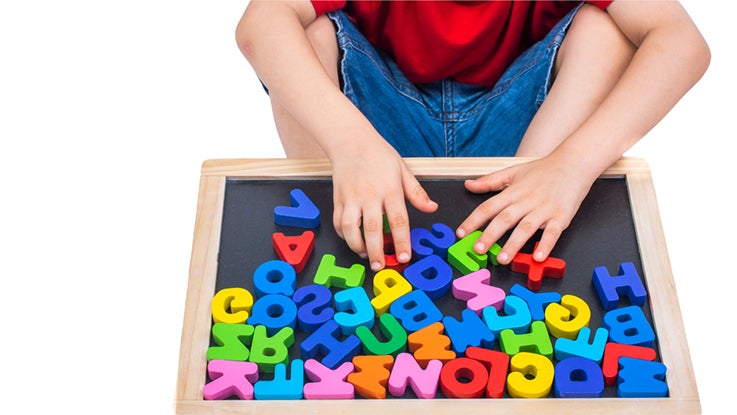
Spread magnetic letters around the table, and call out the sounds for the letters you want your child to find. As they identify each one, have them stick the letter to a cookie sheet or another magnetic surface.
When they have all the letters in the word they’re practicing, ask them to put the letters in the correct order and read the word.
Try this variation if your child wants a little more of a challenge:
Once they’ve gathered all of the letters for the word you’ve called out, ask your child to change the word by swapping out one letter for another. So, for example, if they spell pat first, they could exchange the a for an o and spell pot next. See how many times they can swap!
Circle the Sound
Hand your child a newspaper or magazine page with large text, and ask them to circle as many words as they can find with the /f/ sound (or whatever sound they’re currently learning).
Play Phonics Hopscotch
Draw a hopscotch grid with your child, but instead of numbering the squares, write letters in each of them (vowels, consonants, digraphs, etc.). When your child lands on a square, ask them to say the sound the letter(s) make.
Magic e Wand
Wave a “magic e” wand to turn short vowel words into long vowel words (cap → cape), showing how silent e changes the vowel sound.
Digraph Detectives
Search for and highlight digraphs like sh, ch, and th in short stories or poems to strengthen pattern recognition.
Fluency
Once kids have mastered age-appropriate phonics, they can start to read leveled texts with fluency. Fluency is the ability to read smoothly and accurately, with appropriate expression. Children who struggle with fluency may read slowly or stumble over words.
How It Helps Kids Learn to Read
Fluency lays the foundation for comprehension. When kids read smoothly and with expression, they don’t have to devote as much brainpower to reading the words. Instead, they can focus on the meaning behind them.
Ideas for Practicing at Home
Here are some strategies to help your beginning reader become more fluent.
Use the HOMER App by Begin
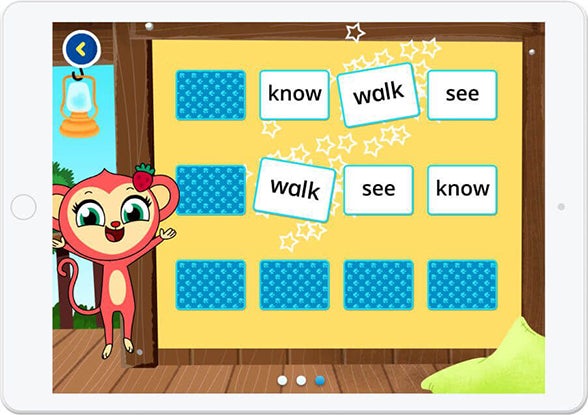
The HOMER app by Begin is an excellent resource. The app’s personalized reading exercises help kids build their decoding skills. They’ll practice sight words and phonics foundations to help boost their reading fluency.
Using the app for just 15 minutes a day can make a huge difference in your child’s literacy skills. Start your free trial today and see how much your learner can grow!
Play Copycat
This fun game will help your child learn to read with expression. Choose a short story or a passage from their favorite picture book.
Read the first sentence out loud, using different voices and expressions to represent different characters or emotions. Be sure to pause at commas and use the appropriate tone for question marks or exclamation points.
Then, have your child repeat the sentence back to you, copying your expressions and intonation. Repeat this for a few more sentences until they get the hang of it.
Next, switch roles and let your child read a few sentences while you copy their expressions and intonation.
Want a fun variation on this? Ask your child to read like a robot with no emotional affect or expression in their voice. Then ask them to read like a person. Kids love creating the staccato robot voice, and it gives them a clear sense of the power of intonation.
Read “Too Easy” Books
Let your child read books that they find easy. This allows them to focus on reading smoothly and with expression without being distracted by difficult words or complex sentence structures.
Encourage them to read the same book multiple times. They could read aloud to relatives over video chat or to their favorite stuffed animals. The more practice they get with each book, the more fluent they will become.
Word Walk
Make an oversized board game your child can play on their feet! Write the words your child is learning on index cards (one word per card), and then place them along the floor in a board game-like path.
Sprinkle in some game cards, like “go back two spaces” or “jump ahead five spaces.” Grab a die from another game and begin!
Ask your child to roll the die, walk the corresponding number of steps, and say the word they land on. Try giving your child fun directions like “walk and talk very slowly” or “jump like a rabbit and talk in a silly, high voice.”
Create a Reader’s Theater
Turn a book into a play, and the more participants, the merrier! (Hint: a book with lots of dialogue allows for the best dramatic reading experience.)
Assign each family member a character and also remember to cast someone in the role of the narrator. Then let the dramatic reading begin! You can also try doing the play with puppets, using your child’s dolls or stuffed animals.
Comprehension
Comprehension is the ability to understand and take meaning from text. It’s typically developed later than the other components of reading. However, it’s just as important.
Informational texts are especially valuable for teaching reading comprehension because they often contain specialized vocabulary words related to specific subject matter. The trick to engaging kids with these fact-based texts is to pick something relevant and fun for them.
For instance, if you have a dog, reading an informational text about taking care of one could be fun for your child. Or if you’re about to go on a trip, reading something about the place you’ll visit might pique their interest.
How It Helps Kids Learn to Read
Comprehension allows kids to draw inferences, make predictions, and understand the main idea of a text. It also helps them make connections between what they’re reading and their own knowledge and experiences.
Ideas for Practicing at Home
To help your child develop their comprehension skills, try these activities.
Retelling a Story
Once your child finishes a book, ask them to retell the story to you in their own words. This will help them recall and organize the information they read and identify key plot points and characters.
Draw Prediction Pictures

Stop halfway through a read-aloud session and ask your child to predict what will happen next. Then, have them draw a picture related to their prediction. It could be the character in a new setting or a new situation.
Discuss any clues or evidence in the text that led them to their prediction. Then, after you finish the book, compare their prediction to what actually happened in the story.
Give Your Child a Reading Journal
Encourage your child to keep a reading journal where they can write down their thoughts, questions, and connections as they read.
As you review the journal together, you can discuss their understanding of the text, explain the meaning of any unfamiliar words, and help them make connections between different parts of the story.
Interview a Character
When you’re reading with your child, it’s helpful to ask both open-ended and close-ended questions, especially if it’s your second time reading a particular book.
With that in mind, another fun way to help your child grasp the meaning of a story is to hold a pretend interview. After you read a book, have your child pick which character they want to be. Then you can be the interviewer and ask the character questions.
Questions like “How did you feel when you did ?” or “What happened after you did ?” give your child a chance to step into their character’s shoes and look at things from their perspective. Then you can choose a character, and your child can interview you.
Vocabulary
Your child’s vocabulary is their understanding of words and their meanings. A strong vocabulary can help your child be a better reader and communicator.
Informational texts are especially valuable for teaching reading comprehension because they often contain specialized vocabulary words related to specific subject matter. The trick to engaging kids with these fact-based texts is to pick something relevant and fun for them.
For instance, if you have a dog, reading an informational text about taking care of one could be fun for your child. Or if you’re about to go on a trip, reading something about the place you’ll visit might pique their interest.
How It Helps Kids Learn to Read
A rich vocabulary helps children understand what they are reading and make connections to their own experiences. It also allows them to express themselves more clearly when speaking or writing.
Moreover, a strong vocabulary can improve reading fluency and comprehension. As your child encounters new words in texts, they can decipher the meaning based on the words they already know.
Vocabulary is divided into four different types:
- Listening vocabulary
- Speaking vocabulary
- Reading vocabulary
- Writing vocabulary
They’re all important for your child to learn.
Ideas for Practicing at Home
Your child will develop their vocabulary throughout their lifetime. One of the best and simplest ways to increase your child’s vocabulary is to talk with them all the time.
Whether it’s playing school with your child, asking questions about the block tower they’re building, or having a conversation about the things you see on a walk, engaging in dialogue strengthens vocabulary skills.
Here are a few ideas for practicing and growing vocabulary at home.
Read Aloud
Find books above your child’s reading level and read them aloud. As you come across new words, take a moment to define them. You can also have your child repeat the word and use it in a sentence.
Play Word Charades
Play this classic game (with a vocabulary twist) with your child or the whole family!
Write vocabulary words on slips of paper. Choose words that your child knows, as well as some they’re in the process of learning. Put the papers into a pile. Then take turns picking one and acting it out.
Encourage your child to use props such as toys or household items if they want. Two important ideas are at work here: A whole body experience makes learning vocabulary easier, and acting is fun!
Play Odd One Out
For this game, present a list of words that belong together in a category, except for one odd word out.
For instance, your category might be furry animals, and you might say “dog, cat, horse, dolphin, and cheetah.” Your child guesses what the category is and which one doesn’t belong.
Subscribe to Little Passports
Little Passports delivers educational activities and games to your doorstep. Each month focuses on a different topic, allowing your child to dive deep and learn new vocabulary related to various subjects and places.
With several subscriptions available for ages 3-10, you’re sure to find one your child will love!
Practice the 5 Components of Reading with Begin
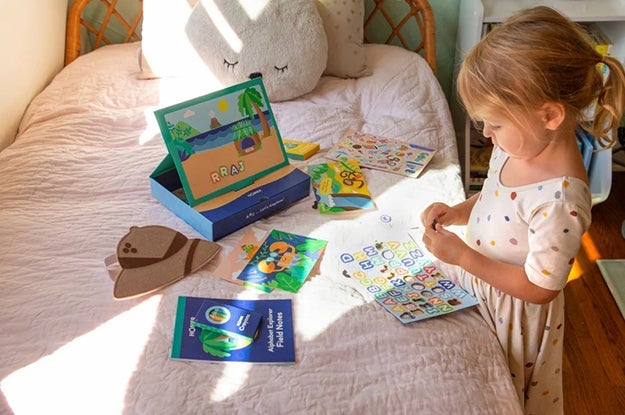
The five components of reading—phonemic awareness, phonics, fluency, comprehension, and vocabulary—create a strong foundation for literacy. You’ll help your child become a better reader by actively practicing these skills at home.
One of the most enjoyable ways to practice is with play-based programs from Begin. Whether your child uses the HOMER app to practice phonics or builds their vocabulary with a Little Passports subscription, they’ll have a blast while learning!
*The 6Cs Skills Framework is a science-backed framework designed by acclaimed developmental psychologists and learning scientists Dr. Kathy Hirsh-Pasek and Dr. Roberta Michnick Golinkoff (Becoming Brilliant, 2016).
Frequently Asked Questions
Is there a sequence to learning the 5 components of reading?
Even before your child can read independently, you can help them grasp the components of reading (like comprehension, vocabulary and fluency) when you read aloud to them.
And as your child starts to develop their reading skills, remember that, although each component is a separate skill, they’re not entirely separate entities, so they can’t be taught in total isolation. They should be integrated instead.
However, there are approximate starting ages for teaching each component. Both phoneme awareness and phonics are typically first taught in preschool or kindergarten, while fluency, comprehension, and vocabulary lessons begin around second grade.
The 5 components of reading tend to overlap in about second grade, and they are taught all the way up through twelfth grade…and beyond!
Does my child need to know all 5 components of reading before they can learn how to write?
Reading is part of the broader category of communication. In terms of communication skills, speaking and listening come first, then reading to process and understand language, and finally, producing language through writing.
That said, your child doesn’t need to know everything about reading before they begin to write. One informs the other. Reading is the input, and writing is the output. However, kids do need a strong phonics foundation before they can begin to write.
What is an authentic text?
An authentic text is a piece of fiction or nonfiction writing, like a book or a newspaper article. It’s not a leveled text, meaning it hasn’t been created with specific sentence lengths, vocabulary choices, and reading levels in mind.
While leveled materials give kids gradually increasing reading challenges, authentic texts engage kids with real-life examples of situations and the language used in them.
What is skilled reading?
Skilled reading is the combination of all 5 components of reading. When your child is a skilled reader, they can decode text, understand vocabulary, make sense of what they’re reading, and use thinking and reasoning skills.
It also means they have strategies for making predictions and asking questions about a text, as well as motivation to apply what they read to themselves and the world.