
Learning vocabulary is one of the most essential steps in your child’s journey toward becoming a strong, consistent reader. But we know teaching vocabulary can sometimes be a challenge for parents.
With almost 200,000 words in the English language, where do you even start? Have no fear! Working on vocabulary with your child can be fun and easy, and we’re here to help.
As we work through some playful, effective tips on how to teach vocabulary to your child, there are a couple of pointers we encourage you to keep in mind. These will help you and your child stay focused while still having fun.
Key Takeaways
- Vocabulary is all the words a child knows and understands, spoken and written.
- A strong vocabulary supports reading comprehension, writing, communication, and academic success.
- Kids typically know 50 words at age one, 1,000 by age three, and 10,000 by age five.
- Teach new words through reading aloud, real-world examples, repetition, and simple definitions.
- Games like charades, treasure hunts, riddles, and word scrambles make vocabulary practice fun.
- Signs of struggle include poor comprehension, misused words, and trouble following multi-step directions.
Table of Contents
What Is Vocabulary?
Before we dive into the tips and activities, let’s take a moment to define what “vocabulary” means.
Vocabulary refers to all of the words a person knows and understands. This includes the words they can use in spoken and written language and those they recognize when reading or listening.
A strong vocabulary allows you to communicate effectively, understand and make sense of the world, and express yourself in various ways. Children with an extensive vocabulary are better equipped to read, write, and interact with others.
Tips on Teaching Vocabulary
While your child will naturally pick up new words over time, intentional instruction and practice can help them build their vocabulary faster.
The following tips can make teaching vocabulary more enjoyable for both of you.
Start Young
It’s never too early to start teaching vocabulary. Before your child can speak, you can introduce new words by pointing out objects and saying their names. Talk to them about what you’re doing and share about your day.
Research consistently shows that the more words babies and toddlers hear in their early years, the stronger their vocabulary and later reading and literacy skills become.
As your child grows, introduce new words in context and encourage them to use them in conversation. This early exposure to words will set a strong foundation for their vocabulary development.
Use Real-World Examples
Children learn best when they can apply their learning to real-life situations. When teaching vocabulary, use examples from your child’s everyday life to make the words more meaningful and relevant.
For example, if you’re teaching the word “bridge,” you might point out the bridge you and your child travel under every week on the way to the grocery store. Anchoring new words to real-world experiences helps children remember them better.
Encourage Independent Reading
It’s important to foster a sense of confidence and independence in your child from a young age. Even as they continue to build their vocabulary, it’s helpful to allow your child to explore and grow on their own.
Your child won’t know every word they come across, even if they’re reading at their reading level, and that’s OK! You’ll be there to help them fill in the gaps.

Read Aloud
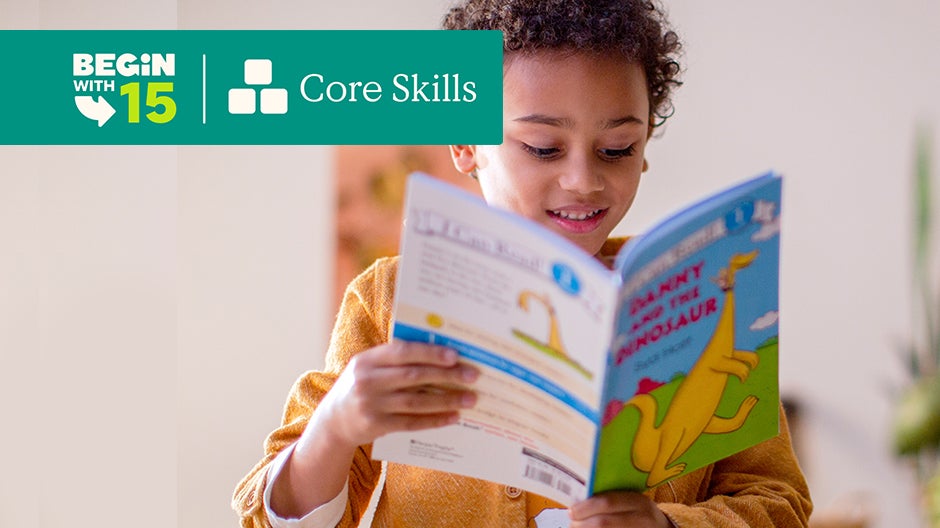
While reading independently is important, reading aloud to your child can also improve their vocabulary. It allows you to introduce and explain new words naturally. Pick age-appropriate books and read to your child regularly.
When you come across a new word, finish the sentence that it’s in to give your child additional context. Then ask them what they think the word means before explaining it to them. Model how you can use the context of the sentence to help make meaning of new words.
You can also preview the book ahead of time, pick out words that may be new for your child, and introduce them before reading. Then, review the words again in the story afterward so you don’t have to interrupt the flow to introduce the new word while reading.
Be Prepared for Mistakes and Mispronunciations
Mistakes are part of the learning process. Don’t be surprised if your child tries to use a verb as a noun or mispronounces a word. When this happens, gently correct them and provide the right usage or pronunciation.
A simple way to do this is to repeat back what they said using the correct form. For example, if your child says, “I goed to the park,” you might respond, “Yes, you went to the park!” This way, they hear the correct version without feeling discouraged.
By not making a big deal out of their mistake or bursting out laughing, you can create a safe space for your child to learn and grow without fear of embarrassment.
Use Technology
In today’s digital age, the right type of screen time can boost your child’s vocabulary.
Game-based educational apps by Begin, like HOMER or codeSpark, can expose your child to new words in a fun and engaging way. And since it feels like play, your child will enjoy their
Get Specific
Teaching vocabulary is all about the nitty-gritty. It’s important to make sure that when your child is learning a new word, they have all the tools they need to thoroughly understand the newest addition to their vocabulary vault.
Working on a single word with detail (and repetition!) helps ensure your child not only knows the word using their recall skills but can also recognize and comprehend its use.
For example, if your child is learning the word enormous, you might:
- Define it simply: “Enormous means really, really big.”
- Show with objects: Hold up a small toy car and a big stuffed animal and say, “The stuffed animal is enormous compared to the car.”
- Use in context: “Look at that enormous tree in our yard!”
- Repeat: Bring the word up again later in the day: “Wow, that elephant in the picture is enormous!”
Help Them Help Themselves
During your child’s exploratory reading sessions, they’re likely to come across some words they don’t know. But that’s no reason for them to struggle!
Teaching your child how to work out words for themselves by using skills they have already mastered—such as sounding-out—will help them on their road to learning and reading independently.
You can also show them how to use a children’s dictionary or a tablet/computer to look up meanings. Learning how to find out what a word means on their own builds both confidence and independence.
Encourage Curiosity and Exploration
The world is full of words to learn! Encourage your child’s natural curiosity by answering their questions and actively looking for new words together. Language development is an exciting adventure, and you can be their guide.
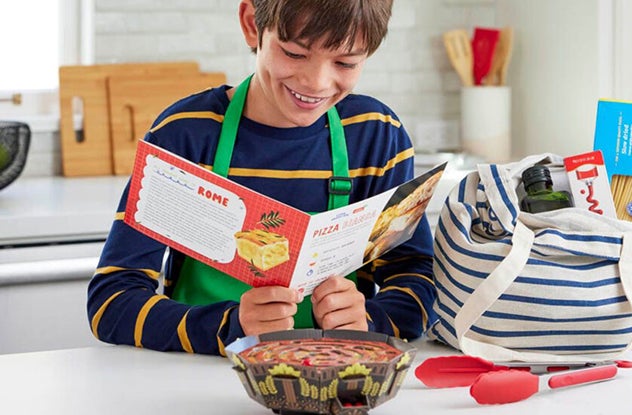
Little Passports can help with this by providing educational kits that spark curiosity and exploration in children. The subscription boxes feature various themes, such as science, world cultures, and cooking, which are all great topics for vocabulary expansion.
Engage Your Child with Word-Play Games
.Utilizing word-play games (like the ones below!) can help you figure out how to teach vocabulary to your child in functional and fun ways.
Fun and Easy Activities for Teaching Vocabulary

With those tips in mind, here are some fun and easy activities to help your child learn new words.
1) Vocabulary Clue
This game offers an all-star line up of repetitive exposure to vocabulary, providing context clues for your child to use while recalling, and loads of fun while playing!
If you’d like to try this game, you’ll need a list of vocabulary words that you’d like your child to focus on. Write each vocabulary word on a separate slip of paper, then mix them all up in a bowl or hat.
For the first round, you will start by pulling out a vocabulary word. Make sure your child doesn’t see the word!
Next, try to describe the word without actually saying it. Your child’s goal is to guess the word as fast as possible!
We recommend giving players three minutes per word to guess. The younger your child is, the more time they’ll need. That’s OK! You can adapt the timing as you go if you find that your child needs a bit longer to guess.
Keep going and taking turns until you work your way through the bowl of vocabulary words.
For the second round, you use the same vocabulary words, but this time you can only provide clues by acting out the words!
For the third round, you can give verbal hints again, but you and your child can only use one word to hint at what the vocabulary word might be. For example, if the word was “sky,” your hint could be “cloud.”

2) Two Truths and a Lie
This game is easy, quick, and can be used on the go!
For this game, when practicing vocabulary words with your child, provide them with three different options. One option will be the correct definition of the word, while the other two are lies.
We encourage you to be as absurdist and silly as possible!
As you begin, make it obvious which answer is the correct one. As your child gets better and better at recognizing their vocabulary words and the right definition, you can get more advanced with your white lies.
We recommend avoiding switching around the definitions from other vocabulary words they’re focusing on. We don’t want them to get confused!
Sticking with silly, funny white lies will help move them in the right direction.
3) Sticky Ball Game
If you don’t mind sticking some tape on your walls, this is a great game to use for teaching vocabulary!
You can write out each vocabulary word onto a separate flashcard, then stick them onto the wall. Make sure they’re spaced apart! This will make it easier for your child to read.
Next, scrape together a ball made out of tape that’s nice and sticky.
Your job will be to read off the definition of one of the words. Once your child figures out what it is, their goal is to throw the sticky ball at the right word as fast as they can.
This game is even better if you have multiple kids, as they can play together. Just make sure you adjust the vocabulary
4) Race for the Right Word

You’ll need yourself and one other person to help with this game if you want to give it a go.
One of you should be positioned on one side of the room. Have the other person go to the opposite end of the room and wait with a stack of vocabulary cards written onto large pieces of paper.
Hint: Keep the font a little bit small—the goal is for players to have to run up to the other person to read it!
Once you yell “GO!” your child will dash to the person on the other side of the room holding the flashcard. Then they will run back to you and tell you the definition of the word they saw. Feel free to have the person holding the cards read the words off for younger children.
If your child gets the definition wrong, they can run back to get a hint from the person holding the word. Players can run back and forth as many times as needed to get the definition correct.
You can make this game easier or harder depending on your child’s reading level!
5) Vocabulary “Kamishibai”
This activity might sound fancy, but a kamishibai is just a Japanese form of storytelling that’s done through visual cues. Traditionally, people build tiny “stages” that they use to slide in small pictures representing scenes in a story (think of a very small, mechanical film screen!).
There’s no need to build a stage, but we encourage you to get crafty and creative with this one!
If this sounds like an interesting activity to you, start with a book that your child is familiar with. They should have an understanding of some of the vocabulary they’re trying to practice.
You can illustrate a handful of scenes from the book together that emphasize the vocabulary they’re learning. Give them a head start by reading the book together. Then, ask if they can retell it with the pictures you made together. Can they assemble the story in the right order?
The challenge: Can your child tell what picture scene goes with what vocabulary word?
For example, if you’re reading A Very Hungry Caterpillar together, you could draw a picture of the hungry caterpillar turning into a butterfly. This scene could work as an example for vocabulary words like “change” or “transform.”
The storytelling and visual aspects of this technique will boost their imagination and recall skills.
6) Word Treasure Hunt
Create a fun word treasure hunt by hiding small pieces of paper around the house with different words written on them. Give your child a list of clues or hints about where they can find each hidden word.
Once they find a word, have them read it aloud and try to use it in a simple sentence. Then they can move on to the next clue.
After finding all the words, challenge your young learner to write a short story using as many of them as possible.
7) Picture Dictionary

If your child enjoys drawing, encourage them to create a picture dictionary. For this ongoing project, they’ll need a three-ring binder, paper, and some art supplies.
On each page, have your child write a word they’ve recently learned at the top. Then they can write a simple definition and an example sentence that uses the word.
Finally, have your child illustrate the word with a drawing or collage. Let them be creative as they bring the word to life through their own interpretation.
When the entry is complete, they can add it to their binder in ABC order. As they add more words to their dictionary, they’ll have a fun, personalized resource to refer back to.
8) Word Association Game
This easy-to-learn game is perfect for car trips or waiting rooms. It can accommodate multiple players and is a fun way to help your child expand their vocabulary.
To play, say a word and ask your child to say the first thing that comes to mind. Take turns building on each other’s words.
For example:
Player 1: Pet
Player 2: Cat
Player 1: Feline
Player 2: Whiskers
And so on. The game can go on for as long as you’d like. It’s a simple way to help your child think critically about language and make connections between words.
For variety, you can mix it up a bit.
Try:
- Choosing a theme and taking turns naming words that fit into that category
- Naming a word that means the opposite of what the other person said
- Take turns naming a word that starts with the last letter of the previous word
The possibilities are endless, and any variation will keep your child engaged while strengthening their vocabulary. The next time you have a few minutes to spare, give it a try!
9) Vocabulary Charades

Put a fun twist on learning new words by playing vocabulary charades. Write down various words on slips of paper and put them in a bowl.
Have your child draw one and act out the word without speaking while the rest of the family tries to guess what it is. To make it easier, set a one-minute timer. If no one has guessed correctly at that point, allow your child to name a synonym or antonym for the word as a clue.
Take turns acting and guessing, and talk about the meaning of each word after it’s been guessed.
10) Illustrating Words with Multiple Meanings
Homonyms are words that sound the same and are spelled the same but have different meanings. They can be tricky for kids to learn when you’re teaching vocabulary, especially if they only know one definition.
For example, if they know you go to a “bank” to deposit or withdraw money, they might be confused when they see “bank” in a book about rivers.
This activity can help your child learn more about words with multiple meanings. Write several pairs of homonyms on index cards, along with a hint about which definition you’re using. For example, one might say, “bark—like a dog” and another “bark—on a tree.”
Here are some others to try:
- Bat (a flying mammal) and bat (sports equipment)
- Park (a playground) and park (a car)
- Kid (a child) and kid (a baby goat)
Ask your child to illustrate each word card. Then you can use them to play memory.
Simply shuffle the cards and put them face down on the table. Take turns drawing two and seeing if they match. If they do, keep them. If not, it’s the next player’s turn. When all the cards are matched, whoever has the most is the winner.
11) “Word of the Day” Challenge
Challenge your child to learn a new word every day with this activity. Each morning, choose a new word for your child to learn and spend a few minutes discussing what it means. Encourage your child to use the new word at least once that day.
When picking words, remember to make them age-appropriate. A preschooler may enjoy words like “silly” or “gigantic,” while an older child may be ready for more complex words like “ambivalent” or “resilient.”
12) Word (Un)scramble
Does your child like puzzles? Think of this game as a word puzzle! Word (Un)scramble challenges your child’s vocabulary, spelling, and critical thinking skills.
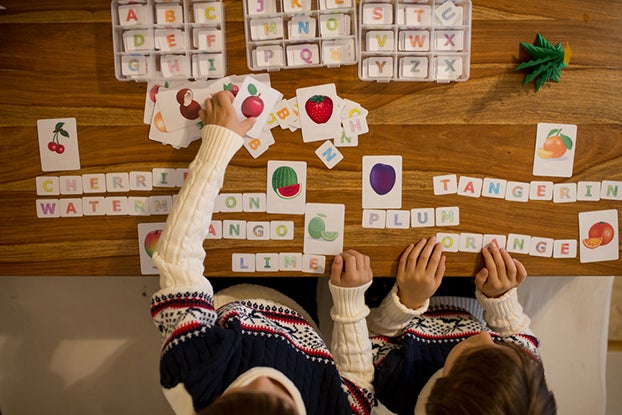
Start by writing a word on a piece of paper in block letters, but don’t show it to your child. Then cut the word into its individual letters. Scramble them up and set them on the table.
Recite the definition of the scrambled word. Now your child has to figure out what word you’re thinking of. Challenge them to manipulate the letters until they spell the word that fits your definition. Once they’ve figured out the word, it’s time to play again.
Take turns coming up with new words and unscrambling them.
Hint: When playing this game, be sure to start with simple words that your child is familiar with. As they get more comfortable with the game, you can raise the difficulty level.
13) Grocery Store Word Search
It can be fun to integrate vocabulary games into your daily chores. Heading to the grocery store? Instead of bringing a shopping list, write down the definitions of what you’re shopping for, like, “Something that’s white, comes from a cow, and goes in cereal.”
Before starting your shopping, ask your child to figure out what the definition refers to and write the word next to the definition. Now that they know what you’re looking for, encourage them to help you find the item in the store.
Not only will they practice their vocabulary, but your child will also become an excellent grocery shopping assistant!
14) Riddle of the Day
Here’s a new game for the morning routine: start the day by writing down a fun riddle and placing it by your child’s plate at the breakfast table. For instance, you could write, “I live in a box with lots of my friends. We’re all the colors of the rainbow.”
Ask your child to try to answer the riddle. Maybe they’ll figure it out in a jiff, or maybe they’ll come up with an unexpected answer that prompts more conversation. After they solve the riddle you prepared for them, ask them to come up with one of their own to ask you.
15) Stop the Bus
Stop the Bus is a lively game that will spark your child’s vocabulary, critical thinking skills, and creativity. Start by writing categories (animals, sports, colors, food, etc.) across the top of a piece of paper.
Make a copy for each child playing the game and give everyone a pen or pencil.
Now it’s time to get started. Call out a letter and ask the kids to write a word that starts with that letter in each category. For instance, if the letter called is “B” and the categories are animals, colors, and food, they might write bat, blue, and berries.
Once they’ve filled out a word under each category, they can yell, “Stop the Bus!” Every word will earn them a point. The child with the most points at the end of the game wins.
Now You Know How To Teach Vocabulary!

Expanding your child’s vocabulary will take time! We hope that one or more of these tips and activities gave you some ideas for making their vocabulary acquisition fun, easy, and a part of their learning routine that they look forward to.
If you ever find yourself needing to mix up your routine, we recommend trying the HOMER app. It has tons of personalized activities to help teach vocabulary to your child and build confidence that will carry through their reading journey!
Frequently Asked Questions
Why is teaching vocabulary to kids important?
Teaching vocabulary is essential because it lays the foundation for all areas of learning. A strong vocabulary helps children read, write, listen, and speak with greater confidence and success.
Since comprehension depends heavily on knowing the meaning of words, a child’s ability to read to learn is directly tied to the size of their vocabulary—and this can influence later academic achievement.
In addition, building vocabulary supports overall cognitive development. It strengthens skills such as reading comprehension, communication, memory, problem-solving, critical thinking, and attention.
How many vocabulary words should a child know by preschool and elementary school?
Even before your child can speak, they’re learning lots of vocabulary words. By age one, many children can recognize about 50 words, and then by three when they’re starting preschool, their vocabulary might jump to about 1,000 words.
When your child starts elementary school at five years old, they may be able to recognize ten times as many, roughly 10,000 words.
How can I tell if my child is struggling to learn vocabulary words?
It’s not always easy to know whether your child’s vocabulary is growing at the right pace. Some signs that your child might be struggling with their vocabulary skills include having trouble with reading comprehension or misusing common words in conversation.
Other signs of difficulty to look out for include not being able to follow multi-step instructions or conversations and not understanding grade-level books.
If you’re concerned about your child’s vocabulary, reach out to their teacher or a speech pathologist. They can help create a program that will further support your child’s learning.