“When do kids learn ABCs?” is one of the biggest questions for parents preparing their children for school. It’s normal to feel anxious when you see other toddlers singing the entire alphabet, while your child seems more interested in the box you got in the mail the other day.
But don’t worry. There’s no need to rush! Yes, the ABCs are the foundation of reading and writing, but mastering them is a gradual journey, not a single sudden event.
So, how can you make the journey more fun and successful? By learning about the various stages of development that your child will go through on their way to learning the alphabet.
In this article, we’ll explore the common milestones by age, showing exactly what skills kids usually develop during their toddler and preschool years.
Key Takeaways
- Learning the ABCs is a journey that starts at birth and continues through age 6 when your little one starts using letters to read and write.
- Phonics is key. Knowing letter sounds is much more important for reading than just knowing letter names.
- Focus on fun, not drills. Children learn best through play, songs, and hands-on activities.
- Be patient. Mastering the ABCs takes years.
When Do Kids Learn the ABCs?
Birth to Age 2
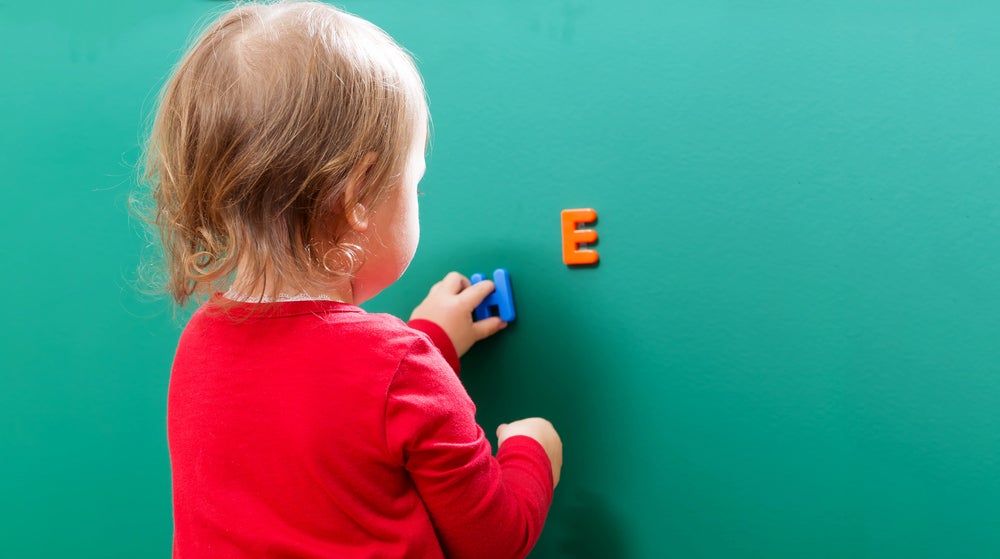
Even before your child starts to learn the ABCs, they’re building a foundation for language and literacy. From birth to age 2 (sometimes called the pre-alphabet stage), they’re learning to identify sounds and getting comfortable with books and the printed word.
Key Milestones
Babbling and cooing: From zero to 6 months, your baby is experimenting with different sounds by babbling and cooing. These adorable noises also serve to develop the muscles in their mouth and throat that they’ll need to form words when they’re older.
Sound recognition: From about 6 to 12 months, your child will start to respond to different tones and voices. For example, they might turn their head when they hear your voice or the sound of their favorite toy.
This helps strengthen their listening skills, which are crucial later on for distinguishing the unique sounds that letters make.
Interest in books: Between 12 and 24 months, your toddler will start to look at books, point to pictures, and try to turn the pages themself, with the result that handling books becomes a familiar and enjoyable exploration.
Learning the language: Between 18 and 24 months, your child may start connecting sounds to meanings and begin to say single words and small, two-word phrases.
How You Can Help
The best thing you can do to help your child in the first 24 months of their life is to make reading a comfortable and fun experience.
Read aloud every single day. Point to pictures and name the objects. Don’t worry about pointing to and naming the letters yet. Simply building a comfortable and fun association with books is the goal.
Ages 2 to 3
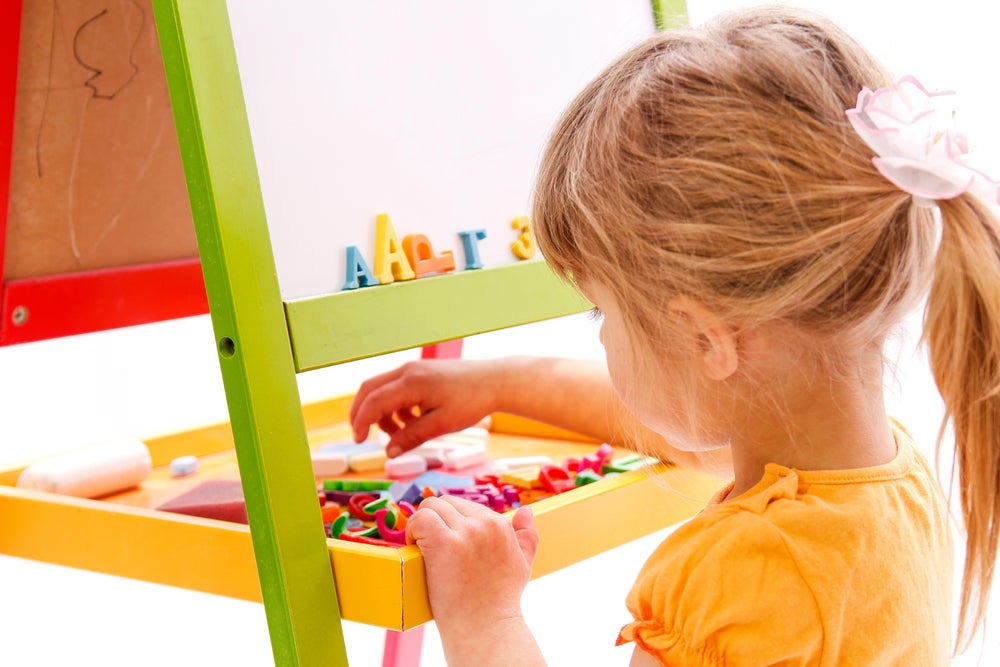
Between ages 2 and 3, the ABCs start to distinguish themselves as more than just squiggles on a page. Your child will likely begin to recognize letters as unique shapes, even if they don’t know the names yet.
Key Milestones
Basic letter recognition: Starting around the age of 2 and continuing to age 3, your child will likely begin to recognize the first letter of their own name. They may also recognize common letters they see on everyday objects like signs, logos, and the cereal boxes on top of the fridge.
Name knowledge: Your 2-year-old may start to identify their own name and will often know how it sounds and looks.
Starting to sing the Alphabet Song: Your child may start to understand the sequence of letters and sing parts of the Alphabet Song, though it may be fast, jumbled, or even missing a few letters.
Matching: Your child can now develop the ability to match simple shapes and colors, like blocks or puzzles. While it doesn’t directly relate to learning the ABCs, it is a pre-literacy skill that trains their eyes and brain to spot the differences between letters that look similar.
How You Can Help
At this age, the goal is still about fun and incorporating letters into their play. Provide simple alphabet toys, puzzles, and books. When you play with your child, point out letters by saying things like, “Here’s the letter A! A is for April.”
As you do this, focus on the letter shape and the sound it makes, not just the name.
Ages 4 to 5
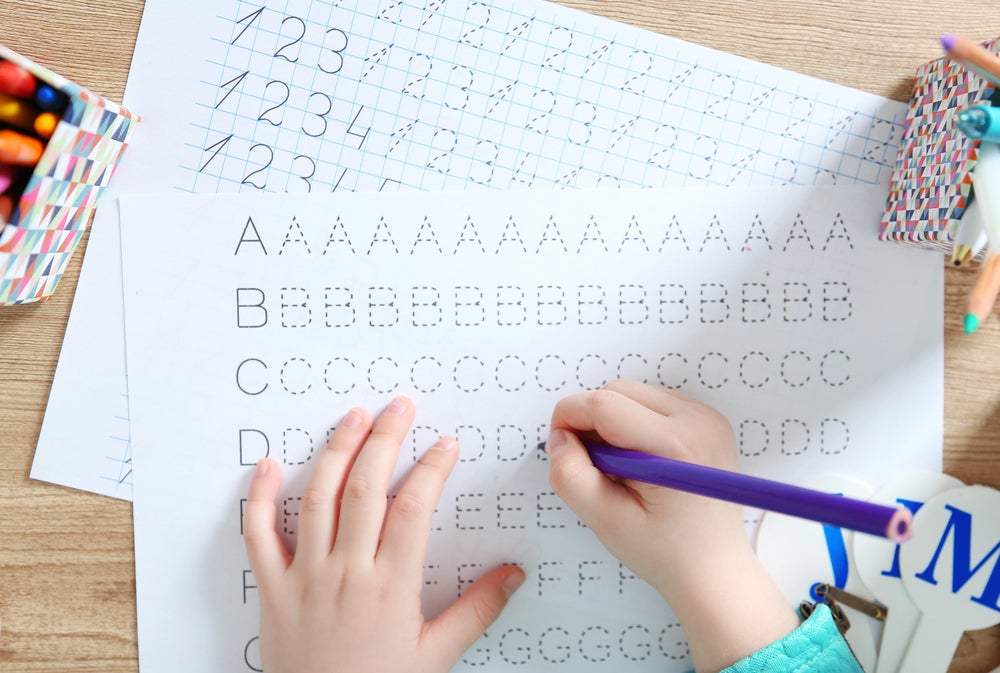
As your child reaches ages 4 and 5 and is exposed to preschool and early kindergarten, they’ll likely experience the most significant mastery of the ABCs.
Key Milestones
Letter naming: By age 4 or 5, your child might be able to name most of the uppercase and lowercase letters.
Alphabet song: They’ll likely be able to recite the alphabet correctly without the tune. This shows that they understand the order without relying on a mnemonic device.
Phonics: Between the ages of 4 and 5, kids begin to understand the sounds that each letter makes. This is called phonics, which allows them to unlock words and serves as the bridge to reading.
Pre-writing: Your child may start to write notes to their friends and family. These first attempts may be messy, reversed, or drawn instead of written, but they show that your child is engaging with writing.
Common words: Your child may start to recognize a few simple, high-frequency words without sounding them out (e.g., the, is, a, or my).
How You Can Help
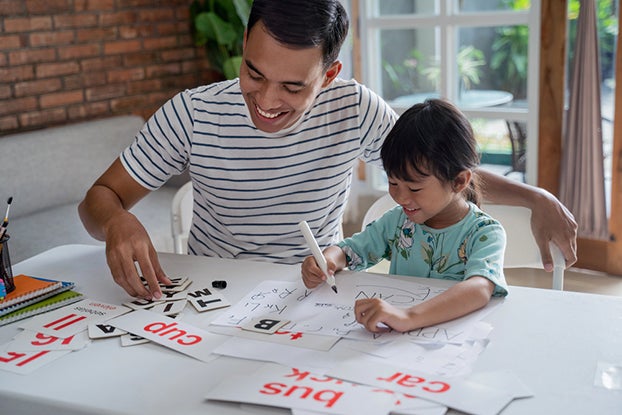
Use hands-on activities to make learning fun. For example, let your child write letters in the sand, draw them with finger paint, or stick letter magnets on the refrigerator. Play games where you say a sound, and they have to find the letter that makes the sound.
Whatever you choose to do, make practice a game, not a chore.
Ages 6 and Up

Some kids have a pretty solid grasp of the ABCs and the sounds they make by the time they start first grade. At this stage, the focus shifts to using those letters for reading and writing.
Key Milestones
Decoding: At age 6 and up, your child will use their phonics knowledge to sound out and decode simple words.
Reading: With their new-found decoding skills, your child may begin to read simple books faster and with a better understanding of what’s going on.
Writing: Your child may also be able to print all the ABCs (both uppercase and lowercase) correctly and may use them to write simple sentences and short stories.
Letter combinations: Not long after turning 6, your child will move on from individual letters to letter combinations that make a single sound (like ‘sh,’ ‘ch,’ and ‘pp’).
How You Can Help
For first graders and above, encourage independent reading and writing, and set aside time to read together (e.g., them reading to you, you reading to them, or you both reading a different book together).
You can also help them continue to build their skills by asking them to write thank you notes for you. Above it all, continue to make learning enjoyable and relevant to their life.
Why the Pace Varies
Every child is different and learns at their own pace, and that’s OK! Your child may master their ABCs by age 4, or, it may take them until they turn 6 to really get the hang of it.
The difference in pace is perfectly normal and is affected by many variables, including exposure and support, your child’s temperament, their school environment, and developmental delays.
When to Talk to a Professional
Most pediatricians and teachers agree that if your child shows little to no interest in letters or books and still cannot recognize many letters by the time they’re approaching age 6, it may be helpful to chat with a professional.
They can check for potential issues like hearing problems, vision problems, or other learning differences. They can also offer strategies for support.
Make Learning the ABCs Fun!
So, when do kids learn ABCs? The answer is: gradually, and through years of fun!
Remember that mastering the alphabet is a marathon, not a sprint. It’s the product of years of practice. The goal is to make learning a joyful experience by celebrating every small step, from recognizing the letter A to sounding out their first full word.
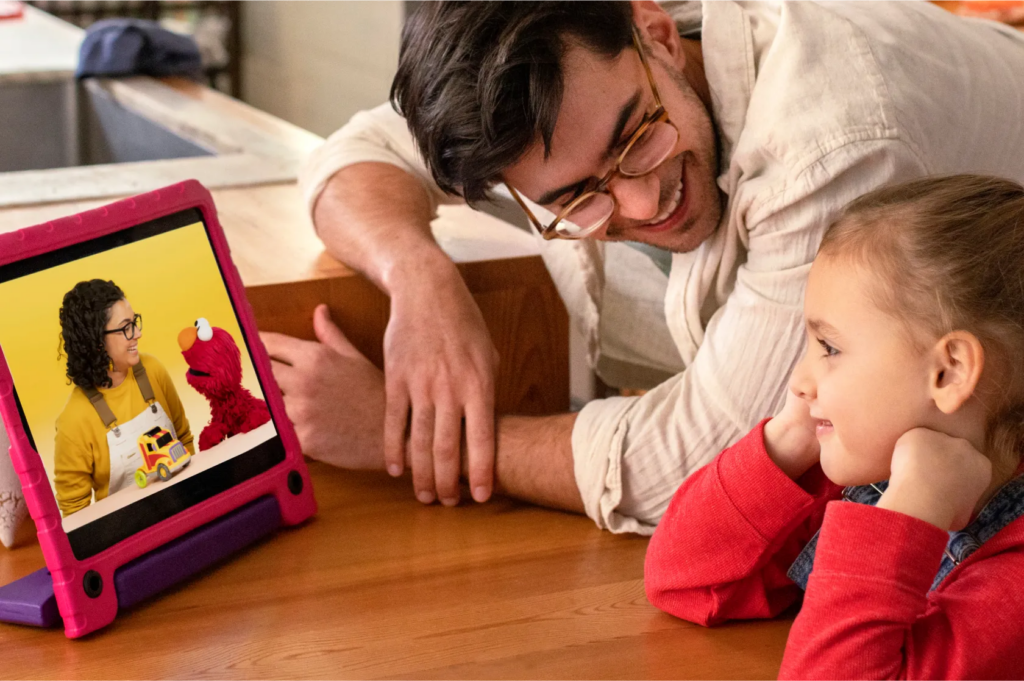
To help them along the way, give your child access to high-quality educational materials such as Begin’s Learn with Sesame Street app and HOMER app.
These tools can help your child build the confidence and curiosity necessary to develop a lifelong love of reading and learning.
Frequently Asked Questions
Should I teach my child uppercase or lowercase letters first?
Most experts recommend teaching your child uppercase letters first. Why? Because they are visually simpler and often appear first in your child’s name.
That said, since most of their reading material isn’t printed in all uppercase, it’s important to introduce lowercase letters shortly after, usually around age 4, so your child can practice recognizing both sets.
Does learning the Alphabet Song help with reading?
While the Alphabet Song doesn’t help with reading directly, it does help with learning the order of the letters, which is an important pre-reading skill.
Keep in mind that the song doesn’t teach the sound the letters make, only the name and order within the alphabet. That’s why it’s so important to practice the sounds separately through talking and reading with your child.
My 5-year-old mixes up letters like ‘b’ and ‘d.’ Is that normal?
Yes, mixing up letters like ‘b’ and ‘d’ is completely normal for children up to about age 7 and is called letter reversal.
Your child’s brain is still developing the visual processing skills to understand left-right directionality, so it can’t easily distinguish between a left-facing ‘d’ and a right-facing ‘b.’
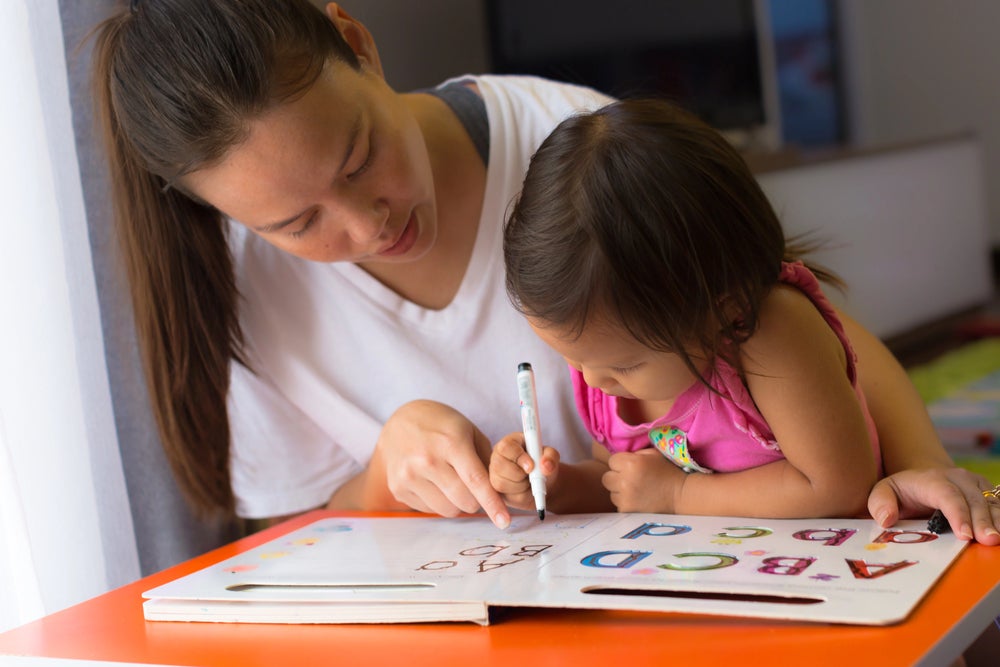
When they do mix things up and identify or write letters incorrectly, gently correct them so that they understand that they’ve made a mistake. Then give them hands-on practice, like tracing letters or feeling them, to help them anchor the correct shape in their memory.
How many letters should a 2-year-old know?
There’s no set number of letters a 2-year-old should know. In fact, it’s completely normal for a 2-year-old to recognize only a few letters, or even none at all.
At this age and stage, you want them to be focused on basic language and shapes. As a result, they might recognize the first letter of their name and/or letters they see often, like those in the name or logo of their favorite toy.
Keep in mind that learning letters, and eventually reading and writing, is a gradual process. At age 2, your goal should be to simply make books, letters, and language fun.