
If you’ve ever had to transfer your child from one grade to another or move to a new school district, you may have wondered, “Wait, what grade should my child be in at this age?”
Trying to figure out what grade a child should be in based on their age can be confusing, especially if you’re unfamiliar with the U.S. education system. But don’t worry. We’re here to help!
In this article, we’ll break down the standard correlation between U.S. grade level and student age from kindergarten through high school. So whether you’re a parent trying to understand your child’s education or just curious about how the American education system works, keep reading.
Key Takeaways
- In the United States, the school system is broken down into three stages to guide your child from early childhood to young adulthood: Elementary School, Middle School (sometimes called Junior High), and High School.
- In kindergarten and 1st grade, it’s all about the basics like shapes and letters. By 3rd grade, children hit a huge turning point where they stop learning to read and start reading to learn.
- As they reach 5th grade and move into middle and high school, the focus shifts to advanced problem-solving, independent thinking, and preparing for the future.
- While most kids start kindergarten at age 5 and graduate high school at age 18, education is not one-size-fits-all.
Table of Contents
- Standard Elementary Grades by Age
- Standard Middle School Grades by Age
- Standard High School Grades by Age
- Grade Level by Age Chart
- Exceptions and Cutoffs
- Navigating Major School Transitions
Standard Elementary Grades by Age
In the United States, educators typically break schools down into three levels to cover kindergarten through senior year (12th grade):
- Elementary
- Middle School (Jr. High in some districts)
- High School
Let’s start with elementary school. This is where your child will begin formal education and learn the basics of reading, writing, and arithmetic.
Elementary schools usually contain kindergarten classes and grades 1st through 5th or 6th, depending on the district. But how do those grade levels correspond to student age?
Let’s look a little further.
What Grade Are 5-Year-Olds?
Five-year-olds enrolled in kindergarten are at the beginning of their academic journey. Students typically turn six during the school year, though there are some exceptions, which we’ll discuss later.
In kindergarten, your child will learn basic, early-learning concepts like colors, shapes, letters, and numbers. They’ll also begin to develop social skills and independence.
What Grade Are 6-Year-Olds?
After completing kindergarten, your child will move on to first grade. They’ll typically be six years old for part of this school year.
The first-grade curriculum builds upon the fundamentals learned in kindergarten. Your child will continue to develop their reading and writing skills and become more fluent at addition and subtraction.
What Grade Are 7-Year-Olds?
Your child will likely be in second grade at seven years of age. By this point, they may have a solid understanding of essential reading and math concepts and be able to write longer sentences independently.
Second graders are often curious about the world around them and ready to explore science and social studies topics more deeply. They’re the perfect age for a Little Passports: World Adventures subscription!
What Grade Are 8-Year-Olds?
By the time they’re eight, your child will probably be in third grade and halfway through elementary school. In addition to working on their academic skills, they’ll work hard on problem-solving and critical thinking.
Third grade is also the year when students stop learning how to read and start reading to learn. This is a crucial turning point in their education, as they’ll use their foundational reading skills to tackle more complex subjects in the future.
What Grade Are 9-Year-Olds?
Your child may be in fourth grade at nine years old. More complex math topics like fractions, decimals, and basic geometric principles will challenge their cognitive skills this year.
They’ll also work hard on their grammar and vocabulary, helping them become better readers and writers. Science experiments, social studies projects, and more complex homework assignments will also become a regular part of their routine.
What Grade Are 10-Year-Olds?
Once your child is 10, they’ll likely be in the fifth grade. During this final year of elementary school, your child will continue to work on advanced math skills like long division and tackle more complex writing assignments.
They’ll also face changing social dynamics as they gear up for middle school.
Standard Middle School Grades by Age

Welcome to middle school! In much of the United States, middle school encompasses grades six through eight, with students typically aged 11 to 14.
However, this is not a nationwide standard. Your district may have a slightly different setup, such as a junior high school model — with only 7th and 8th grades. In this case, your 6th grader would stay in elementary school for one more year.
Let’s look at how old children are in each of these grades.
What Grade Are 11-Year-Olds?
Your child will most likely be in 6th grade at 11. It’s an important transition year as they adjust to a new school and new expectations. They may be switching classes for the first time or dealing with more peer pressure and an increased workload.
What Grade Are 12-Year-Olds?
Twelve-year-olds tend to be in 7th grade, a year of academic and social growth. While taking on the challenges of algebraic equations or historical timelines, they’ll also navigate new friendships and social norms.
What Grade Are 13-Year-Olds?
At 13 years old, your child will likely be in 8th grade. During this final year of middle school, the main focus is on preparing students for high school.
These young teenagers are developing their own identities and interests and seeking more independence.
Standard High School Grades by Age

After eighth-grade graduation, your child is off to high school. In the United States, high school typically lasts four years:
- 9th Grade (Freshman)
- 10th Grade (Sophomore)
- 11th Grade (Junior)
- 12th Grade (Senior)
Here’s a look at the typical age for each grade in high school.
What Grade Are 14-Year-Olds?
Most 14-year-olds are in 9th grade. Since it’s their first year in a new school, they may need time to adjust and find their place.
They’ll likely work with a guidance counselor to create a course plan for the next four years. As a parent or caregiver, you’ll want to stay involved and help your child navigate through this stage of their educational journey.
What Grade Are 15-Year-Olds?
Many students are 15 during their sophomore (or 10th grade) year. They’ll be taking classes to support their future career path, whether that’s college or entering the workforce.
Class schedules won’t look the same for everyone, but most students will take a mix of core subjects (like English and math) and electives, such as art, band, or theater.
What Grade Are 16-Year-Olds?
Your child will likely be in their junior year of high school (11th grade) when they’re 16. This is a crucial time for them to consider their post-high school plans.
In junior year, many students take the SAT or ACT and begin researching colleges or other options. Graduation seems so real and so close.
What Grade Are 17-Year-Olds?
You blinked, and now your little learner is 17 years old. This year, they’ll be a senior (12th grade) preparing for their next chapter in life.
That could include:
- Enlisting for military service
- Attending college or a trade school
- Applying to a certificate program
- Starting an entry-level job
- Taking a gap year to refresh and make plans
Grade Level by Age Chart
Now that you know more about how grades and ages correlate in America, here’s a quick chart to refer back to:
| Grade Level | Typical Age Range |
| Kindergarten | 5-6 |
| 1st Grade | 6-7 |
| 2nd Grade | 7-8 |
| 3rd Grade | 8-9 |
| 4th Grade | 9-10 |
| 5th Grade | 10-11 |
| 6th Grade | 11-12 |
| 7th Grade | 12-13 |
| 8th Grade | 13-14 |
| 9th Grade (Freshman) | 14-15 |
| 10th Grade (Sophomore) | 15-16 |
| 11th Grade (Junior) | 16-17 |
| 12th Grade (Senior) | 17-18 |
Exceptions and Cutoffs
While the above chart is a general guideline, it’s important to note that there can be exceptions and variations in grade level based on individual circumstances and state regulations.
Let’s explore three common scenarios.
Birthday Cutoffs
Some states have strict cutoff dates for starting kindergarten. For example, if you aren’t five years old on or before September 1st, you may not be able to enroll in kindergarten until the following year.
In this case, a child would be almost six before starting school, pushing up all their other grade levels as well. They’d be nearly 19 when graduating from high school.
Skipping a Grade
Some schools allow students with exceptional academic abilities and maturity to skip a grade. This would make your child a year younger than their classmates, but they’d be in an appropriate grade for their abilities.
Repeating a Grade
If a child struggles academically or has missed a significant amount of school, the staff may recommend having them repeat a grade. This repetition can give them more time to catch up and improve their academic performance. But they’ll be a year older than many of their peers.
Navigating Major School Transitions
Understanding the average age for each grade level is a great starting point, but school is about much more than just when your child was born.
During major school transitions, your child goes through massive physical, mental, and social development. Knowing what lies ahead and how to navigate those milestones can help you support them every step of the way.
Kindergarten
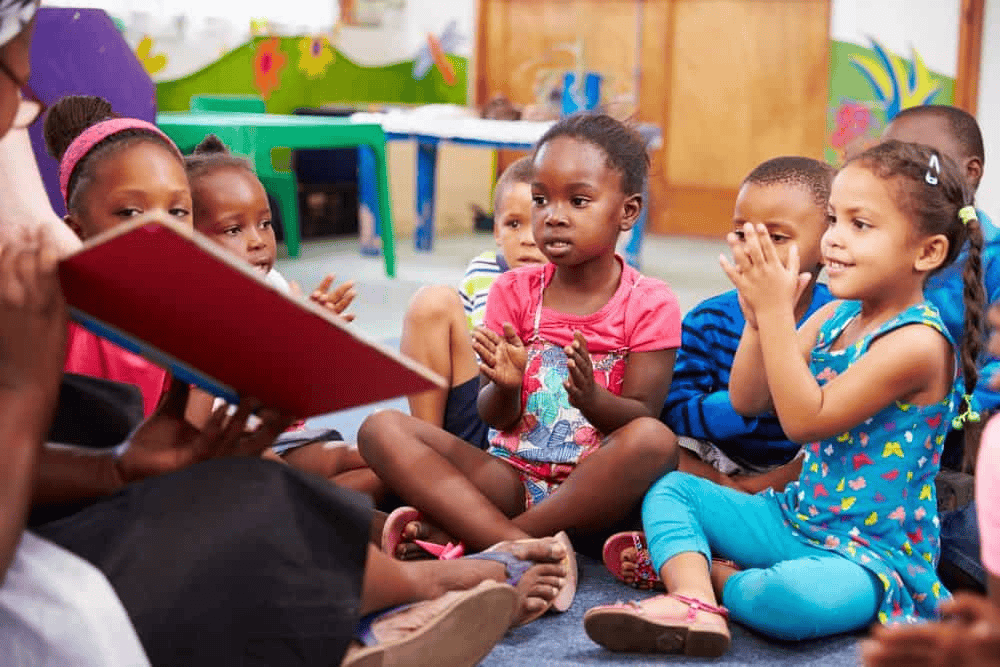
Kindergarten marks the transition from the flexible, play-based routines of preschool or home into the structured, full-day school environment.
Before this, their days were likely filled with naps and flexible routines. Now, all of a sudden, they’re being asked to navigate a classroom environment, follow multi-step directions from a teacher, and share attention with twenty other children. That can be a lot!
But the biggest transition in kindergarten isn’t the classroom or the academics. It’s the social and emotional changes they’ll experience. At this stage, your little learner is developing executive functioning skills that help them focus, control impulses, and manage big feelings.
This can take many forms, but common examples are sitting still during circle time, waiting patiently for a turn at the water fountain, and learning how to resolve playground disagreements with words instead of tears.
Both physically and mentally, a full day of kindergarten can be absolutely exhausting for your five-year-old. You might notice your child is extra cranky or prone to meltdowns right after the afternoon bell rings.
This is completely normal and often called “after-school restraint collapse” because they’ve been working so hard to be on their best behavior all day long.
How To Help
You can ease this transition by keeping a very predictable evening routine at home. Prioritize early bedtimes, offer a healthy snack immediately after pickup, and give them plenty of unstructured downtime to unwind.
By keeping home life peaceful and steady, you give your new kindergartener the secure launchpad they need to tackle their brand-new academic world with confidence.
Elementary School

When your child moves from kindergarten to first grade and beyond, they’ll encounter more big changes in their life, especially if they went to a private school for kindergarten and were only going until lunch time each day.
From first through fifth grade (roughly ages six to 11), they’ll experience a steady rise in learning the mechanics of reading, phonics, and understanding basic numbers. But, around the third grade, they’ll be asked to stop learning how to read and to start reading to learn.
This transition demands a lot more brain power and stamina. Instead of just listening to stories, your eight-year-old is suddenly handed a textbook and expected to pull facts from science and social studies articles.
Math also evolves from simple addition into the abstract worlds of fractions, long division, and word problems, and homework becomes a regular part of the weekly routine, requiring your child to manage their time outside of school hours for the very first time.
Things are also changing outside the classroom. Socially, your child is starting to form deep, personal friendships. They’re moving away from parallel play and into specific friend groups based on shared interests and personalities.
As with that first big move into kindergarten, the elementary school years can challenge your child physically, mentally, and socially.
How To Help
You can help them navigate these transitions by nurturing their curiosity and encouraging them to develop a growth mindset.
The elementary years are the perfect time to fuel their natural curiosity about the world. Expose them to engaging activities, books, and educational subscription boxes that bring geography, science, and other subjects to life.
And, when they get stuck on a tricky math problem or a tough reading passage, remind them that mistakes are just proof that their brain is growing. Building a growth mindset, and the resilience that comes with it, will give your child a solid foundation for the years ahead.
Middle School

Around age 11, your child will say goodbye to the familiar halls of elementary school and step into the brand new world of middle school.
This transition is famous for being one of the trickiest stages of growing up. Why? Because almost everything about their daily environment changes overnight.
Instead of staying with one teacher in a single classroom all day, middle schoolers must learn to navigate a maze of hallways, track a complicated rotating schedule, and manage a school locker, all while answering to multiple teachers with completely different teaching styles.
At the same time, their body, brain, and social skills are entering a massive phase of development. Not only are they nearing puberty, but their brain is also going through a major rewiring process that makes emotions feel incredibly intense.
On top of all that, 11, 12, and 13-year-olds start looking to their peers, rather than their family, to figure out who they are and where they fit in. This can lead to a rollercoaster of social drama, peer pressure, and an intense desire for privacy and independence.
How To Help
You can help your middle schooler navigate these ups and downs by acting as a behind-the-scenes organizer.
Teach them how to use a paper calendar or digital planner. If they’re not ready to keep their own schedule, consider using a family calendar that you can post on the refrigerator, in the kitchen, or in some other high-traffic area.
You can also show them how to color-code their notebooks and break down big weekly projects into small, manageable daily tasks. This will help them manage all the new responsibilities, classes, and information they’re exposed to every day.
Most importantly, keep the lines of communication wide open at home. Your child might push for more space, but they still desperately need to know you are their safe harbor.
Listen to their worries without jumping in to instantly “fix” every problem, and celebrate their growing independence as they discover their true, unique identity.
High School

The final major transition happens around age fourteen, when your teenager walks through the front doors of high school as a freshman. This milestone marks the official countdown to young adulthood.
The biggest shift in high school is the sudden weight of personal responsibility. For the very first time, every single grade, attendance record, and behavioral mark goes onto a permanent academic transcript that colleges, trade schools, and future employers will review.
Kids are also asked to use and master technology to a more advanced degree. This may include things like graphing calculators, writing software, database software, research apps, collaboration tools, and others.
Because of this, it’s completely normal for your teen to experience a spike in academic anxiety.
They’re expected to balance rigorous core subjects like algebra and chemistry (and the tech that comes with it) alongside extracurricular activities, varsity sports, and perhaps even a first part-time job.
It can all feel very overwhelming!
How To Help
The relationship between you and your teenager will go through a transition of its own during these four years. Your job is to slowly step back from being the daily “manager” of their life and step into the role of a trusted “consultant.”
Instead of packing their bags or emailing their teachers for them, teach them how to advocate for themselves. Encourage them to ask for help from their guidance counselor to plan out their graduation pathway (e.g., college prep, certificate programs, or entering the workforce).
By giving them the room to make choices (and fail safely), you help them build the true independence they need to confidently step into the world beyond the classroom.
Prepare for Elementary School with Begin
Education is not a one-size-fits-all model, and various factors can affect a child’s grade level. So, if you have any questions about what grade your seven-year-old should be in or anything else related to their academic placement, don’t hesitate to contact their school.
And remember that our team at Begin is also here for you! We offer personalized education solutions to meet the unique needs of every learner, whether above or below their grade level. Visit BeginLearning.com to learn more.
Frequently Asked Questions
What happens if we move to a different state mid-year?
The United States doesn’t have a single nationwide school curriculum, so different states have their own rules for birthday cutoffs, graduation requirements, and which subjects are taught in each grade.
If you move, the new school will look closely at your child’s age and official transcripts and do their best to place your child in the grade that keeps them on track.
That said, don’t be surprised if the new school has different expectations than the old school and your child has to retake a class or two.
Can my child start kindergarten early if they are ahead?
The option to start kindergarten early depends on where you live. While many, if not most, school districts strictly enforce the fall birthday cutoff, some states allow “early entrance” testing.
If your child turns five just a few weeks after the cutoff date, the school might let them take a special test to check for reading readiness, math foundation, and social maturity. If they pass and are deemed ready for the classroom, they can start kindergarten before the cutoff.
Check with your local school district in the spring to see if early testing is an option for your child.
How do school grade levels work for children who are homeschooled?
Homeschooling offers a lot of flexibility, so traditional grade levels might not apply. Why? Because many homeschooling parents use “ready-to-learn” placement tests from learning companies to find the perfect curriculum for their child’s unique skill level.
This means an eight-year-old might study fifth-grade math but read at a third-grade level.
However, most states still require parents to register their children under a specific grade based on their age. This ensures they stay eligible for state-mandated testing and eventually earn a recognized high school diploma.
What is the difference between “Middle School” and “Junior High”?
While people often use these names interchangeably, they’re actually very different. It all comes down to teaching style.
“Middle schools” usually focus on the transition from childhood to the teenage years; include grades 6, 7, and 8; and often emphasize team-building, social-emotional learning, and the big step of changing classes.
“Junior Highs” are designed to feel exactly like miniature high schools. They usually only include grades 7 and 8 (and sometimes 9) and place a much heavier focus on strict academics, preparing for future career paths, and earning high school credits.