

Do you want to help build your child’s vocabulary and improve their reading comprehension? Learning root words is a great place to start because they serve as the foundation for many other words.
This guide will explain exactly what root words are and when your child will learn them. It will also provide lots of examples of these important vocabulary building blocks.
Key Takeaways
- Root words are the most basic form of a word, establishing its primary meaning. These words do not contain prefixes or suffixes and are not always words that can function on their own.
- Examples of root words include dia, which means across; grad, which means step; and graph, which means write.
- Root words help kids build their vocabulary without memorizing large numbers of words. They also help to boost kids’ reading comprehension because, by knowing the root, kids can decipher unfamiliar words.
- Kids get early awareness of root words in kindergarten. Then throughout elementary school, they learn about roots, affixes, and word parts. They start learning about root words, specifically, in 3rd grade. By fifth grade, they bring these learnings together to determine the meaning of a new word.
Table Of Contents
- What Are Root Words?
- Examples of Root Words
- Why Does Knowing Root Words Matter for Kids?
- When Do Kids Learn Root Words?
What Are Root Words?

To grasp the concept of root words, it might help to picture a plant. Just like roots form the base of a plant, anchoring it to the ground, root words form the base of a word, anchoring it to the primary meaning of the word.
The root word, which doesn’t include any prefixes or suffixes, serves as the foundation for building other words. No matter what else is attached to the root word, you can count on the root to point to the word’s meaning.
Prefixes, Suffixes, and Affixes
When talking about root words, it’s also important to know a few more terms: affix, prefix, and suffix.
Affixes are words or word parts that are added to a root word. They change the meaning or grammatical properties of that word. An affix is small, usually only one or two syllables or sounds. Prefixes and suffixes are types of affixes.
A prefix is a word part that’s added to the beginning of a root word to change its meaning. Examples include un– as in unhappy, or dis– as in disadvantage.
A suffix, on the other hand, is a word part that’s added to the end of a root word. These might include –ful, like in helpful, or –ing, like in helping.
Root Words vs. Base Words
Although they may seem similar, root words are different from base words. Base words are words that stand alone, not needing prefixes or suffixes. Some examples include call and act. You can add on to these words to slightly alter the word’s function, such as adding –tion to the word act to create action.
Root words, on the other hand, are derived from Greek or Latin and do not always stand alone (though sometimes they can). One example is aud-, which means to hear. Although aud– is not a word by itself, by adding affixes, you can make words like audible and audience.
By knowing root words like aud-, even if your child doesn’t recognize the word audible, they’ll know the word has something to do with hearing and can better use context clues to decipher the meaning.
Examples of Root Words
Let’s review some examples of root words that are helpful for your child to know.

Why Does Knowing Root Words Matter for Kids?
If you’re wondering what the big deal is about root words, the answer is simple. Root words allow your child to supersize their vocabulary without memorizing a large stack of flashcards.
With root words, knowing one word unlocks a host of new words. Their reading comprehension gets a huge boost. For instance, if your child knows that graph means “write,” they’ll be better equipped to decipher words like calligraphy and autograph.
In addition to this, knowing root words improves spelling, gives your child added confidence, and supports their overall academic learning.
When Do Kids Learn Root Words?

Your child will become aware of root words in kindergarten and then build upon their knowledge through fifth grade. Let’s take a look.
Grades K-2 (Ages 5-8): Early Awareness
From kindergarten to second grade, children aren’t getting formal root word instruction just yet. Instead, the focus is on word awareness, such as patterns in words, basic word recognition, compound words, and simple word parts.
For example, children will be taught how familiar words such as sun and flower combine to make the word sunflower, and how suffixes like –ing, –ed, and –s/es, change the meaning of a word (for example, cook can change to cooked and mean something slightly different).
Pointing out words and how they work gives your child the building blocks they’ll need as they learn to read.
Grade 3 (Age 8-9): Introduction to Roots and Affixes
By third grade, your child will be ready to dive into the root words themselves. Using a range of strategies, they’ll learn a host of simple root words and their meanings.
In third grade, kids will also begin to explore prefixes (like un-, re-, and pre-) and suffixes (like –ful, –less, and –er). For example, the root word act means to do, and by adding prefixes like re- and suffixes such as –ion and –or, you get the related words react, action, and actor.
Grade 4 (Age 9-10): Building Awareness of Word Parts
In fourth grade, the focus is on building awareness of word parts. Children will start to identify and define roots and affixes, using them to decode unfamiliar words. Here are some examples:
- Port (carry) is the root of transport, import, and export
- Graph (write) is the root of autograph and photograph
- Struct (build) is the root of construct and structure
- Pre (before) is the root of preview and preheat
Grade 5 (Age 10-11): Applying Knowledge of Roots
In fifth grade, all that your child has learned so far about root words starts to come together. They’ll become true word detectives, putting their root, prefix, and suffix knowledge to work.
Some roots they might focus on in fifth grade include:
- Tele (far) and related words like television and telephone
- Aud (hear) and related words like audience and audible
- Dict (speak) and related words like dictate and dictionary
- Bio (life) and related words like biology and biography
Fifth graders will also work with words that have multiple affixes (such as unfriendly reconstruction, or unfriendliness), increasing the challenge.
Root Word Activities to Try
Sometimes it’s easier to absorb information embedded in an activity that engages all of the senses, with a focus on fun as much as education! Here, we’ve put together eight activities designed to give your child a chance to practice using root words in a creative way.
1) Root Word Anchor Chart
What You’ll Need
- Large piece of paper
- Markers, colored pencils, crayons, or paint
What to Do
1. Using a marker, make four columns across the top of the paper, labeled:
- Root word
- Meaning
- Picture
- Examples
2. Fill in the columns with root words and the words they make, like this:

3. Hang the poster on the wall where your child will see it.
4. If you leave space, you and your child can add more words as your child learns them.
2) Root Trees
What You’ll Need
- Large piece of paper
- Markers, colored pencils, crayons, or paint
What to Do
- Using a marker, draw a tree on the piece of paper.
- Write a root word on the trunk (like sect).
- Write the root word with affixes on the branches (like bisect and section.)
- Hang the poster on the wall.
- If you leave space for more trees, you and your child can continue to add to the “forest” as your child learns more root words.
3) Root Detective
What You’ll Need
- Book
- A cozy spot!
What to Do
- Choose a book to read with your child. (A good idea is one your child is familiar with, like a book you’re already reading together or one your child is reading on their own.)
- As you read, look for root words.
- If you need to give hints, try things like:
- “The word begins with…”
- “The word means…”
4) Root Word Flash Cards
What You’ll Need
- Index cards
- Markers, colored pencils, crayons, or paint
What to Do
- Write root words on index cards, such as mit, cent, and fort.
- Show them to your child one by one, and ask them to come up with words containing the root word. (In this case, words like admit, century, and fortress.)
- If you want to get more creative, ask your child to draw a picture of a few of the words on the back of the index card.
- And if you want to make it more of a game, use a timer to see how many words your child can make in one minute!
5) Concentration (Root Word Style)
What You’ll Need
- 30 index cards (or small pieces of paper)
- Markers, colored pencils, crayons, or paint
What to Do
- Take one index card and write a root word on it (such as bene.)
- Take a second card and write a word containing the root word on it (such as benefactor.)
- Repeat this until you have 15 pairs of cards.
- Lay them all out, face side down.
- With your child, take turns trying to find matches: the root word and the word that contains it.
- Ask your child to say the words out loud as they play.
6) Root Word Journal
What You’ll Need
- Paper
- Markers, colored pencils, crayons, or paint
- Stapler and staples or string and scissors
What to Do
- Fold a small stack of paper in half.
- Staple them together (or string them together.)
- Ask your child to draw a cover on their journal.
- Then, see how many roots they can “collect” by writing the word on one side of the page and, using prefixes and suffixes, writing new words on the other side.
7) Root Word Wheels
What You’ll Need
- Large piece of paper
- Markers, colored pencils, crayons, or paint
- Scissors
What to Do
- Cut out a big circle from the piece of paper to make a wheel.
- Draw a smaller circle in the middle of the wheel.
- Draw spokes coming from the smaller circle to the edges of the wheel.
- Write the root word in the center circle (such as vid.)
- Write words containing the root word in each spoke section (such as video.)
- Your child can also draw pictures in the spokes to illustrate the words.
- Hang the wheel on the wall.
- And if you want to get even more creative, make another wheel (or three) and make a poster of a car!
8) Roots of Root Words
What You’ll Need
- A dictionary (remember those?)
- A computer or cell phone
What to Do
- Tell your child they need to put on their archeologist’s hat because you’re going to go digging! For words!
- Research the origins of root words together. For example, you might research the root word ambi and discover it means both and on both sides and comes from the Latin ambi, which means round or round about.
- Combine this activity with the Root Journal activity to keep a record of your “digs!”
Note: This is a great activity if your child likes solving mysteries, learning about history, or diving into myths. For example, you might research the root word chron and find out it means time and comes from the Greek chronos, which also means time.
Extending your research, you and your child can learn about Kronos, the mythical Greek leader and youngest of the Titans.
Get to the Root of Learning with Begin
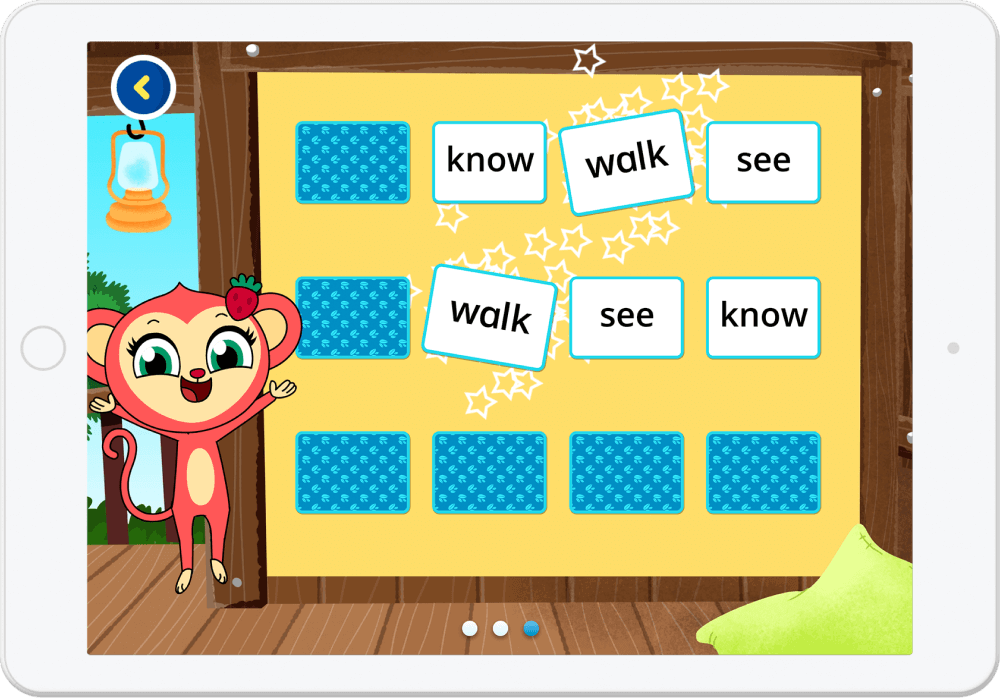
HOMER by Begin is a great way to introduce your two- to six-year-old child to root words and build their vocabulary and reading skills! They can apply what they’ve learned through fun games, videos, classes, songs, and stories.
If hands-on learning is more their speed, they can practice their root word skills through activities and games with HOMER’s Early Learning Kits.
Begin supports your child’s academic journey and inspires a love of learning that will last a lifetime!
Frequently Asked Questions
What is the easiest way to teach my child about root words?
Starting with a subject your child loves is always a great way to expand their learning! For instance, if your child is really into bike riding, begin there! Show them how the word bicycle comes from the root word cycl, meaning circle, wheel, or ring.
Then you can introduce your child to the idea of suffixes by teaching them what bi- means!
How can I practice root words with my child at home?
Reading together gives many opportunities to practice root words with your child at home. You could also draw a root tree detailing root words and related words, make word lists, and quiz your child weekly to bolster their learning.
How do root words connect to other subjects, like science or history?
Root words are used extensively in subjects like science and history, and knowing them will give your child a head start in understanding complex terms within these disciplines.
In science and medicine, Greek and Latin roots have been used to create standardized terminology. For instance, cardiology stems from the Greek root cardi-, which means heart, and the suffix –ology, which means the study of.
Many words related to history are also rooted in Latin. For example, revolution, from the Latin word revolvere, meaning to turn or roll back.
Do all words have a root word?
No. Whereas many words do derive from Greek or Latin roots, some words simply stand alone and are both the root and full word.
Onomatopoeic words, which sound like what they describe, such as buzz and meow, are also rootless words. Additionally, words borrowed from other languages often don’t have roots.
Do all root words come from Greek and Latin?
No. While a majority of root words come from Greek and Latin (around 60-70%), other sources, cultures, and languages have also contributed words. The English language also takes some root words from Old English, Germanic, Norse, French, Algonquin, Polynesian, and more.
To note: most of these words are “free roots” or base words, meaning they can stand on their own. For example, the root word sun comes from the Old English word sunne. And another example? The root word get comes from the Norse word geta.
How do root words help with spelling?
Being comfortable with root words can improve your child’s spelling because words that use the same root word often have the same spelling pattern. For example, once they know the root word multi, they will have an easier time spelling multimedia and multiply.
Learning how to use root words to improve spelling helps your child identify the internal structure of words, as opposed to just memorizing the order of the letters.
Does learning about root words help with learning synonyms and antonyms?
Yes! This is another example of how learning root words gives your child the ability to sleuth out the definitions of other words. If your child knows the definition of a root word, they can better find a synonym or antonym for it.
In a fun subcategory of antonyms, your child will learn that some affixes turn words containing root words into their opposite! For example, audible becomes inaudible.