
Managing time well opens up a whole world of possibilities! When your child can create a plan for the responsibilities and activities they want to accomplish, they feel a sense of control, ownership, and, ultimately, freedom to set and reach their goals.
To help you teach your child time management skills, we’ve put together some age-based ideas to gradually introduce them to how time works and how they can effectively use it. In addition, we’ve added general tips to set you up for success. Good luck!
Key Takeaways
- Time management is a plan for dividing your time productively.
- Kids need age-based ideas for managing their time, like learning about “now and “not now” in preschool and planning long-term projects when they’re in 5th grade.
- General time management tips include giving your child choices, breaking down chores into smaller pieces, and modeling time management.
Table of Contents
- What Is Time Management?
- How to Teach Kids Time Management: Ideas by Age
- General Time Management Tips
What Is Time Management?

Learning how to manage time is tricky for all of us. It’s one thing to be aware of the big-picture list of activities we need to accomplish, but actually doing them, one by one, can be challenging! This is especially true for our kids.
Time management is a plan for dividing your time productively. It’s about working more efficiently, not harder or longer. Because it requires thoughtfully planning your day (or week or month), it can reduce stress and build confidence and focus.
When kids learn time management at an early age, it helps set them up for a lifetime of success!
How to Teach Kids Time Management: Ideas by Age

How do you teach kids time management skills? Not all at once! Bit by bit, you can help them build understanding and practice implementing it. Let’s look at age-based ideas for you to try.
Preschool
Three- and four-year-olds may not be able to fully grasp the idea of time management, but they are experts at understanding “now” and “not now.” These foundational concepts are important to explore.
1) Talk about Seasons
The passage of time is abstract, but preschoolers are concrete thinkers. So how can you teach them about it? One great way is by using the seasons (spring, summer, fall, and winter) because they’re concrete, too.
Point out sensory evidence of the changing seasons. Visual: trees with leaves in the spring and bare branches in the fall. Tactile: the temperature differences between summer and winter. Olfactory: the scent of flowers in the spring and leaves in the fall. The list goes on.
You can also use these cycles in nature to explore the cycles in your child’s life. (“Your birthday is in the fall. Just like the trees change from spring to fall, you change each year, too.”)
2) Make a Schedule
Create order and predictability with a visual schedule. Use pictures of objects to show the activities your child participates in each day, such as drawing an apple to represent snack time and shoes for going outside.
As your child becomes familiar with the idea of a schedule, they learn sequencing, which is important for understanding how time works.
3) Practice Waiting
Time management is partly about delayed gratification. (“You can’t go outside now, but you can in an hour.”) Your child may feel frustrated when they need to wait, so it’s a great thing to practice.
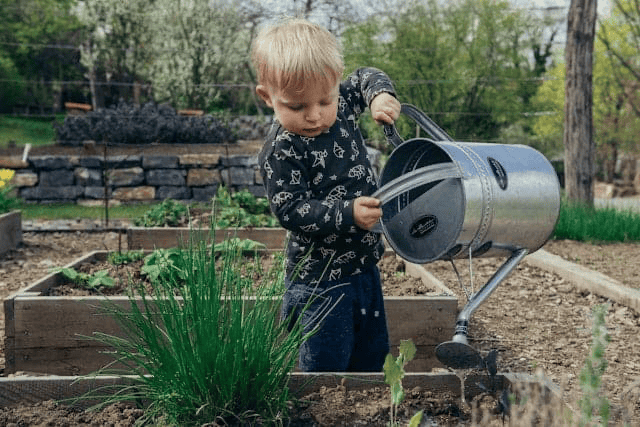
Plan an event for a few days away, and use a calendar to mark off the days until it arrives. Another fun way to learn about delayed gratification and patience is by planting a garden. No matter how hard it is to wait for plants to grow, there’s no other option!
Grades K-2
Once your child hits kindergarten, they can start to explore calendars and clocks in more depth. These time symbols are useful in continuing their time management skill-building.
1) Learn to Organize
Part of making an activities calendar successful is knowing where essential things live. Your child can’t manage their time if they have to search for something first!
Set up spaces that reinforce organization, such as cubbies for shoes and baskets for “take to school” things. Then add a section to your child’s schedule for “organizing,” so putting things away is part of their routine.
2) Try a Timer
Early elementary school-aged kids are still pretty concrete in their thinking, so another idea is to make the passing of time equally concrete by using a timer for jobs and activities. If your child can see the minutes ticking down, they can assess their progress and adapt.
3) Be Open to Natural Consequences
Your child isn’t going to perfect their time management skills right away. In fact, that’s not the point. You want them to develop a long-term relationship with it. One way to do that is by letting natural consequences happen.
It’s hard to do that as a parent! But try to let your child feel what it means to forget something or be late to an event. These become pivotal moments in their time-management learning process.
Grades 3-5
At this age, you can help your child begin learning how to set goals, determine and prioritize what’s important, and get comfortable with flexible thinking.
1) Estimate Time
Before an activity or chore, work with your child to estimate how much time it will take. Then, once they do it, reflect together on how accurate their timing was and how they can change their expectations or improve their speed.
2) Plan Long-Term Projects
This idea is useful if your child has a school assignment with multiple parts.
Brainstorm the project phases together, and then create a schedule that reflects those smaller pieces by working backward. (“The assignment needs to be finished on Friday, so what do you need to have done the day before? And the day before that?” etc.)
You can use the same process for longer-term projects your child has at home.
3) Set Priorities
Try dividing activities into three groups: high-priority need-to-dos, lower-priority need-to-dos (like extracurriculars), and want-to-dos. If you want to help your child visualize these three levels of activity, try this fun project:
- Get a jar, stones, smaller pebbles, and water.
- Place the stones (high-priority need-to-dos) in the jar first.
- Then place the pebbles (lower priority need-to-dos) in the jar next.
- Finally, fill the jar with water (want-to-dos).
General Time Management Tips
Regardless of your child’s age, here are some general time management tips to try!
1) Choose Systems Over Reminders
Be proactive, not reactive. This means helping your child set up a schedule that works for them (and being open to revising it until it’s right). Try to trust the system, including not reminding your child about their responsibilities and allowing them to face natural consequences.
2) Give Your Child Choices
Give your child the opportunity to be part of the process. Ask them questions (“What do you want to tackle first?”), create the time management system with their strengths in mind (are they a visual learner?), and try having a “huddle” at the start of the day to revisit the plan.
3) Practice with Chores
Ask your child to take on time-sensitive household chores so they can practice being efficient in a low-stakes way. For example, you might ask them to set the table for dinner each night.
4) Break Down Jobs into Pieces
Try to break down each job your child needs to do into smaller, more manageable parts. And celebrate each time they finish one of them!
5) Offer Meaningful Praise and Thoughtful Feedback
Engage in real conversations with your child as they practice time management skills. What can they learn from a successful experience? From a challenging one? Having those honest, productive exchanges, as well as offering real praise, inspires growth.
6) Model Time Management
Finally, our kids are always watching us! Teach your child time management skills by practicing them yourself. Talk about your process, both as you work on a particular chore and afterward.
Time to Begin Time Management!

While improving time management skills is a lifelong process, we hope you see a way to help shape your child’s experience learning them and even speed up their understanding along the way. Managing time well allows your child to soar!
To support their self-management skills and other social-emotional learning, Begin builds engaging lessons into our Little Passports books, the Learn with Sesame Street app, and the stories found in HOMER.
So don’t forget to add Begin Learning to your child’s schedule!
Frequently Asked Questions
How can I teach my child to manage their time without constantly reminding them to do things?
Try to rely more heavily on external reminders, like timers and visual schedules. Choose a time (maybe first thing in the morning) to talk about the day’s expectations. And let your child face natural consequences.
You might also explore using a “When-Then” routine: “WHEN you clean your room, THEN you can play.”
How does screen time fit into time management?
Screen time parameters are a personal choice. They depend on your opinion about screen time and your child’s personality and abilities.
Try keeping screen time off of your child’s schedule. Make it a “reward” for doing all of the other things on it (even other “wants” like playing outside).
And remember that, no matter what, it’s a good idea to stop screens at least 30 minutes before bedtime.
What are the five Ps of time management?
The five Ps of time management are:
- Prioritization
- Planning
- Productivity
- Patience
- Persistence