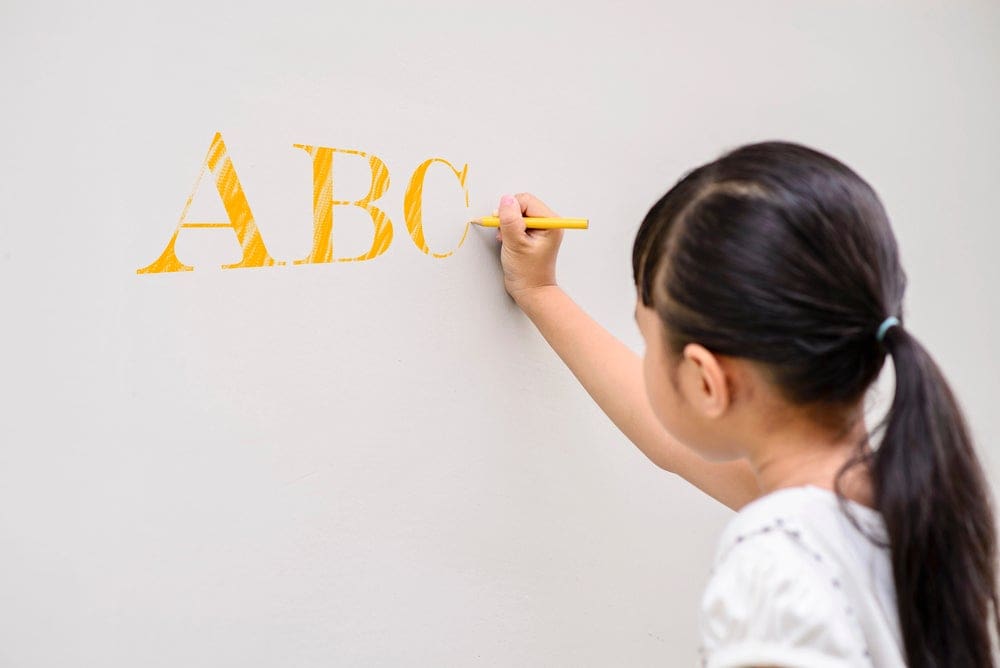

Learning to express themselves through writing is an exciting and fundamental step in a child’s education. The right 1st grade writing prompts can unlock creativity and literacy skills.
This isn’t just about the act of writing letters and words on a page. It’s about nurturing the developmental leap in which your child learns how to translate what’s in their head into concrete words.
For a 1st grader, writing can often feel like a puzzle. But with engaging and well-designed prompts, you can help it become a fun and stimulating activity.
This guide will explore why creative writing prompts matter for young learners and provide a wealth of fun ideas to get their pencils moving.
Key takeaways
- Some examples of engaging 1st grade writing prompts include: “Write about a time you were brave,” “Write a fairytale about a dragon who thought it was a dog,” “What would you do with a truckload of pickles?” and “Today I opened my lunchbox and found…”
- 1st grade writing prompts help make writing fun so that your child gets plenty of practice with phonics, structure, and coordination and starts to develop confidence in their ability to express themselves through writing.
- To set your young writer up for success, build a writing station they can use, keep the practice simple and fun, focus on the message, and always celebrate the work when they’re finished.
Table of Contents
1st Grade Writing Prompts

Personal Connection Prompts
These 1st grade writing prompts help your young learner write about their own lives and feelings.
Students are experts on their own lives and routines, so personal topics remove the barrier of not knowing what to write about. This immediate access to ideas encourages them to simply start writing, which helps build writing fluency and confidence.
- What’s your favorite holiday and why?
- Write about a time you were brave.
- How do you get ready for school in the morning?
Storytelling (Narrative) Prompts
Storytelling writing prompts are crucial for 1st graders because they are the foundation for developing the narrative structure they’ll use throughout their learning journey.
These prompts encourage narrative writing:
- Write a fairytale about a dragon who thought it was a dog.
- Write about finding a talking tree in your backyard.
- Imagine your pet could talk. What would they say?
Silly and Fun Prompts
In 1st grade, students are building foundational writing skills (handwriting, phonics, sentence structure), which can feel like tedious work. Silly and fun prompts inject joy and purpose into the process and become a powerful tool for engagement and confidence.
Here are a few 1st grade writing prompts to stimulate your child’s imagination:
- What would you do with a truckload of pickles?
- Write a letter to your favorite food.
- Write about a time you visited a new planet made entirely of candy.
Finish-the-Sentence/Story Prompts
These prompts provide a beginning to get your young writer started. They’re important for 1st graders because they act as a scaffolding tool that helps young learners bridge the gap between oral language and independent, structured writing.
Try these examples:
- I was camping one night, when suddenly…
- Today I opened my lunchbox and found…
- While I was in the woods, the tree I was leaning against…
1st Grade Writing Skills

Phonics and Structure
While 1st grade writing prompts themselves don’t build an understanding of phonics and structure (for both words and sentences), they do provide a creative way for children to practice these skills and develop them further.
Confidence
With repeated practice inspired by writing prompts, your child can begin to transition from drawing pictures as their primary form of self-expression to using words and sentences.
Seeing their ideas written down in this way helps them build self-worth and confidence in their own abilities.
Coordination
Using 1st grade writing prompts to stimulate your child’s imagination and motivate them to write helps them practice the fine motor skills necessary for clear written communication (e.g., holding a writing utensil and forming letters).
Expression
Expressing thoughts on paper and seeing those thoughts in front of them helps them develop higher-order skills, such as planning and sequencing, connecting writing to speaking, and even thinking about what they’re thinking.
Tips to Set Your Writer Up for Success

Build a Writing Station
Create a dedicated, fun space for writing, and provide supplies such as pencils, a special notebook, and writing tools (e.g., alphabet chart, phonics charts) to make writing practice more engaging.
Keep It Simple and Fun
Focus on topics your child loves, such as animals, friends, superheroes, food, or family, and use short, easy-to-understand prompts. Keep those prompts open-ended, avoid complicated vocabulary, and word the prompts so that they feel like a game, not a test.
Whenever possible, encourage your child to invent, imagine, or change reality.
Focus on the Message
During the early stages of writing, it’s OK for your child to sound out words creatively. Allow for misspellings, like “luv,” “bcuz,” and others.
For creative writing exercises, instead of worrying about the spelling, focus on the storytelling and the way your child communicates. You can take note of the words your child misspells, and integrate relevant practice into a separate activity.
Write Together
Practicing together is a great way to stimulate your child’s interest in writing. Model the process by letting them watch you write, and then use the same 1st grade writing prompt that they’re using to write your own story. Have fun sharing your stories with one another when you’re done!
Encourage Pre-Drawing
Images and words go hand-in-hand and can actually help your child learn faster. Encourage your child to draw a picture to help them organize their thoughts, and then have them use that picture as the start of their story.
Celebrate Their Work
There are many ways to celebrate the work your child produces with these 1st grade writing prompts. Regardless of what the finished product looks like, you can display it somewhere prominent, like the door to their room or the refrigerator, or maybe they prefer to keep it in their special notebook.
Use specific language to complement them, such as “I like how you…” With their permission, read their work aloud to family members and continue to commend them for their effort.
Lastly, don’t forget to celebrate progress, not just their final work. Remember: practice makes progress!
Write On!

Learning to express themselves through writing is a crucial developmental leap for kids. The 1st grade writing prompts in this list are essential for turning a complex skill into a fun and stimulating activity.
These simple, creative ideas help your child practice vital skills, including phonics, spelling, structure, coordination, planning, and sequencing. Most importantly, they build the confidence your child needs to shift from drawing their thoughts to putting those thoughts into words.
For engaging, high-quality educational materials designed to keep your young writer’s pencil moving, give your child access to Begin’s Learn with Sesame Street app and HOMER app.
Investing in this foundation ensures they develop a lifelong love for expressing their great ideas in writing!
Frequently Asked Questions
How long should my 1st grader’s writing piece be?
At this stage of the learning process, don’t worry about length. Instead, focus on helping your 1st grader express complete thoughts and develop confidence in their abilities.
So, if your child writes a single simple sentence, a few connected sentences, or a short, multi-sentence story, that’s fine.
It’s more about their ideas and effort than word count. Encourage them to write as much as they want, even if it’s just one well-thought-out sentence.
How often should my 1st grader practice writing?
At this age, the key is to make writing practice fun and short. Encourage your child to practice writing for 10 to 20 minutes, four or five times a week.
Keep in mind that you don’t have to use formal practice sessions all the time. Instead, you can ask them to draw and label pictures, write a shopping list for a trip to the store, or write a short note to a family member.
This type of short, regular practice helps build muscle memory and keeps them from feeling overwhelmed.
Remember to praise your child’s effort regardless of spelling and grammar, and do your best to keep things fun so they don’t get frustrated.
How do I choose the right prompts for my child?
Choosing the right writing prompts for your 1st grader is key to making the practice fun. Look for prompts that are simple and relate to your child’s life.
- Kids write best about what they know and love, so choose prompts about the family pet, a recent vacation, or a special interest.
- Choose prompts that spark their imagination and encourage them to go in whatever direction feels best.
- Choose prompts that are just one or two sentences long. Too much direction can be confusing.
- Let your child pick a few ideas for themself. Giving them control can make the practice feel more exciting.
Regardless of what you or they choose, the goal is to build confidence and show them that writing can be an adventure.
How do I know if my 1st grader is on track with their writing skills?
It’s only natural to wonder if your 1st grader is on track with their writing skills, so here are some benchmarks to look for.
Your child will be more confident when asked to write something, and they’ll be better able to transfer what’s in their head onto the page. Their penmanship (coordination) will improve and be more legible.
They’ll be able to write simple sentences that make sense and that include a mix of capital letters, lowercase letters, and even punctuation such as periods and question marks.
Keep in mind that your child may be stronger in some skills than others. That’s OK! With continued practice, all of their skills will improve.