
Need to turn your child’s chicken scratch into legible letters? Even in this digital world, having easy-to-read handwriting is a key skill, useful in both school and life. Learning how to improve kids’ handwriting will help you support your child’s writing practice.
In this article, we’ll tell you why handwriting matters and offer 12 tips to help your child improve both the speed and accuracy of their handwriting.
Key Takeaways
- Help your child improve their handwriting by practicing fine motor skills with drawing, coloring, and sculpting with playdough.
- Ensure they have the right posture, tools and paper, grip, and environment as they practice lines and shapes, and then letters and numbers.
- Help your child practice handwriting daily, and demonstrate how to do it when your child feels stuck. Encourage them to take it slow.
- In order to assess your child’s handwriting improvements, look at the legibility of the letters and the spacing between letters and words. Also assess their speed, posture, and pencil grip.
Table of Contents
- 12 Tips for Improving Kids’ Handwriting
- Why Handwriting Matters for Kids’ Development
- Assessing Your Child’s Handwriting
12 Tips for Improving Kids’ Handwriting
Here are 12 easy things you can do to help your child improve their handwriting.
1) Break Out the Playdough, Crayons, and Colored Pencils
Set up your child’s play table or desk with an abundance of crayons, colored pencils, and playdough.
Activities like sculpting, coloring, and drawing help strengthen your child’s grip and dexterity, which improves their fine motor skills and makes them more equipped to write legible letters.
2) Ensure Your Child Sits Up Straight
Take a look at your child’s posture. Sitting up straight makes kids more stable so that movements of the pen or pencil are better coordinated and letter formation is more consistent.
Encourage your child to position themselves in front of the desk, keeping their back straight, feet flat on the floor, and forearms on the desk. This way, they’re distributing their weight evenly, making writing more comfortable and legible.
3) Teach Your Child the Correct Pencil Grip
Having the correct pencil grip makes a big difference in handwriting. Although there isn’t just one right way, make sure your child’s grip is not too tight. A relaxed pencil grip will balance their comfort and pencil control.
4) Start with Shapes and Lines
Before diving into letters and numbers, encourage your child to practice making shapes and lines. These pre-writing strokes can help kids get more accustomed to controlling their pencil.
5) Practice Letters and Numbers
After practicing pre-writing strokes like shapes and lines, it’s time to move on to practicing capital letters and numbers. Kids can start by tracing letters until they develop their muscle memory through repetitive practice, and then they can begin writing them on their own.
Once they’re comfortable with capital letters and numbers, your child can move on to lowercase letters. After that, encourage your child to develop their skills further with words and sentences.
6) Slow Down
When it comes to handwriting skills, accuracy is better than speed. If kids rush through writing a word, it’s more likely to be messy and possibly illegible. Teach your child to carefully make a continuous stroke without lifting the pencil from the paper.
7) Use Lined Paper or Handwriting Worksheets
Lined paper and handwriting worksheets are great tools to help improve your child’s handwriting. These provide structure to guide letter formation, size, and spacing, all of which are important for legibility.
Begin offers free printing and writing worksheets that feature visual cues like directional arrows, a model letter, and baseline guides for the most fun and effective handwriting practice!
8) Practice Daily
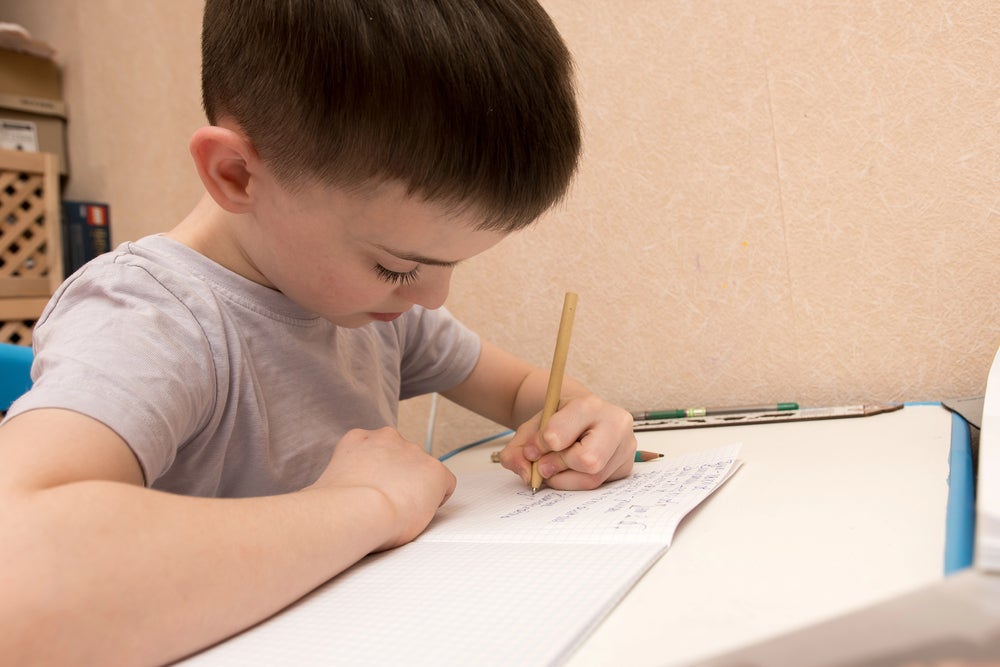
Consistent daily practice makes all the difference in improving your child’s handwriting. Try for five to 10 minutes a day, at least two to five times a week. This consistency builds your child’s muscle memory.
Be careful not to overdo it, though: if your child is getting frustrated or tired, call it quits for the day and pick up again the next.
9) Make Practice Fun and Engaging
Although your child is learning important skills, it’s important to keep handwriting practice enjoyable. When it comes to choosing words to write, lean into your child’s interests. You can also mix up techniques.
For instance, one day, have them practice with worksheets, and the next, transcribe a short poem, write a comic book, or do something non-traditional, like writing in sand or with shaving cream.
10) Choose the Right Writing Tools
Having the right tools will set your child on a path to success. Select ergonomic pens and pencils, lined paper, pencil grips, and slant boards. You can even designate a special pen or pencil that’s just used for practice.
It’s good to experiment with various tools and see what works best for your child. The key is to reduce strain on their hands so that practice time doesn’t feel like a chore.
11) Model Good Penmanship for Your Child
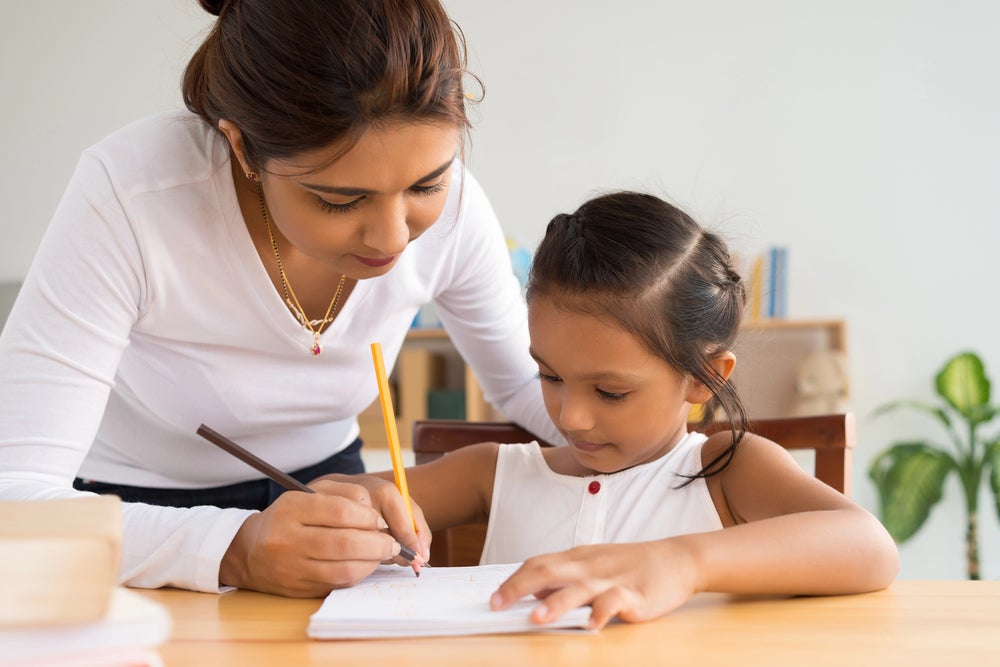
Show your support by modeling good penmanship for your child and helping them emulate it. For instance, you can offer to guide their hand or write side by side. Be sure to use positive feedback to motivate them!
That said, it’s also important to catch any mistakes early so they’re easier to correct. Common struggles to look for include backward letters and fine motor skill challenges.
12) Create a Comfortable Environment
With a cozy, comfortable environment, kids are more likely to persevere and stay motivated. Set up an ergonomic chair, a properly sized desk, and the writing tools we mentioned earlier. And keep the room at a comfortable temperature and distraction-free.
Why Handwriting Matters for Kids’ Development
Improving kids’ handwriting is important for their physical and mental development. Let’s take a look at the benefits of handwriting practice.
Helps Develop Fine Motor Skills
When a child strengthens their handwriting, they’re building the coordination and dexterity they need for everyday life. Developing these fine motor skills makes it easier for kids to do things like tie their shoes and button their shirts.
Boosts Cognitive Function and Memory
Practicing handwriting improves kids’ muscle memory and fosters automatic recall. It also strengthens a child’s reading comprehension skills.
Can Lead to Success at School and Beyond
With better handwriting, your child’s reading and spelling will improve. In addition, their focus and critical thinking skills will be sharpened.
Writing legibly will also give your child a greater sense of confidence. That’s essential for many things your child will need to do later in life, such as signing documents and writing notes and letters.
Assessing Your Child’s Handwriting
Assessing your child’s handwriting requires taking a look at the legibility of their writing as well as the speed at which they write. Don’t forget to take note of the spacing between letters and words.
You’ll also want to examine their physical process of writing, including their posture and pencil grip. After an assessment, it’s easier to see what your child should be focused on as they commence their daily practice.
Handwriting Success with Begin

We’ve given you loads of ways to improve kids’ handwriting. These include focusing on posture and pencil grip, practicing daily, and keeping practice time fun.
And when it comes to fun, Begin’s Early Learning Kits have you covered! They feature lots of engaging activities to practice their reading and writing that kids will love. And for kids who prefer digital practice, they can also try our HOMER app.
Let Begin support your child’s academic journey and foster a lifelong love of learning!
Frequently Asked Questions
What are the 4 P’s of handwriting?
The 4 P’s of handwriting refer to the things that a teacher might focus on when introducing the skill. These are posture, paper, pencil grip, and placement or position. Keeping these P’s in mind will help your child improve their handwriting.
Can handwriting be improved at any age?
Yes, handwriting can be improved at any age, although the older your child is, the harder it is to change bad habits. When your child’s ready to work on this skill, the best thing to do is focus on consistent practice and proper technique.
What causes poor handwriting in kids?
There are a few things that contribute to poor handwriting in kids. These include writing too fast, using the wrong implements, having poor posture, and using the wrong pencil grip.
In addition to these, if your child is very early in the writing process, they also may have poor handwriting. But you can hardly blame them, as they haven’t had a chance to practice enough! The best remedy is to ensure your child keeps at it.
What handwriting worksheets are best for beginners?
We may be biased, but we think Begin has some of the best handwriting practice worksheets available to help your beginning writer improve their handwriting. Give them a try and let us know what you think!