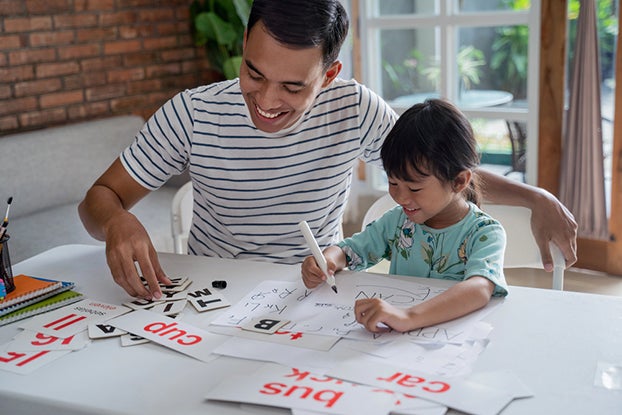
Learning spelling words isn’t always easy, but spelling word lists can help! With a grade-appropriate list, your child can practice spelling high-frequency words like numbers, common nouns, and verbs, as well as words with prefixes and suffixes.
In this article, we’ll share spelling lists crafted for 1st, 2nd, and 3rd graders and give you tips to support your child as they learn.
Key Takeaways
- Spelling words for 1st graders include simple high-frequency sight words and words that end with -at, -ad, -ed, and -ig.
- Second grade spelling words include more difficult sight words and words that use letter combinations like -ai, -aw, -ight, and -ou.
- A third grade spelling word list is made up of more complex words that have prefixes, suffixes, and patterns, including vowel-consonant-vowel (VCV) words, and vowel, consonant-consonant-vowel (VCCV) words.
- Spelling lays the foundation for reading and writing, and improves phonological and phonemic awareness. It also improves decoding skills, builds vocabulary, and boosts fluency.
Table of Contents
- Why Spelling Is Important
- Spelling Words for 1st Grade
- Spelling Words for 2nd Grade
- Spelling Words for 3rd Grade
- Tips for Practicing Spelling Words
Why Spelling Is Important
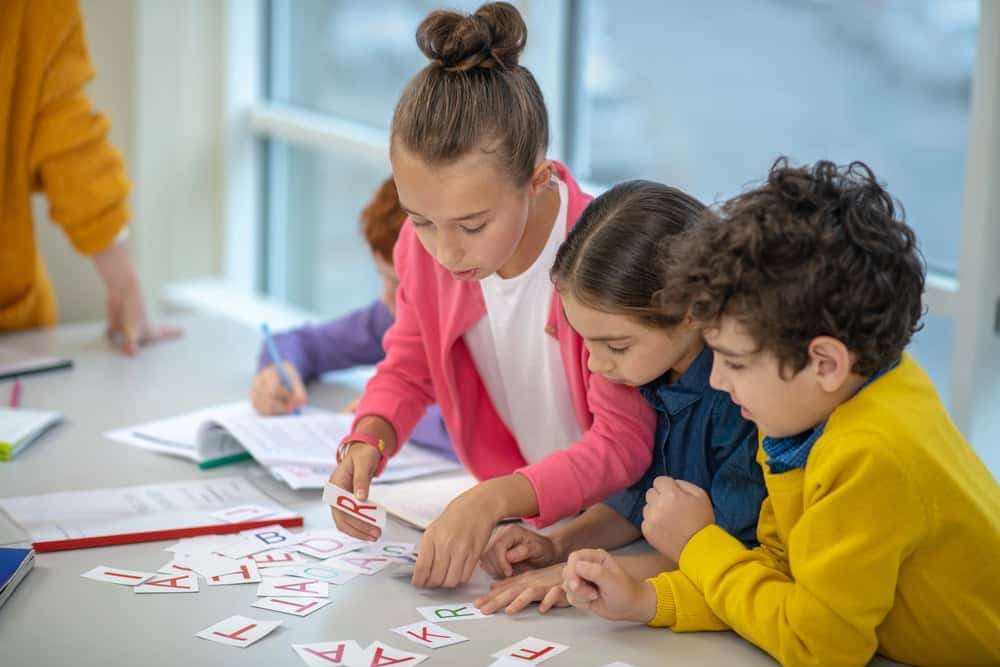
Even though you may be tempted to think that spell check programs have rendered spelling obsolete, being able to spell remains a key skill that lays the foundation for reading and writing and helps your child become a better overall communicator.
By practicing spelling, children learn to understand sounds and link letters to sounds. On top of that, spelling helps your child improve their phonological awareness, bolsters their decoding skills, and improves their vocabulary.
Spelling Words for 1st Grade
In 1st grade, children start to master basic spelling skills through familiar words and easy spelling patterns. Below is a 1st grade spelling list that combines simple, high-frequency sight words clustered in groups based on category, use, or sound.
In addition to these, 1st graders can also practice word families like -at (cat, fat), -ad (sad, mad), -ed (bed, fed), and -ig (big, pig).
- One
- Two
- Three
- Four
- Five
- Six
- Seven
- Eight
- Nine
- Ten
- Eleven
- Twelve
- Thirteen
- Fourteen
- Fifteen
- Sixteen
- Seventeen
- Eighteen
- Nineteen
- Twenty
- Sing
- Sang
- Sung
- Swing
- Swings
- Swung
- Red
- Orange
- Yellow
- Black
- Pink
- White
- After
- Again
- Along
- Animal
- Before
- Every
- Small
- There
- Their
- Well
- Tell
- Smell
- Bell
- Fell
- Sell
- Selling
- Sale
Spelling Words for 2nd Grade

Our 2nd grade list builds upon the 1st grade spelling words. This list combines sight words, common nouns, verbs, and adjectives that a 2nd grader should know how to spell.
Once your child has mastered these words, continue practicing letter combinations such as -ai (rain, sail), -aw (paw, saw), -ight (light, fight), and -ou (proud, pout).
- Stop
- Clap
- Spin
- Swim
- Last
- Skin
- Win
- Twin
- Thin
- Deep
- Steep
- Keep
- House
- Large
- Never
- People
- Apple
- Banana
- Grape
- Around
- Because
- Could
- Swim
- Swimming
- Swum
- Grow
- Grew
- Grows
- Grown
- Growing
- Coat
- Raincoat
- Eyes
- Ears
- Mouth
- Nose
- Head
- Knees
- Toes
- Hands
- Drive
- Drives
- Drove
- Driving
- Driven
- First
- Last
- Where
Spelling Words for 3rd Grade
By 3rd grade, spelling word lists are quite a bit more complicated than they were in 1st and 2nd grade.
When honing spelling skills, 3rd graders should recognize and practice prefixes, suffixes, and patterns, including vowel-consonant-vowel (VCV) words as well as vowel-consonant-consonant-vowel (VCCV) words.
- Action
- Believe
- Enough
- Laugh
- Though
- Useful
- Write
- Writing
- Winter
- History
- Garden
- Basket
- Market
- Change
- Famous
- Regional
- National
- Govern
- Beautiful
- Cheerful
- Harmful
- Playful
- Useful
- Colorful
- Permission
- Confession
- Vision
- Suddenly
- Actually
- Personally
- Especially
- Thankfully
- Joyfully
- Helpfully
- Painfully
- Buying
- Trying
- Flying
- Question
- Geography
- Family
- Science
- Religion
- Folklore
- Custom
- Hundred
- Distance
- Difference
- Paragraph
- Photograph
Tips for Practicing Spelling Words

Whereas some words are pretty straightforward to spell, others can be downright tricky. Here are some tips to help your child practice their spelling words.
1) Break the Word Down
Encourage your child to break words down into manageable chunks as they attempt to spell them. This will help your learner identify prefixes and suffixes that they’re familiar with, and recognize any spelling patterns or rules, like “i before e, except after c,” for instance.
2) Match Images or Mnemonic Devices to Spelling Words
Sometimes using a mnemonic device can help your child remember their spelling words more easily. For example, your child can remember a silly phrase, “Big Orange Apple on the Top,” to help them spell the word boat.
Matching an image to a word is another way to trigger their memory, making hard-to-remember words a bit more top-of-mind. Draw that boat with a big orange apple on top to help plant the spelling strategy.
3) Use Word Families
Another good way to practice spelling words is by building word families. Word families are a series of words that use the same rule or construct.
For example, if several words have similar endings, like night, fright, sight, and tight, learning them together makes them easier to remember. You can also batch words by their prefix or suffix.
4) Trace Words to Create Muscle Memory
Encourage your child to try tracing the words they want to remember. The movement, whether it’s their finger or pencil, engages their mind differently and builds what’s called “muscle memory.”
5) Make a Spelling Song
If your child’s having trouble remembering a spelling rule or word, make a song out of it. Not only can a melody help spelling stick, but making up a silly song is just plain fun! Engage yet another sense by asking your child to write the word down as they sing them.
6) Start at Grade Level and Tweak as Needed
When it comes to what spelling list to use when you practice with your child, it’s best to start with grade-level words, and then tweak as you go. If your child finds their own grade’s list easy, then level up.
If it’s too hard, then have them practice (and master) slightly easier words before progressing to harder ones. The goal is to build their skills and their confidence.
7) Mix Written and Oral Practice
Your child’s memory may work better when they incorporate several senses at once. So grab those practice sheets and the flash cards. Oral and written practice is even more effective together.
8) Use Interactive Games to Reinforce Learning
The name of the game is to keep your child engaged with their spelling practice, and to do that, you want to make it fun.
Interactive games, like HOMER Early Learning Kits, can help your child learn and practice their spelling skills with hands-on activities that reinforce grade-appropriate skills.
If your child prefers to practice online, our HOMER digital app is a great option because activities can be personalized to your child’s interests, from sports to animals.
9) Mix It Up
When you’re doing the same thing over and over, it’s bound to get boring. Instead, mix up the spelling practice with printable spelling lists, worksheets, and online games.
10) Repeat and Review
Of course, repetition and constant reviewing are necessary when your child is learning their spelling words. Just keep at it until it sticks!
Spelling with Begin

Spelling is the key to becoming a good reader, writer, and communicator. Using a mix of strategies can make learning grade-appropriate spelling words easier to master.
Begin’s HOMER app and Early Learning Kits are great options for reinforcing your child’s early literacy skills, like reading and spelling. With Begin, your child can build the foundation for a love of learning that will last a lifetime!
Frequently Asked Questions
What are the stages of spelling in elementary school?
The stages of spelling taught in elementary school begin with precommunicative and semiphonetic and progress to phonetic, transitional, and ultimately correct.
What are the four types of spelling?
The four stages of spelling are phonological, visual, morphemic, and etymological. All of these types of spelling can help your child better remember the letters that compose a word.